JUNE 16, 2026
Erin Mahollitz, Maureen Fitzmahan, Brianne Alcala, Eliza
Make it stand out
Whatever it is, the way you tell your story online can make all the difference.
Writings from the Salons and in-between
JUNE 16, 2026
Erin Mahollitz, Maureen Fitzmahan, Brianne Alcala, Eliza
Make it stand out
Whatever it is, the way you tell your story online can make all the difference.
We see patterns in nature. Patterns in art includes the repetition of visual elements—lines, shapes, colors, or motifs—to create rhythm, harmony, and visual interest. Patterns are important in Western poetry and music in rhyme and rhythm. Human history is seen by many as a way to see connections between eras - history doesn't repeat itself, but it does rhyme.
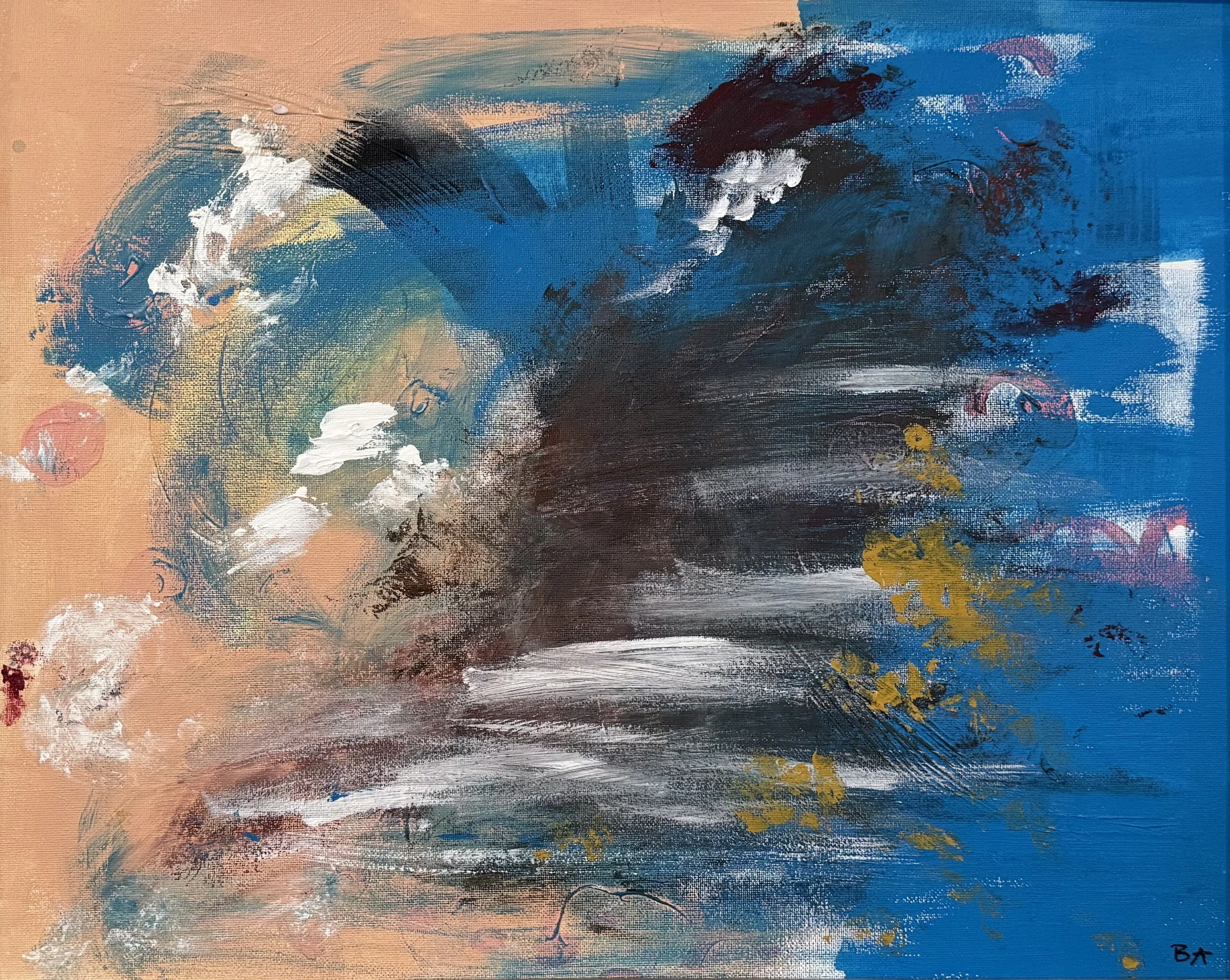
Brian Nelson. 1975. Painting
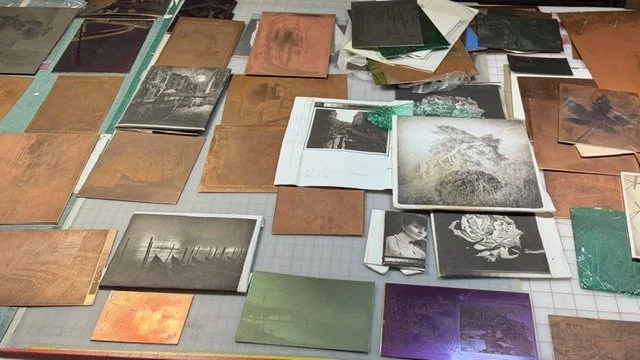
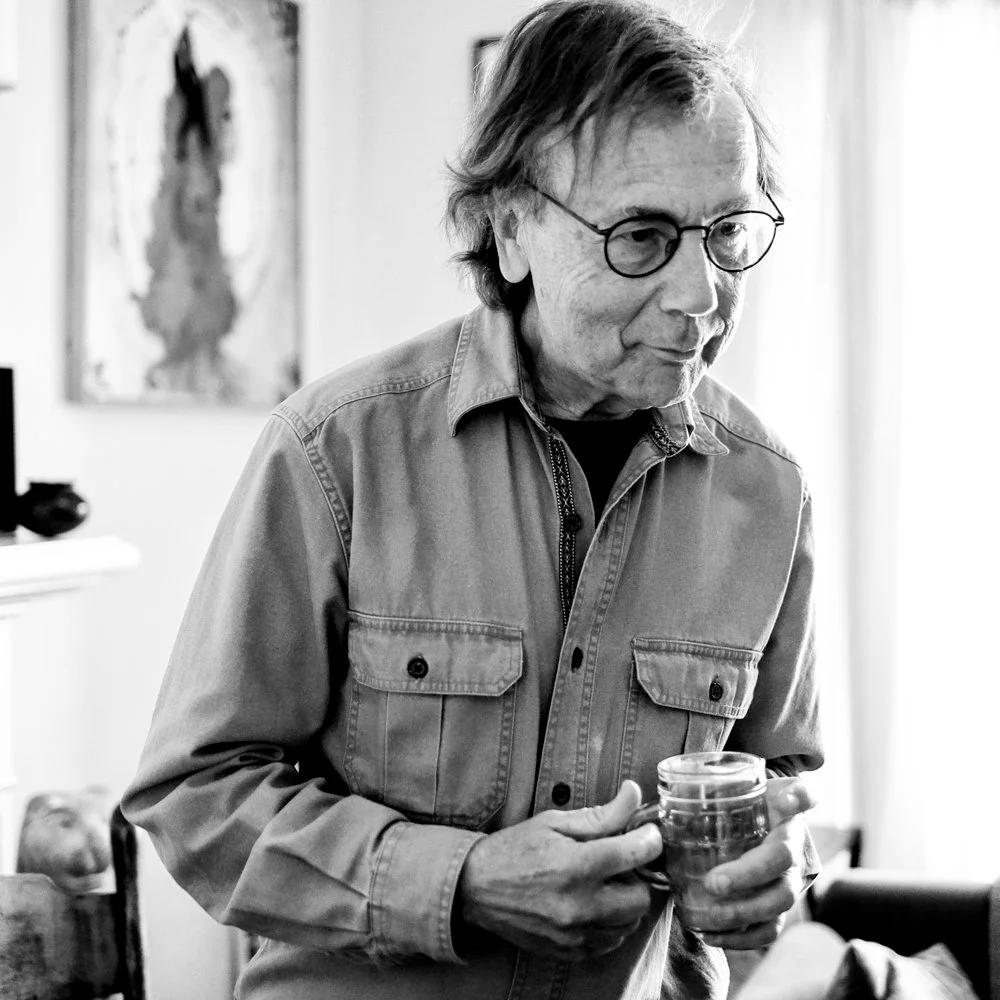
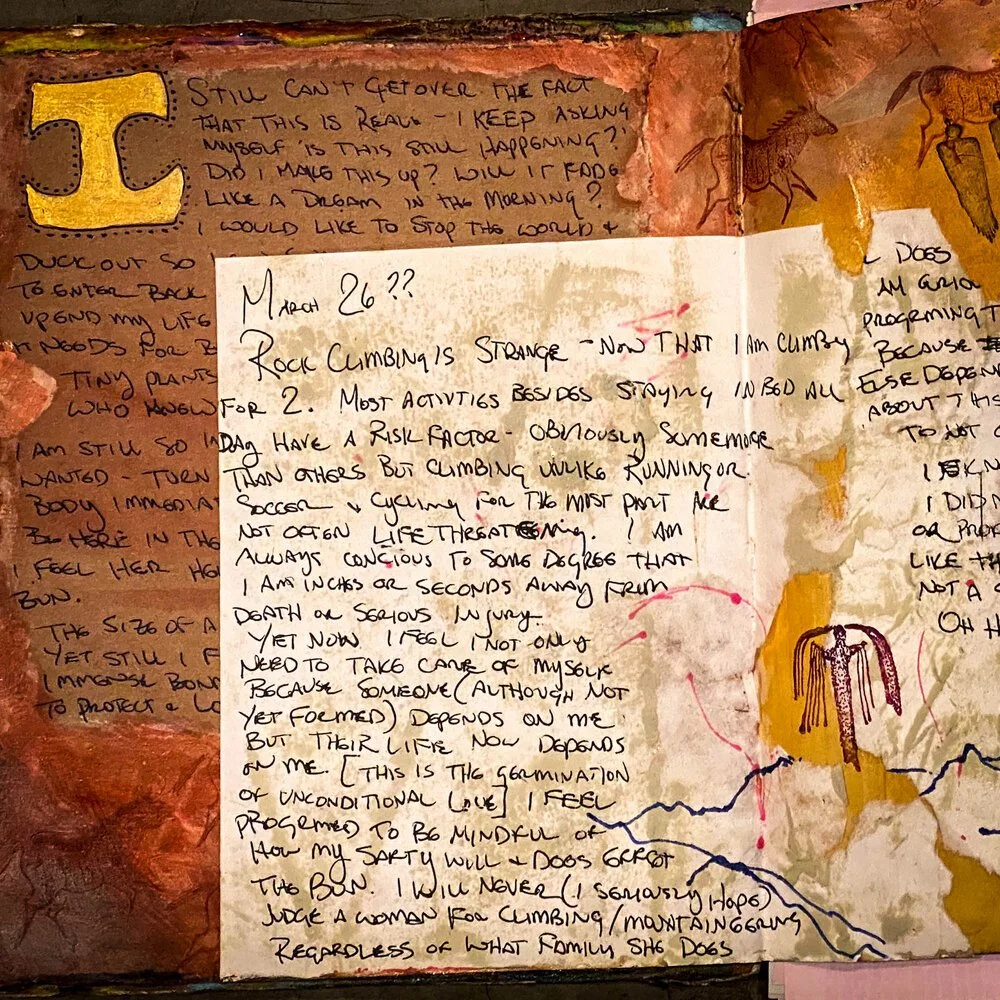
This is an oil painting I did in 1975 that’s hanging in the living room. They’re complementary colors. I’m going to make a 4-color aquatint etching using 4 copper plates and see what happens.
brian Nelson
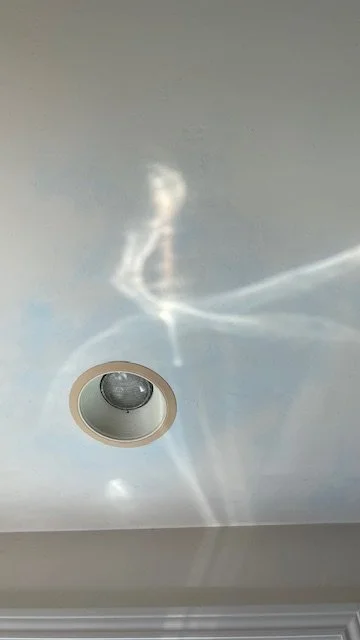
This idea offered itself in the course of coming up with something for the theme, Patterns - and then another one did. Then another one.
Berkeley, California
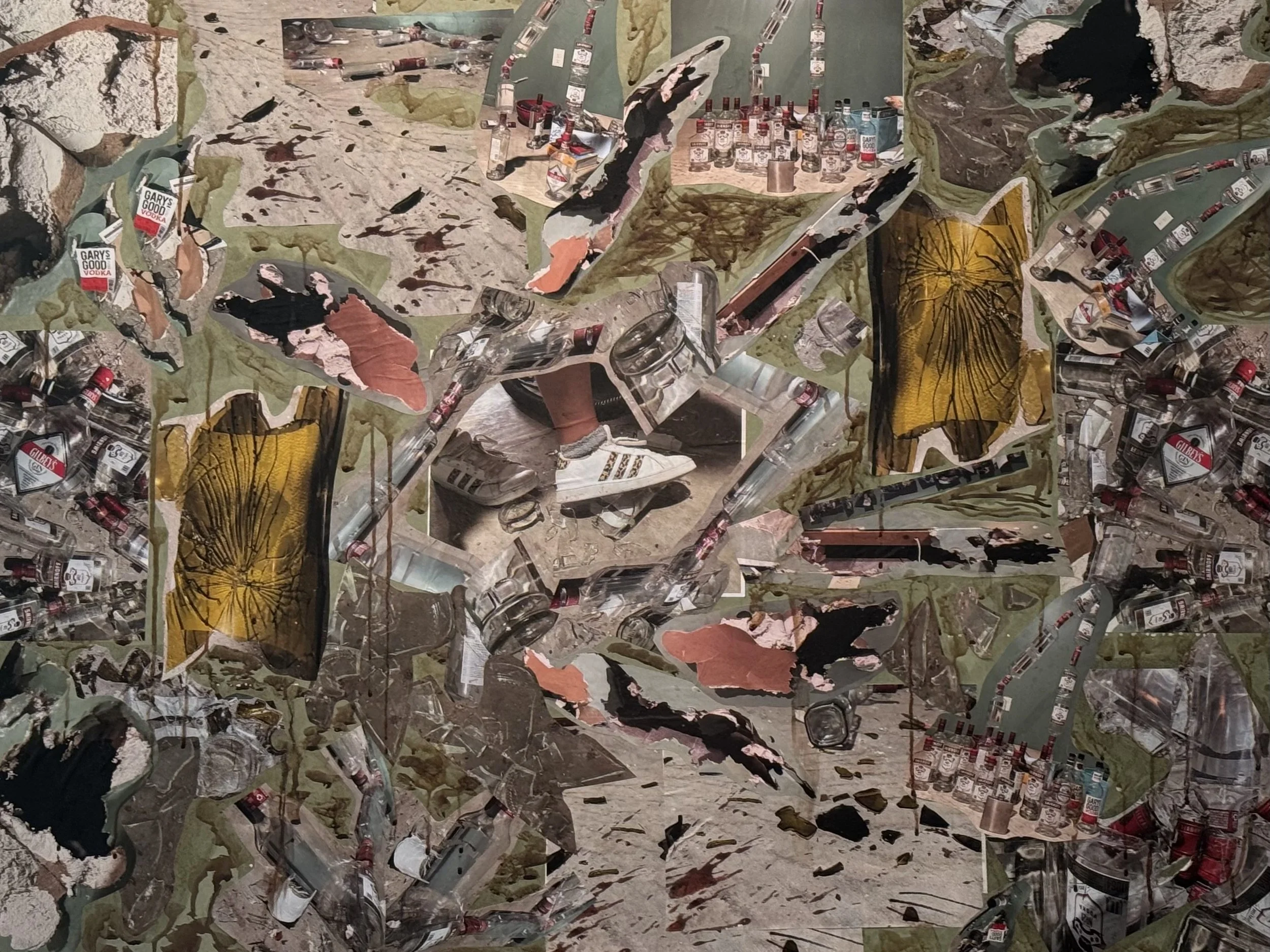
The Dancer (or whatever)
Brían Nelson.
Patterns is a great theme!
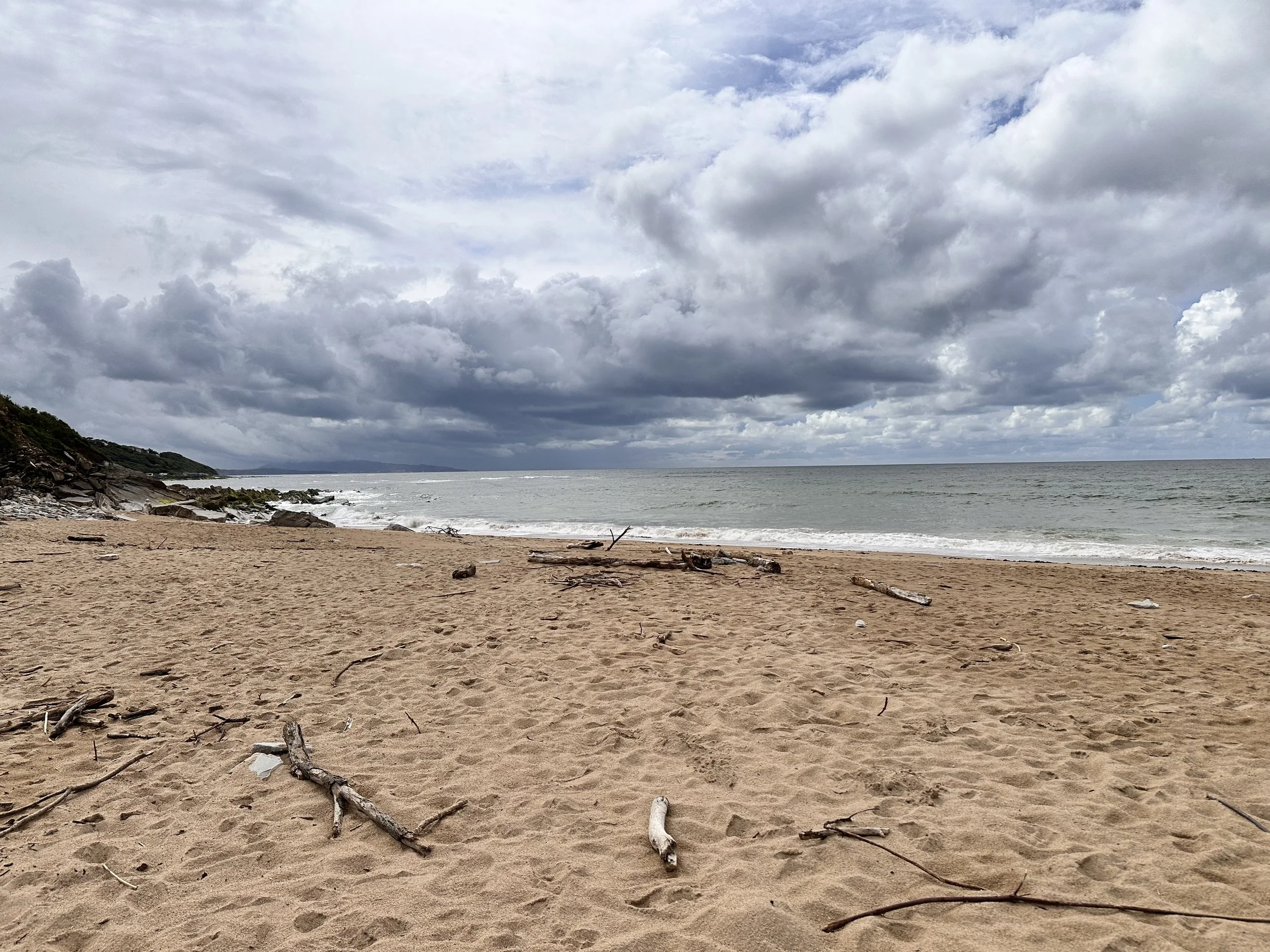
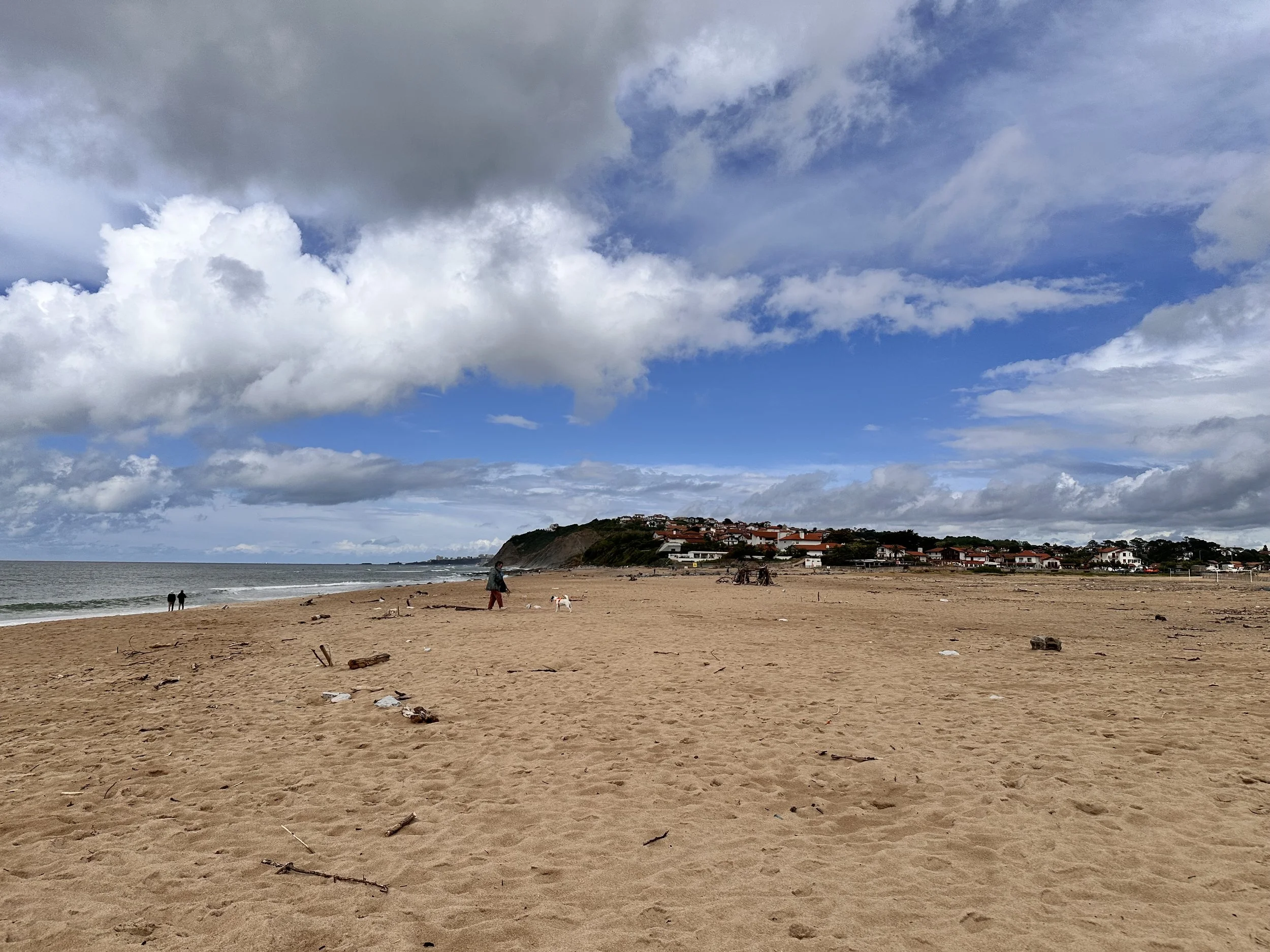
In the basque
Ana Perches
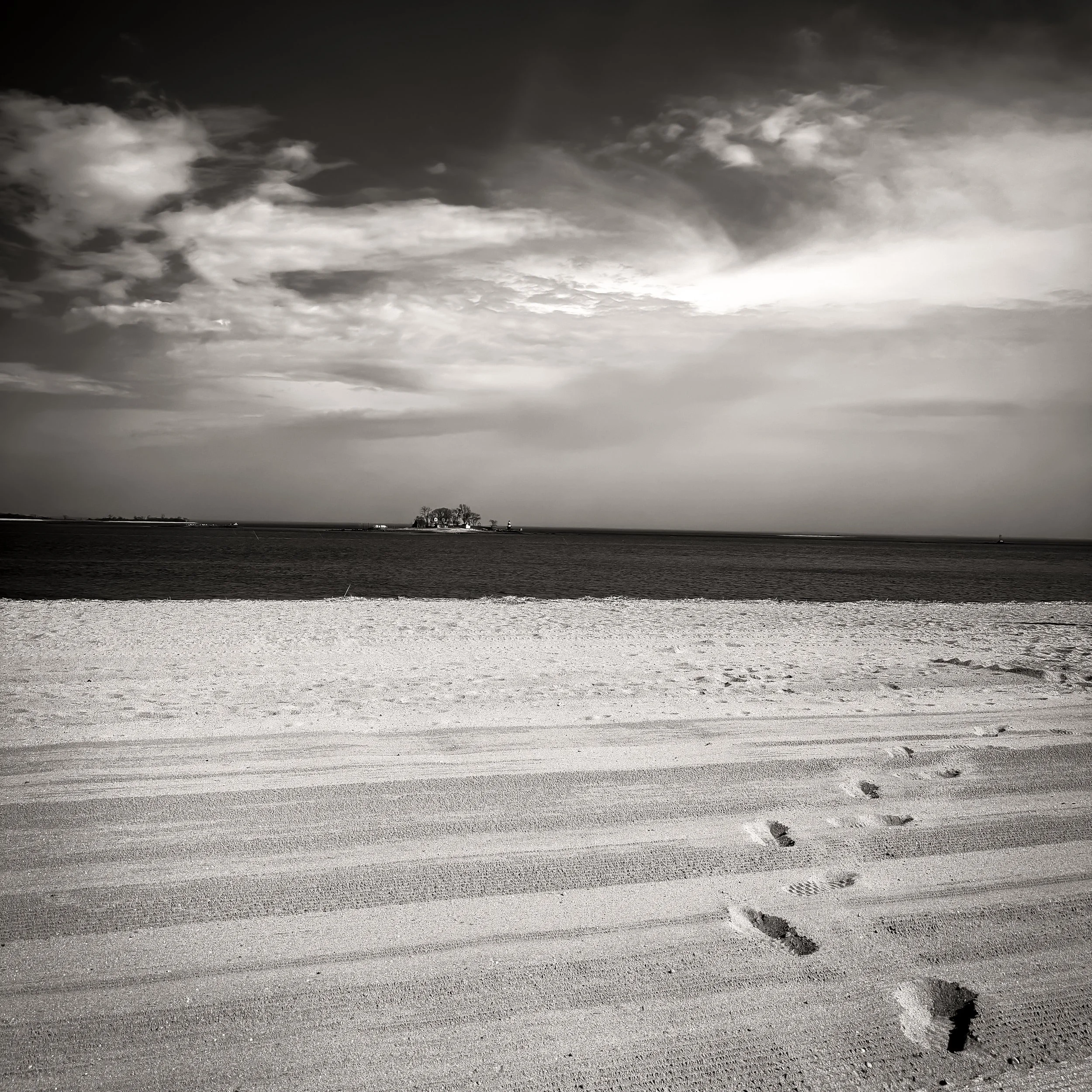
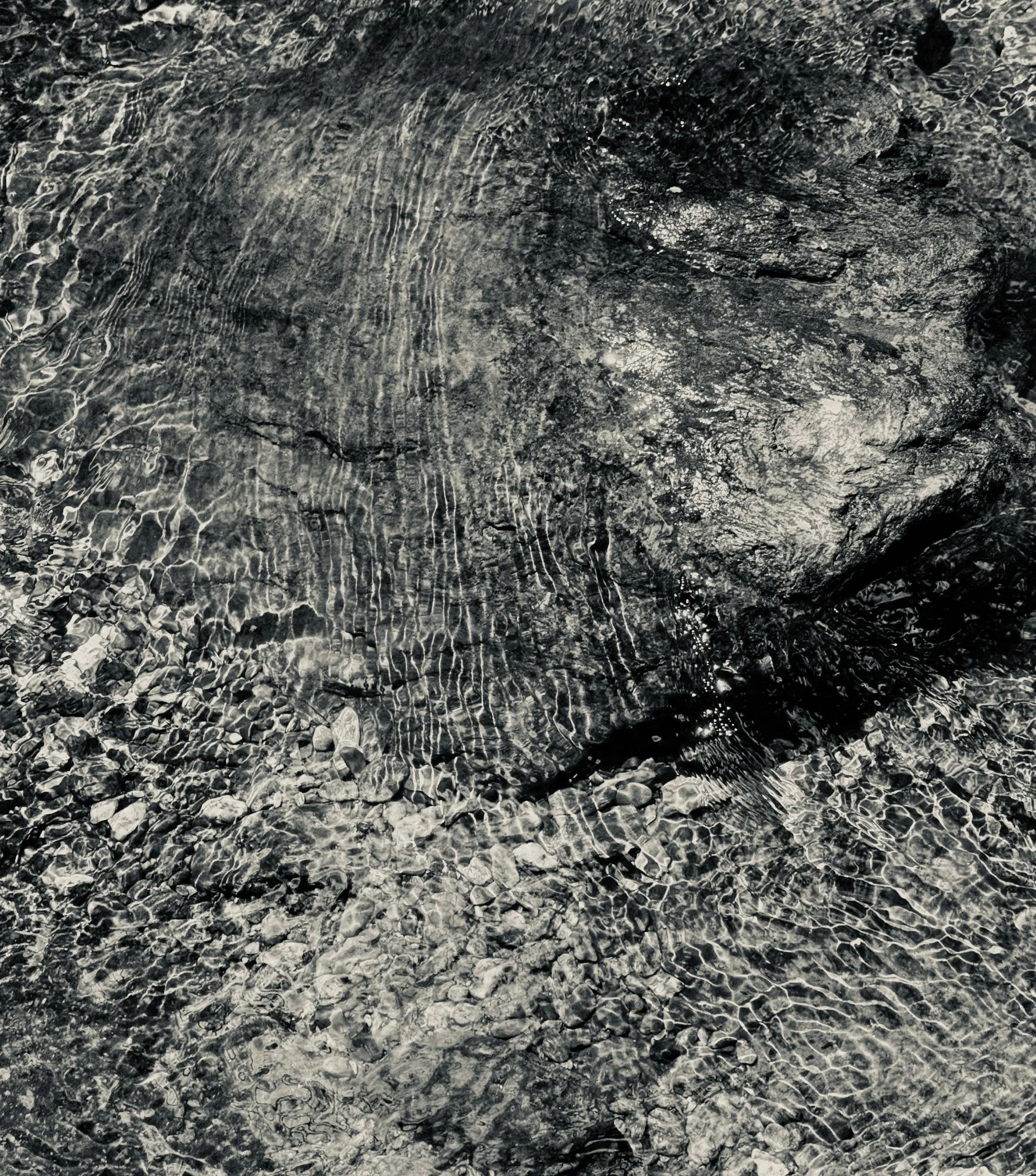
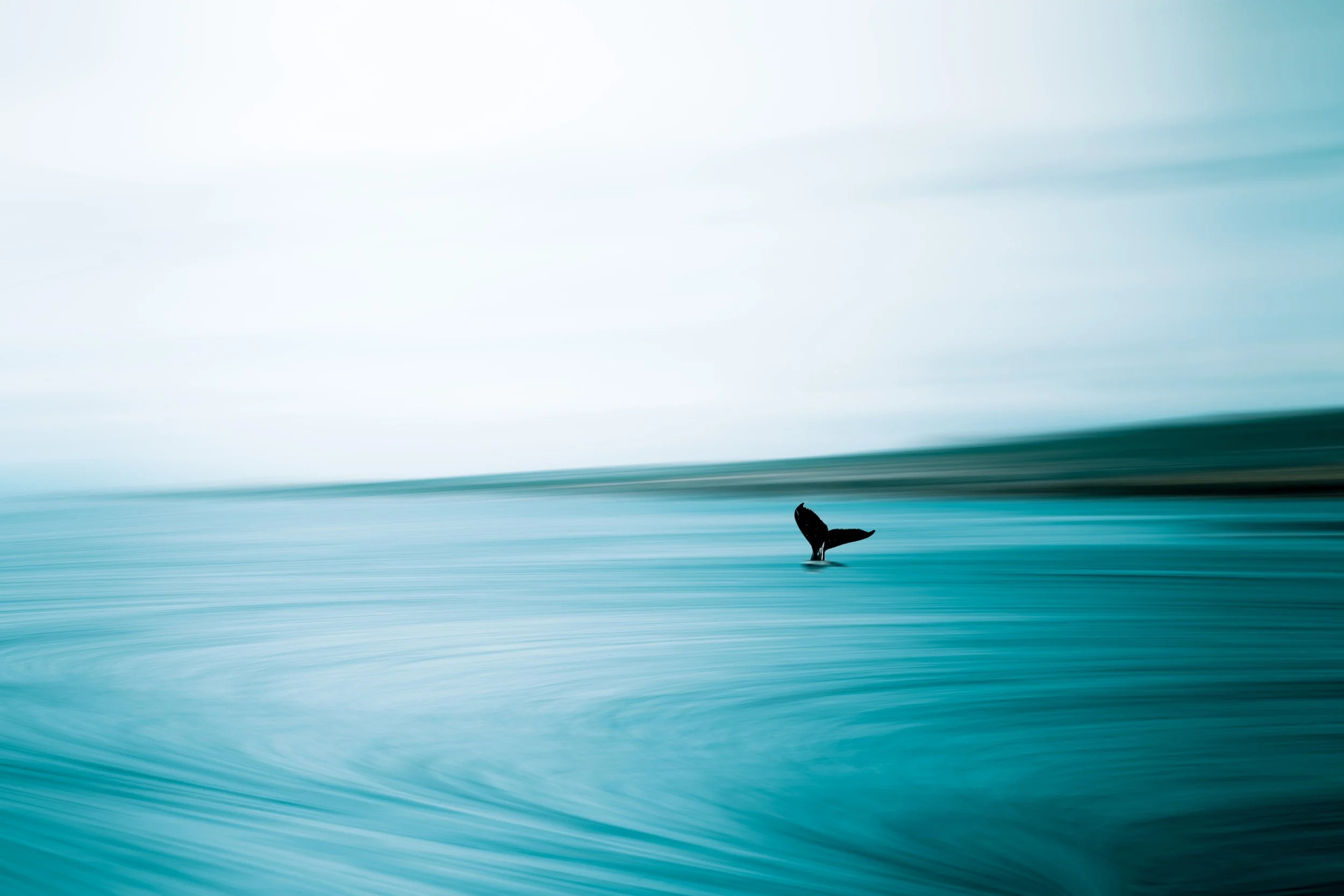
Does this sand have patterns? Millions of people have sailed on these oceans, some to the Americas. In boats. Do they follow a pattern? Are maps patterns?
Ana Perches
Maureen Fitzmahan
Anshin - Union Vale, New York
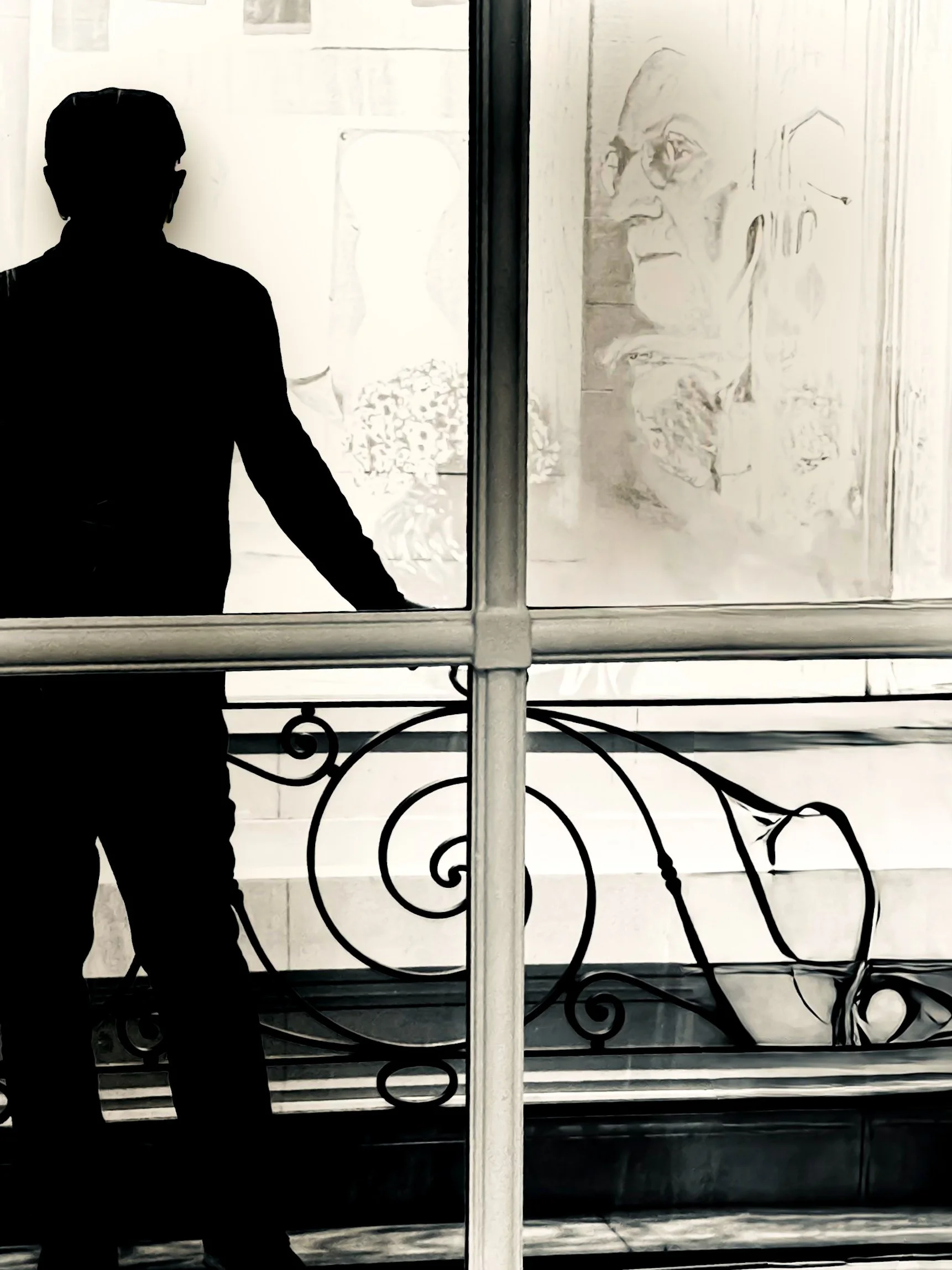
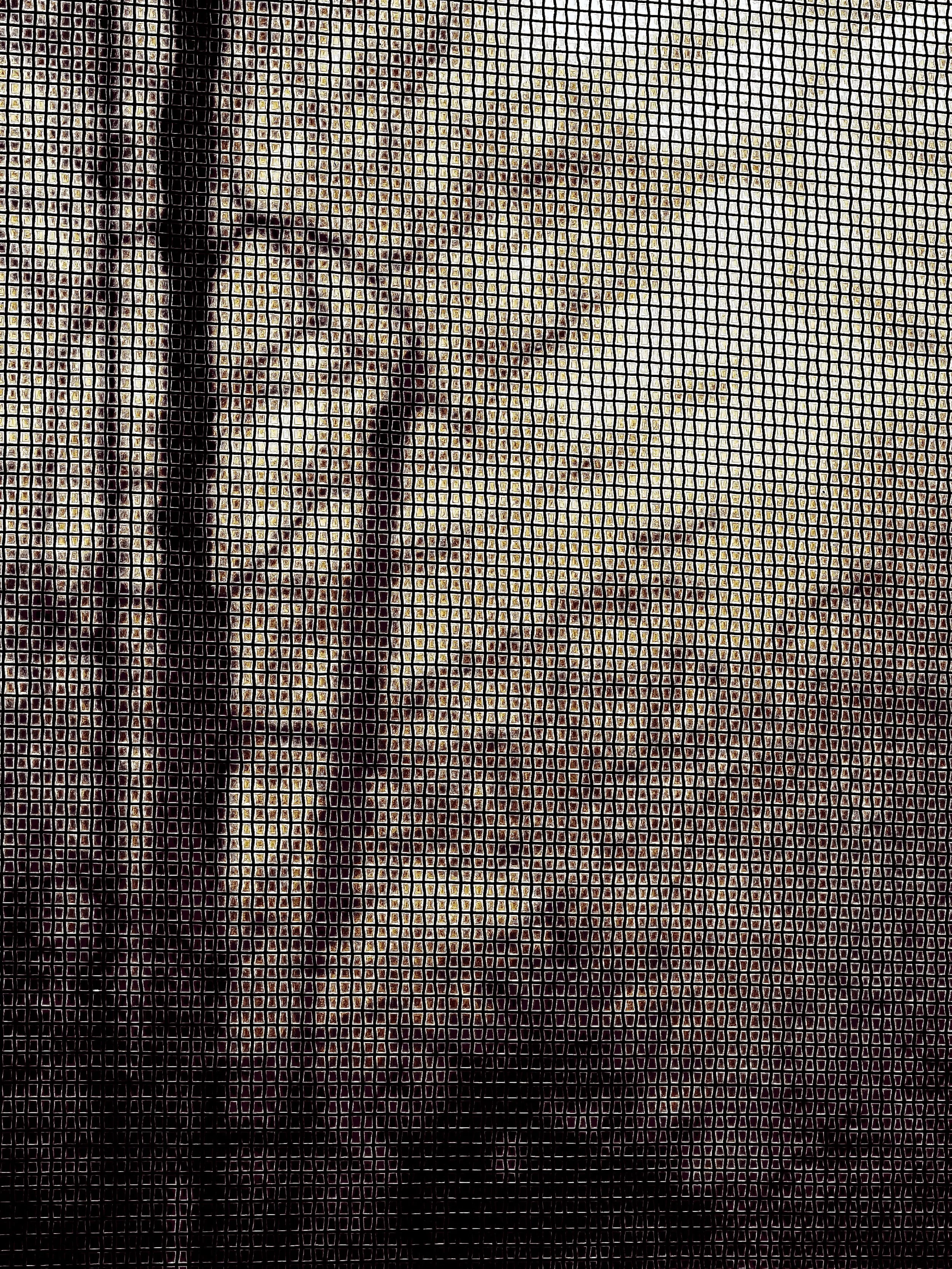
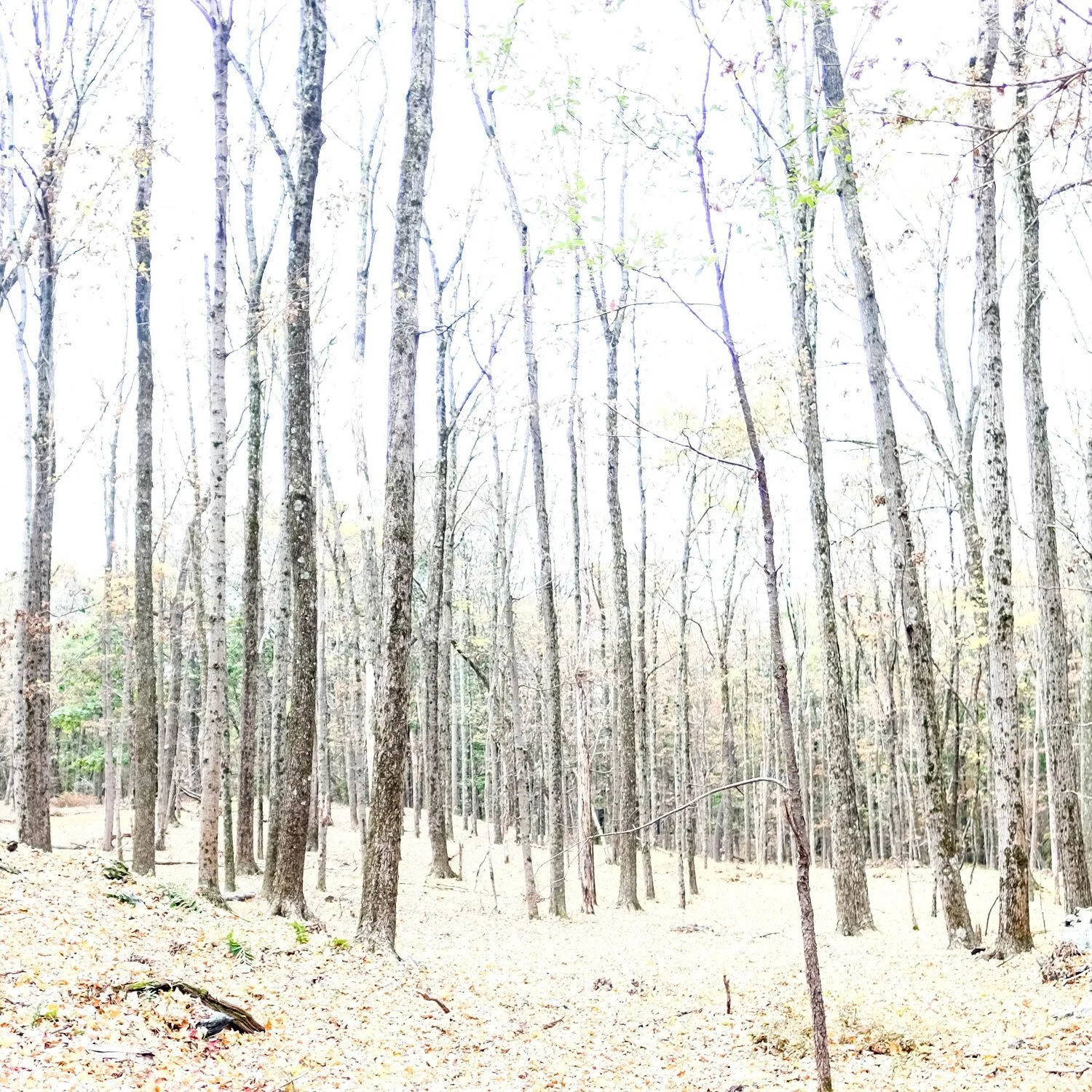
Usually, I look to find a photo that is perfect. But, is it perfect? I took this photo through our screen window. I like the patterns of the squares. There is something here about juxtaposing the woods against humans. Something philosophical. (I’ll have to work on this explanation for our salon.)
Erin Mahollitz
Taconic State Park, New York
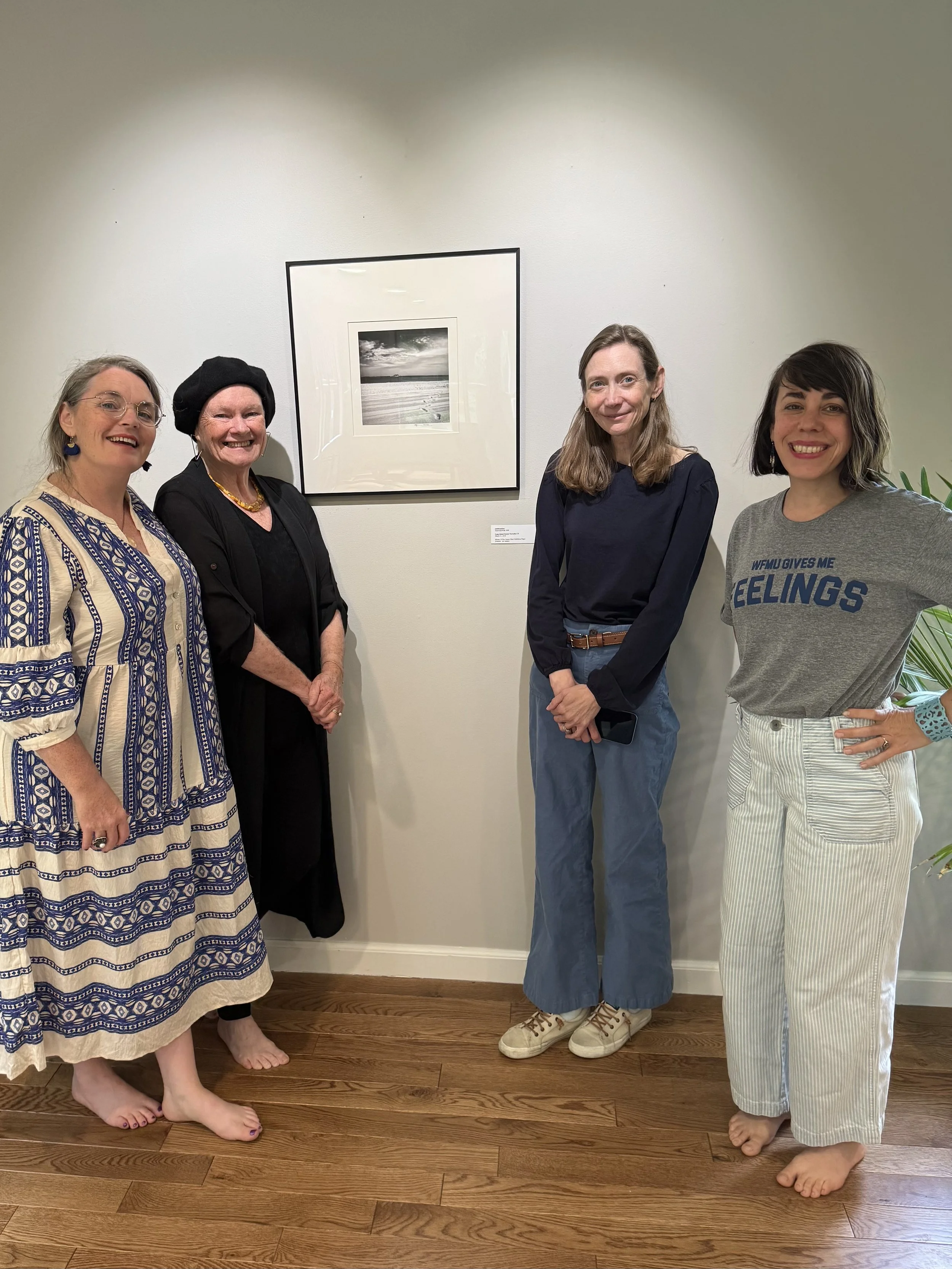
The artists
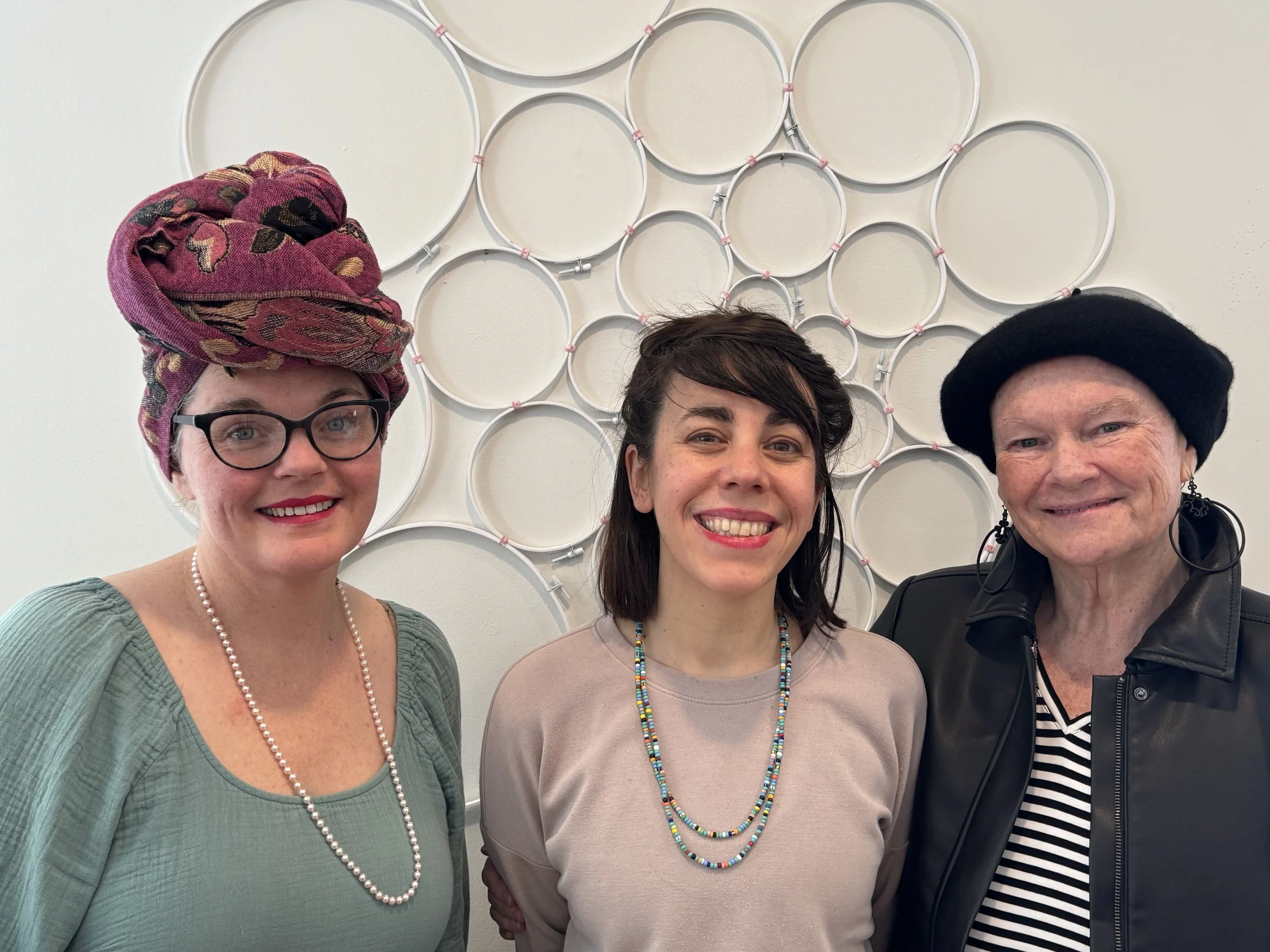
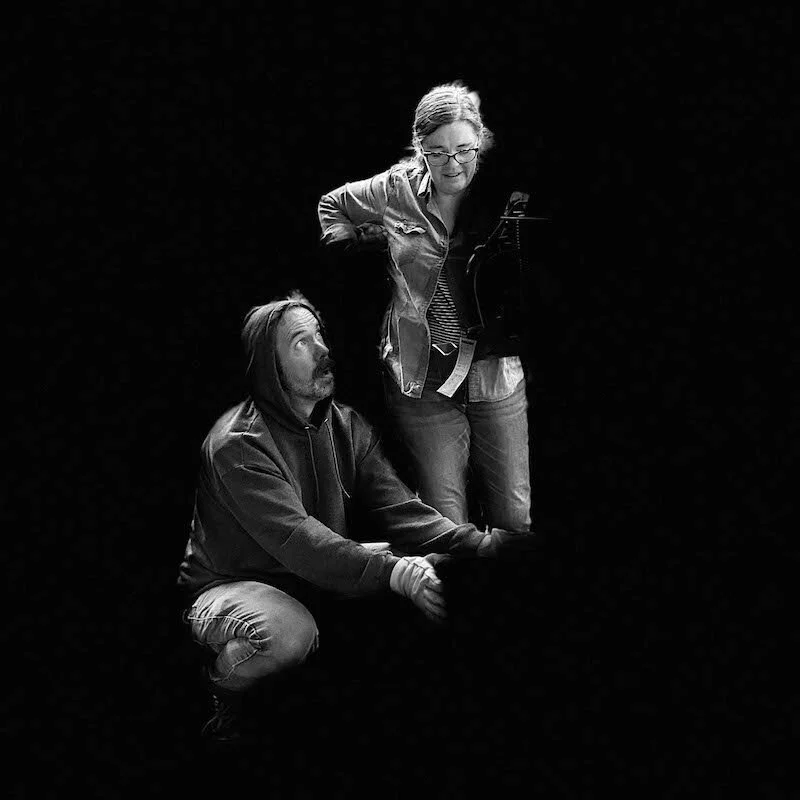
Erin Mahollitz, Eliza Romanyschyn, and Maureen Fitzmahan
February 21, 2026, Union Vale, New York
Erin Mahollitz
Anshin (Union Vale), New York
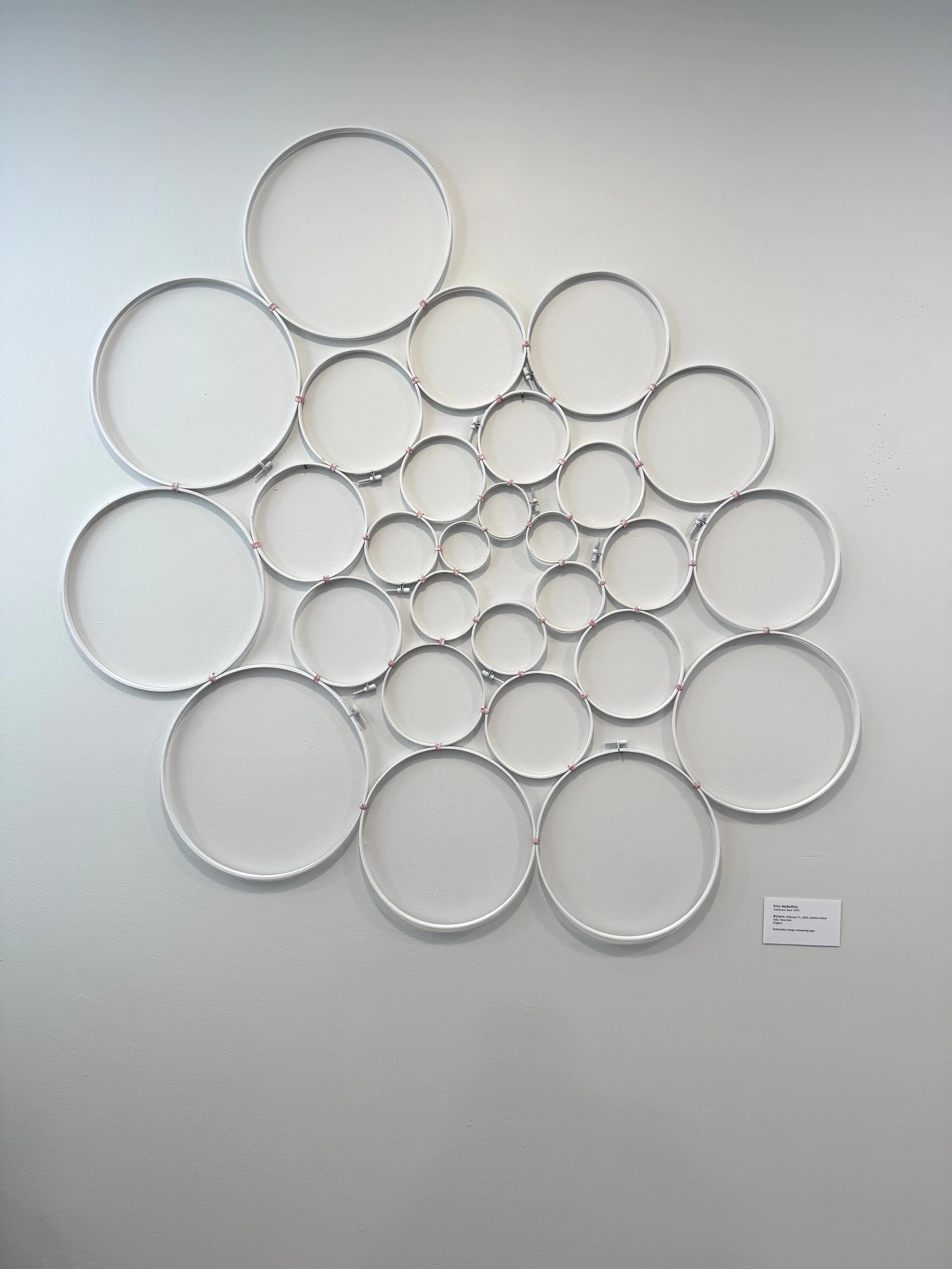
return
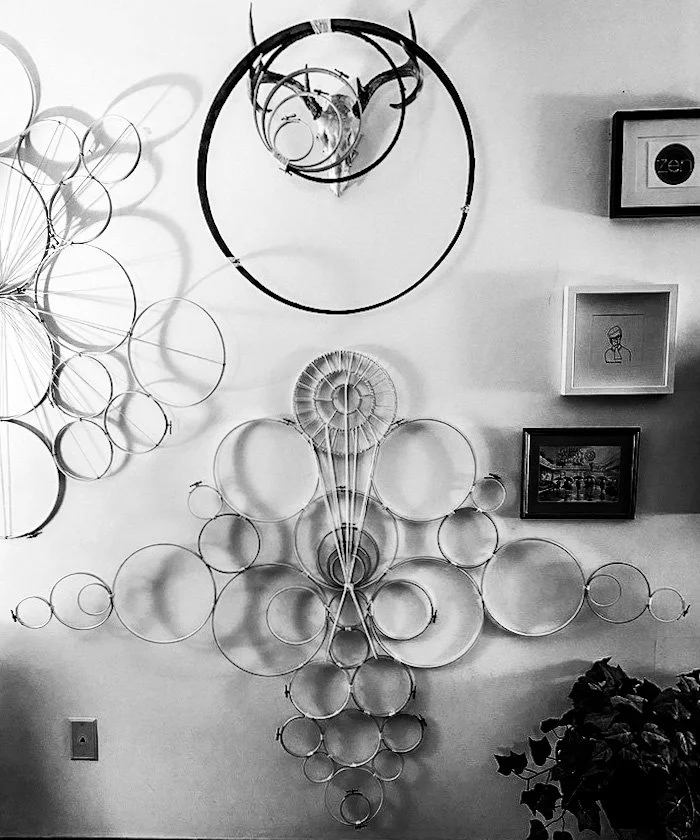
Erin Mahollitz, b. 1979
Return, February 21, 2026, Union Vale, NY
Embroidery Hoops and tape
Eliza Romanyschyn
Shawangunk, New York
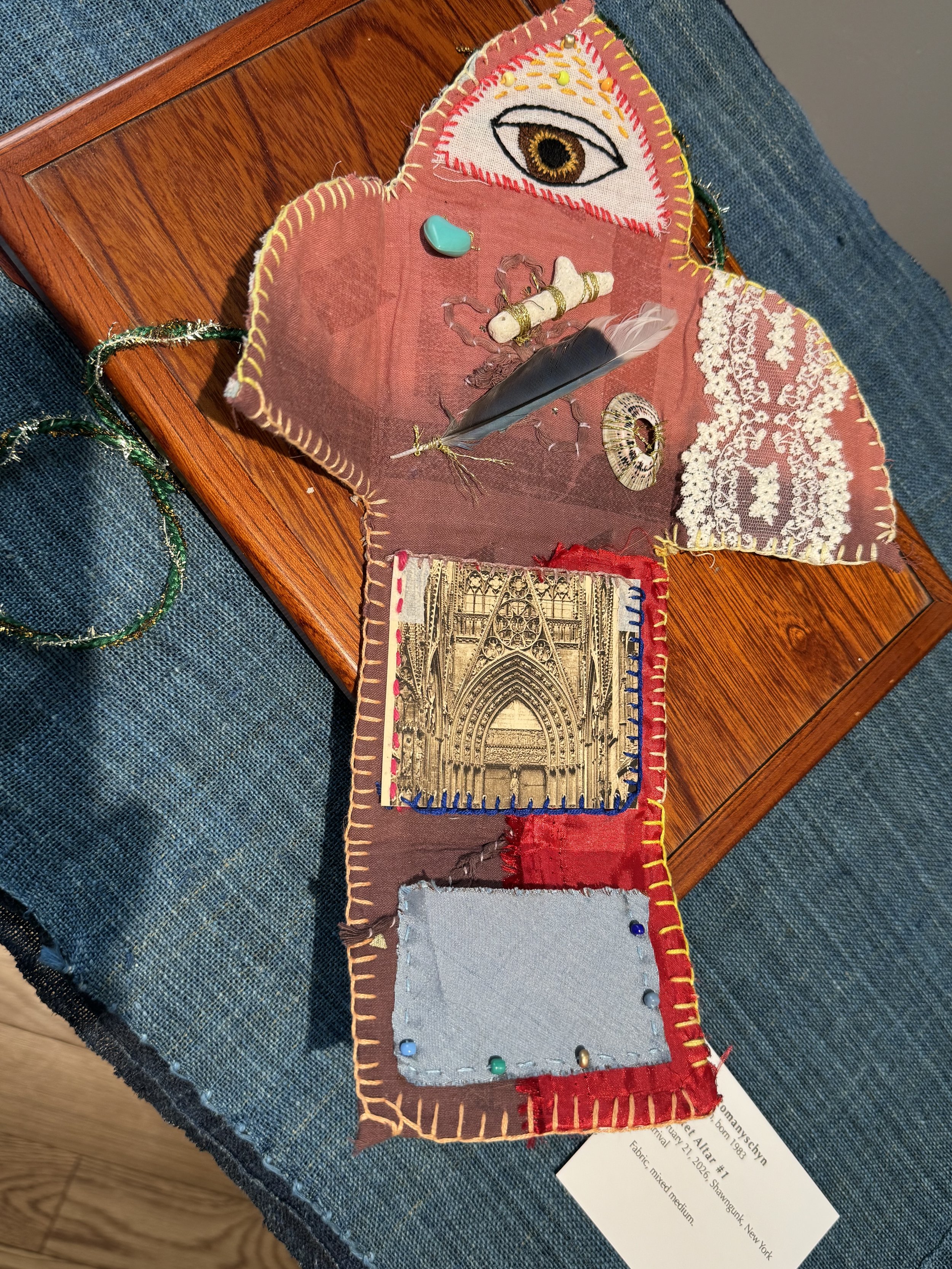
pocket Altar #1
Eliza Romanyschyn, b. 1983
Pocket Altar #1, February 21, 2026, Shawangunk, NY
Fabric, mixed medium
Maureen Fitzmahan
Anshin (Union Vale), New York
Intitulada
Maureen B. Fitzmahan, b. 1948
Intitulada, February 6, 2026. New Havana-Miami, Florida
Black and White Photograph on Epson Exhibition Fiber paper.
katie strange
Vashon Island, Washington
mOrning meditation
Kaitlin F. Strange, b. 1986
Morning Meditation, March 4, 2026. Vashon Island, Washington.
Photography, Color.
aNa perches
Berkeley, California
J’arrive
Ana Perches
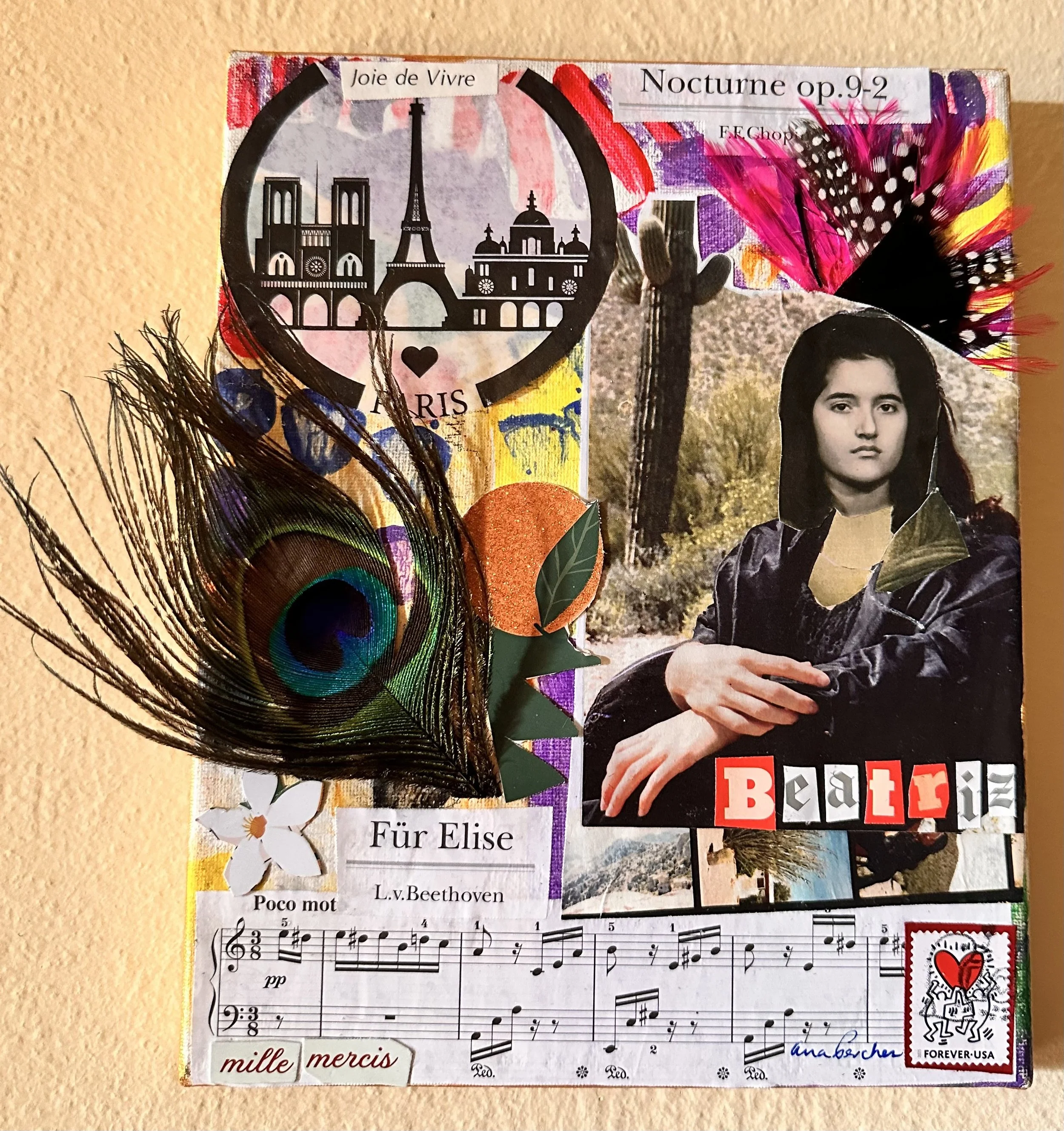
J’arrive, March 28, 2026. Berkeley, CA
Collage, mixed media on canvas.
***
When we die we arrive somewhere.
***
My sister Beatriz was born in Mexico in 1951. She arrived in the United States in 1962. She went on to live in Quebec City for several years and then in Paris for also several years. Then Vancouver and San Diego. The photo of the collage is of Beatriz at age 15. If Leonardo had met her, he would have made her portrait.
Hi Maureen and all Junketeers, I am sorry I can not join you today. Jonathan and I are in El Paso for a Celebration of Life for my sister Beatriz who passed away last month. She was almost 75 and had severe dementia these last few years.
The title of my piece is J’arrive, - French for I arrive, but the expression really means ‘I’m coming.’
brian nelson
Berkeley, California
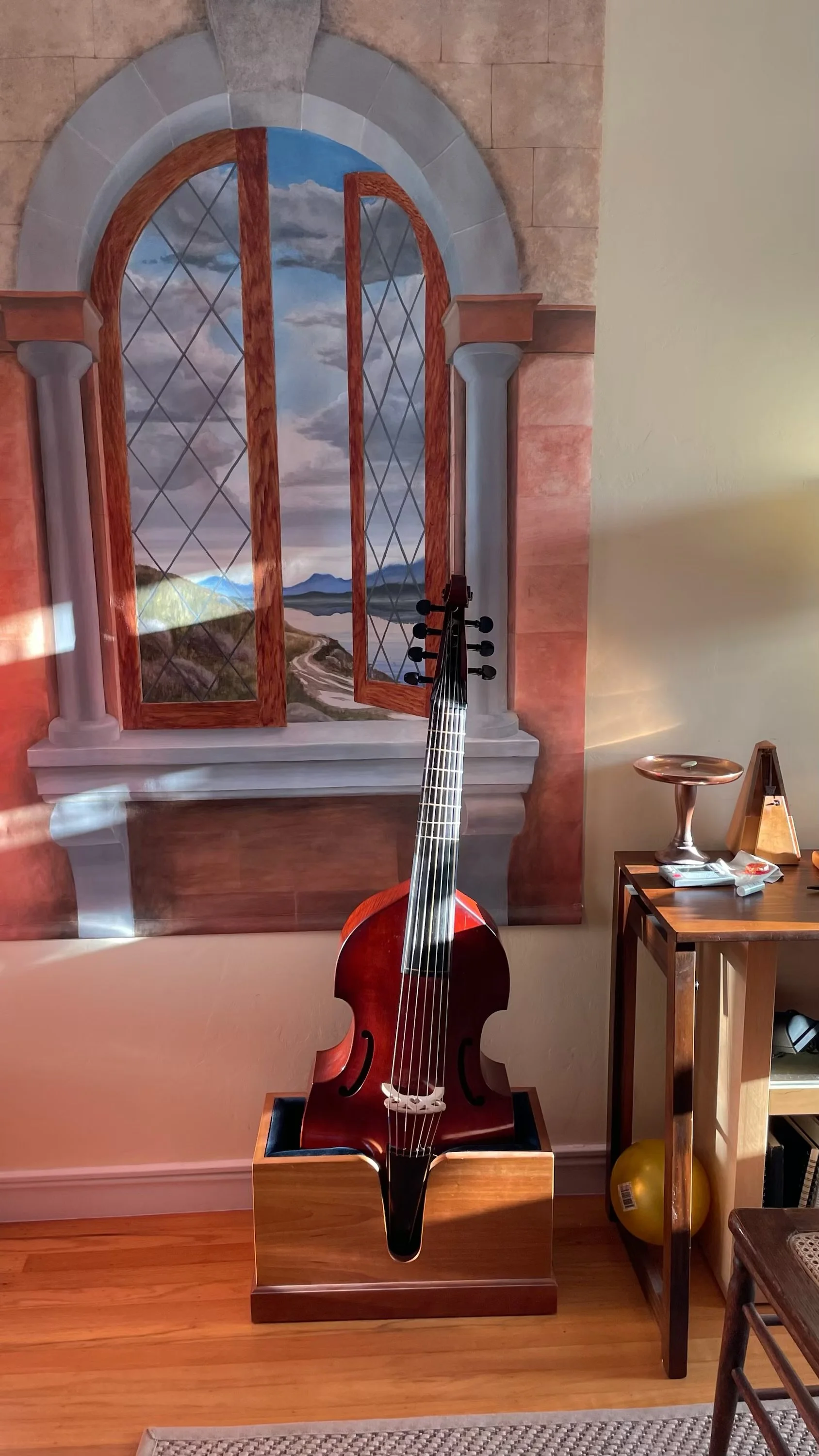
Viola da Gamba
Viola da Gamba and Metronome at the Window 2025
I think of Brian as a great art photographer. But, never limit this great artist to just one medium. Now, he is playing with sound. Studying the Viola de Gamba.
Arrival of the Frogs, March 2, 2026. Brian Nelson. Berkeley, California.
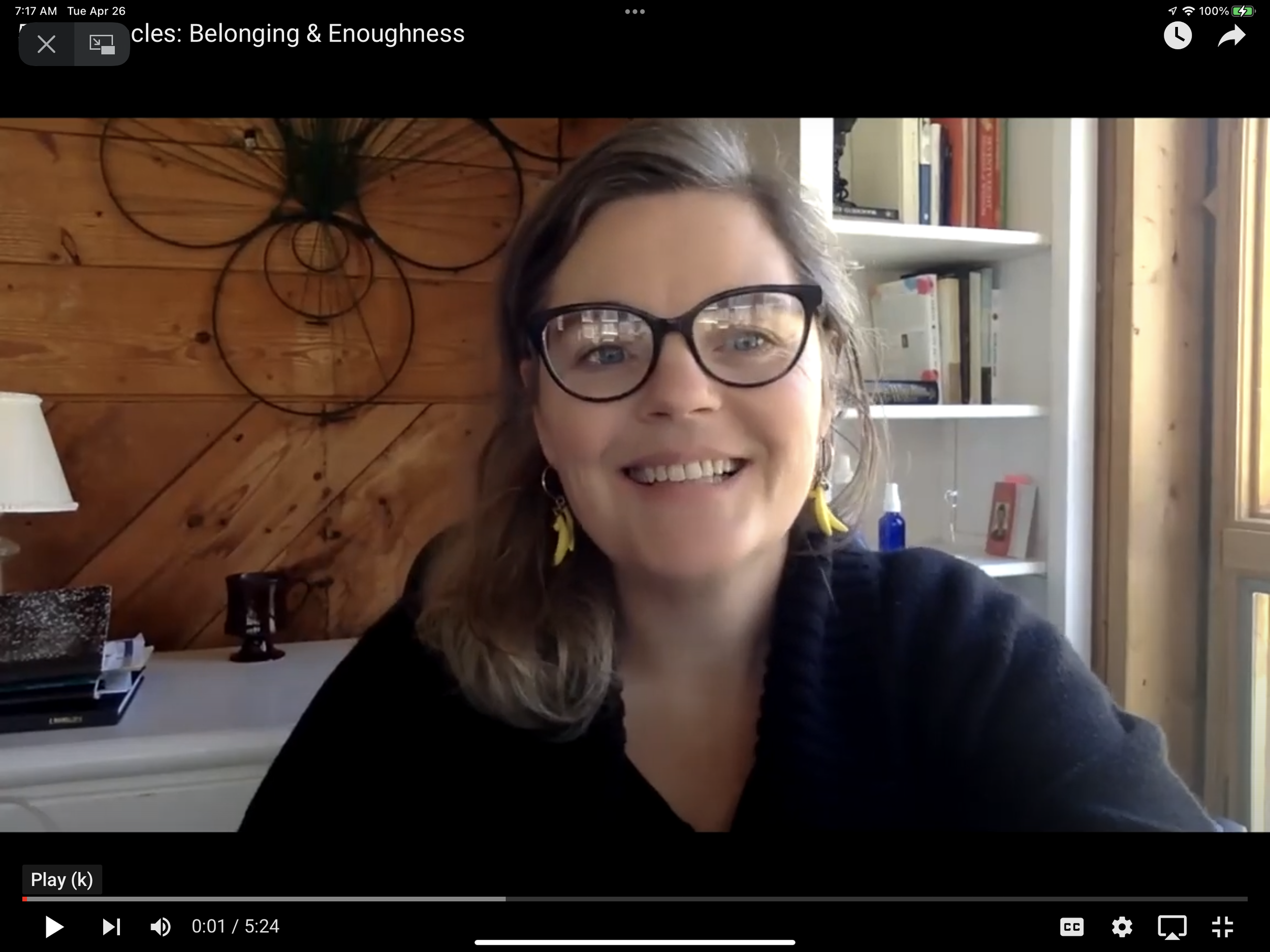
Note: Click on image to watch Erin’s video explanation.
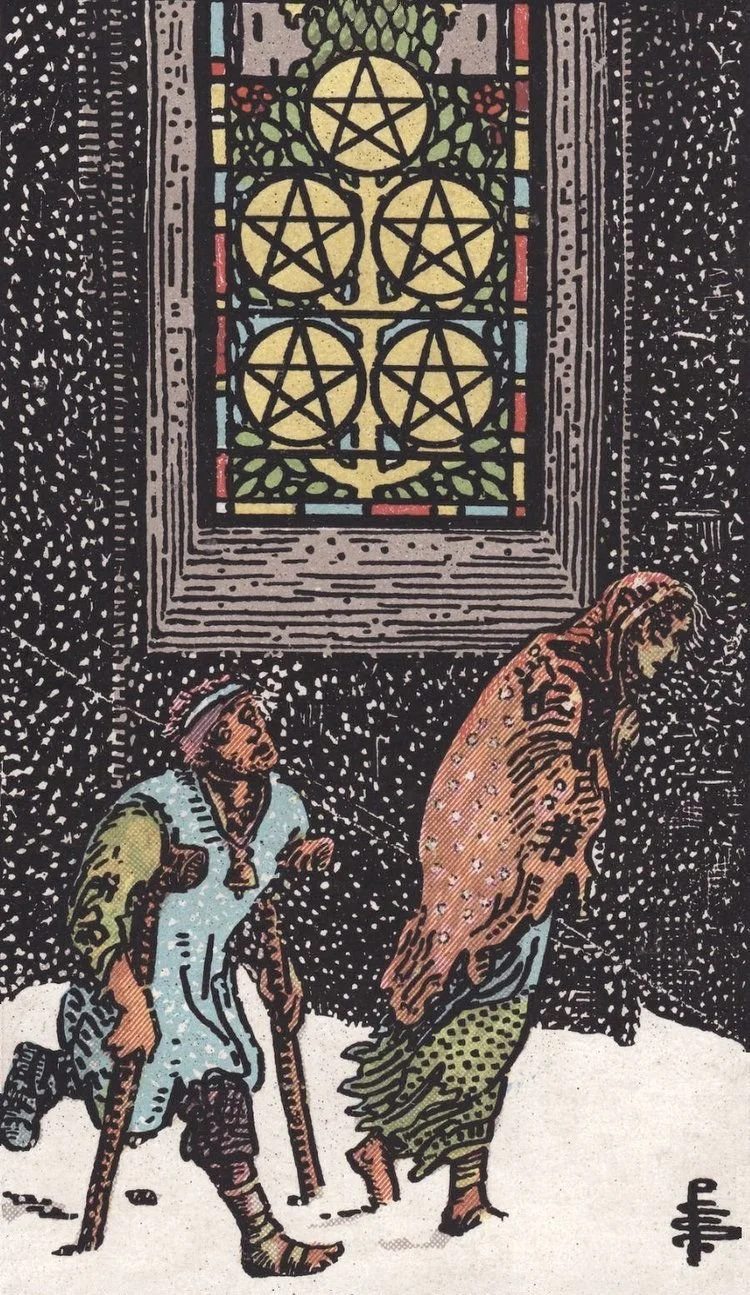
PENTACLES:
Pentacles are related to the EARTH element.
I think of the Pentacles as a symbol of a thing with the spirit, the spirit of a thing.
The Pentacles can relate to our body, our routines, our homes, the things that we have.
They are also connected to our sacred / meaningful work.
FIVE:
The fives in the Tarot reflect the energy of change. And, in the case of the pentacles, that change can feel unstable. Suddenly what used to feel like enough, is not enough. We are in pursuit of abundance and reciprocity, but in order to get there, we must allow for our environment, our work, our finances, and our bodies to change. This is the card where our physical reality does not match our hopes and dreams.
Rejection: These folks are not allowed in the sanctuary. Or perhaps more likely is that the characters do not see themselves as worthy and they are afraid of rejection.
Waiting for a Better Place: Perhaps the church is not their safe place. Maybe they do not enter because to do so would be out of alignment with their true values. They would rather sacrifice comfort than compromise on their values.
YOU are the Sanctuary: What if YOU are the safe place! You are being asked to create a safe and sacred community where the downtrodden can come and experience enough-ness and belonging.
In the Waite-Smith Tarot deck, we see two downtrodden people passing in front of a cathedral. Here are a few stories that emerge from this scene, all of them pertaining to the notion of “belonging.”
Rejection: These folks are not allowed in the sanctuary. Or perhaps more likely is that the characters do not see themselves as worthy and they are afraid of rejection.
Waiting for a Better Place: Perhaps the church is not their safe place. Maybe they do not enter because to do so would be out of alignment with their true values. They would rather sacrifice comfort than compromise on their values.
YOU are the Sanctuary: What if YOU are the safe place! You are being asked to create a safe and sacred community where the downtrodden can come and experience enough-ness and belonging.
With the physical comforts of life in flux because of the 5-like energy of change, this card can make us feel like the World doesn’t like us. We have dreams. We have desires. We have needs. But, they are not manifest. You know your life is supposed to look different/better… this is about your relationship with that experience. How do you find enough-ness and a sense of belonging when things feel so uncertain?
I think about Brené Brown’s work with belonging. Her data shows that fitting-in is the antithesis of belonging. Fitting-in is where you tweak and adjust yourself to fit into a group. Belonging is happens when you find connection from a vulnerable and authentic place. In the five of pentacles place, you have made the shift. You are no longer willing to compromise who you are in order to fit-in. You are waiting in the discomfort for people to join you now that you showing up in a much more authentic way.
Words and YouTube video: Erin Mahollitz.
Erin Mahollitz is a founding member of the Art Junket (2015-2022)
The Art junket Salon: Echo
Stand with your ear right up against the tile work in the domed intersection of walkways on the lower floor of Grand Central Terminal in New York City and you’ll discover a secret: a corner-to-corner whispering gallery. The quietest song or “I love you” can be heard all the way across the hall just as if you were standing right next to one another.
April 3, 2022 Art Junket Salon
Congratulations! Happy 7th Anniversary of the Art Junket - 2015-2022.
The Art Junket Salons are still showing and sharing. I wont lie. It has been a bumpy ride and at times I feared, “Well, I guess this is the end of the Art Junket.” Many of us moved out of the Bay Area and some of us have missed Salons. Some of us just felt tired. Uninspired. But, this Spring seems different. It looks like artists are getting some energy back. And with this new energy, I am seeing artists expanding their creativity, trying new things.
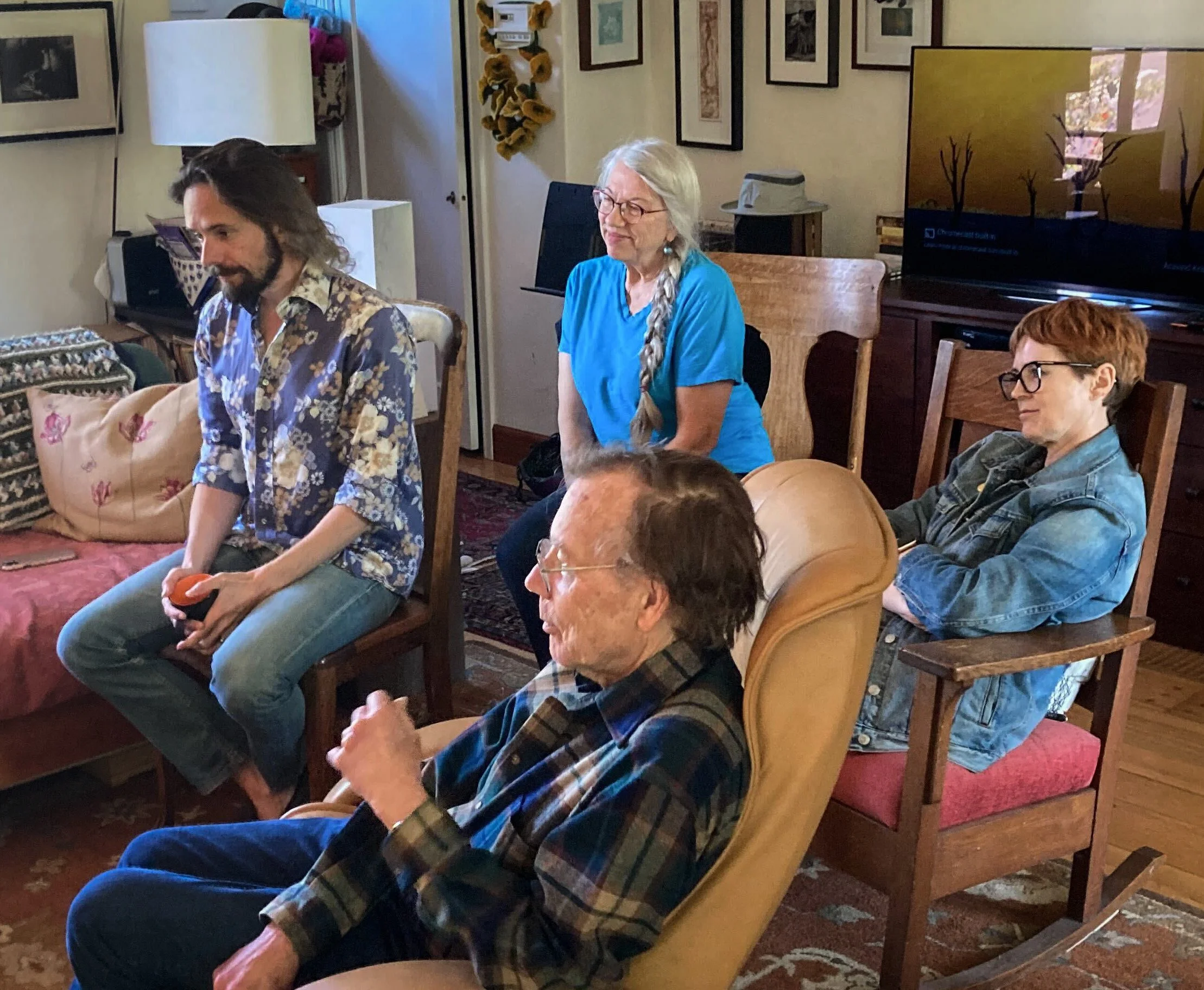
A summary of the stories from the Junketeers:
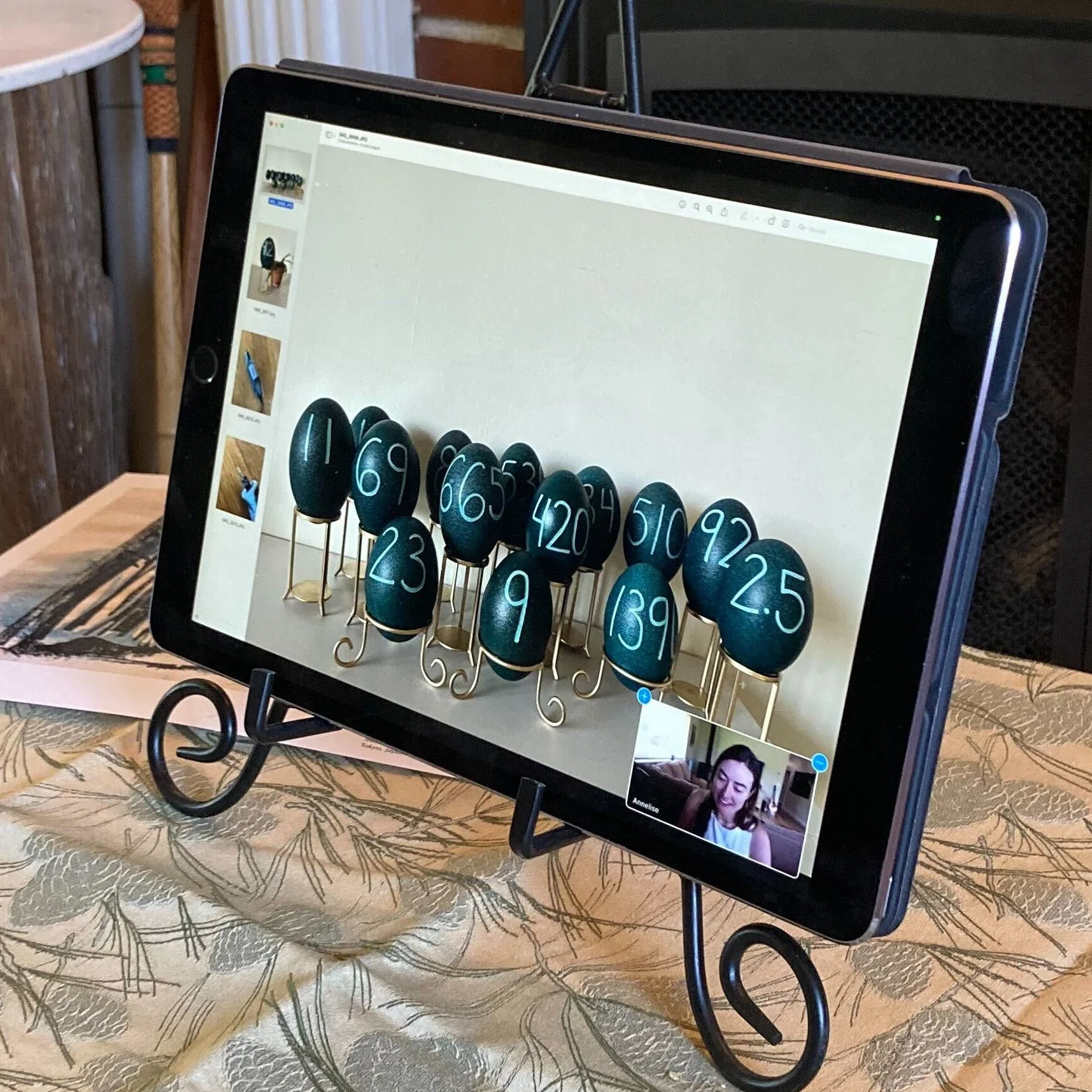
Annelise Dohrer is getting married and made art with Emu eggs. Katie Fitzmahan Strange went to Barcelona, started a PhD program, had a baby, came back, and bought a home on Vashon Island. Erin and Maureen bought 20 acres of woods in New York. Erin set up a business: Magical Homemaking. Brian and Manya are re-renovating their home. Maureen moved to Tokyo in 2021 and she is making mokuhanga (woodcut printing) prints. Tao is working at Alta Vista School in SF. Tony is making music. Zoey moved to Nevada City and is thinking of using a different color. Katie was invited to put on a gallery show on Vashon Island. Taska and Karianne took a challenge on “Slack” to make 100 pieces of art, one piece a day. Taska joined the Salon from the ski slopes of Palisades and showed a 3 dimensional work echoing the mountains. Erin made an art piece depicting a painful experience from middle school and then cut away the power those memories held over her. Yun took her photos from Hawaii using Photoshop and made a mesmerizing and calming experience.
Karianne Jones Silverman, USA b. 1969. Empty. El Cerrito, California. 2022. Paper, wire, tempura. 7”x12.” Art Junket theme: Echo.
The theme of Echo was so big for me I wasn’t sure I could focus it into one project. I started collecting toilet paper rolls thinking something might come of it. Then I found myself with ever-increasing anxiety about climate chaos and became unable to throw away stuff. ‘I can’t contribute to the overflowing landfills, I must use and repurpose all of the stuff. We are emptying our resources on this planet. We think it’s limitless. We are emptying bowls that can’t be refilled.’ My anxiety got to be too much. It’s channeled in this piece called Empty.
Yun Suh. Flow. Digital Art, Photography. Hawaii. 2022.
Annelise Dohrer. Ume Eggs with Numbers of Life. April 2022. California.
Erin Mahollitz. Anshin, New York. April 2022.
Taska Sanford, USA, b 1974. Wandering-Mountains in Echo. Palisades Ski Resort, Lake Tahoe, California. April 2022. 6" x 9" x1", closed. The Art Junket theme: Echo
Echos travel through air. They range and seek out surfaces to ricochet around. Each contact changes the original sound waves slightly. What we do on the surface of the planet echos down into the earth. Each strata holds a record of our noise, but with slight differences. Deep time muffles our marks. I traverse the page with a scratching stylus and record the nuances.
Taska Sanford. Day 10/100. February 2022.
mbfitzmahan, USA & Ireland, 1948. Ume Plum. Tokyo, Japan. April 2022. Mokuhanga (Japanese wood cut print) and sumi ink. Art Junket theme: Echo.
I interpreted the Echo theme by taking my art medium of photography and ‘echo’ it onto another medium, wood cut printing. Living in Japan, it seemed appropriate to learn an old Japanese art form and apply it to the art form I am most familiar with, photography. I hand made a carbon copy of my photograph. I carved the images onto 3 pieces (woods image) or two pieces (ume blossoms) of Shina woodblock, and then applied water based pigments to each woodblock. Finally I took moistened washi (Japanese fabric based paper), covered the block and pressed the image onto the paper. The first image is from a photograph of an ancient Japanese screen. The second is from a photograph of Anshin - our 20 acres of woods in New York.
mbfitzmahan, USA & Ireland, 1948. Anshin. Tokyo, Japan. April 2022. Mokuhanga (Japanese wood cut print). Art Junket theme: Echo.
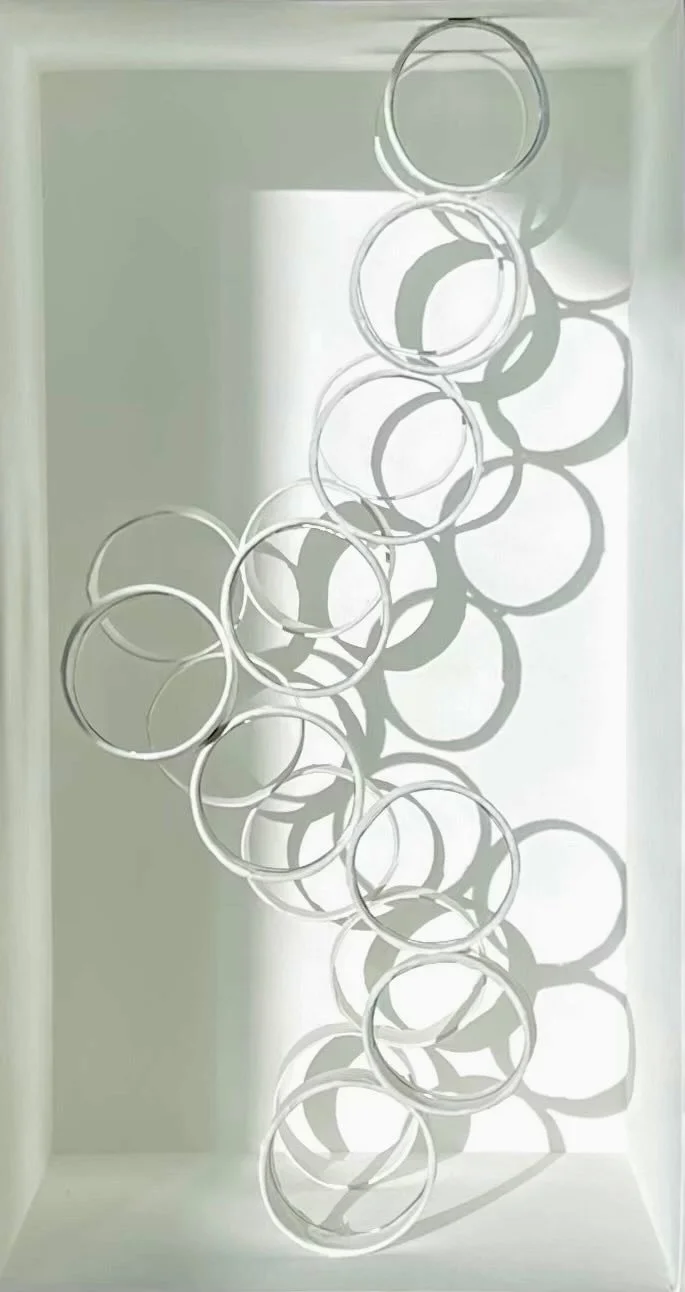
Manya Nelson. Life and Death. El Cerrito, California. April 2022.
Karianne Jones Silverman. Berkeley, California. March 2022.
Brian Nelson. Echo. El Cerrito, California. April 2022
Karianne Jones Silverman. Day 4/100. February 2022.
Let’s talk about lies.
I'm the most terrific liar you ever saw in your life. It's awful. If I'm on my way to the store to buy a magazine, even, and somebody asks me where I'm going, I'm liable to say I'm going to the opera. It's terrible. J.D. Salinger, The Catcher in the Rye.
Lying is news. Lies versus Science. Lies versus Nature. Lies versus democracy.
Who do we turn to for the truth? God? the Dalai Lama? Dr. Fauci? My mother?
Lying is not new. We seem to have been making up lies from time immemorial - all the way back to the dinosaurs. “I killed the biggest mastodon in the world,” Jontu said. Shocked, Tody said, “Really? That Neanderthal lady over there said she killed the biggest mastodon.” “No way! My mastie was bigger than hers,” Jontu protested. And then Jontu ran over and hit the lady on the head with his big stick.
Do you think other animals lie? Or do humans have a corner on falsehoods.
Oscar Wilde, my favorite Irish humorist, wrote a whole essay on lying.
“Facts are not merely finding a footing-place in history, but they are usurping the domain of Fancy, and have invaded the kingdom of Romance. Their chilling touch is over everything. They are vulgarizing mankind. The crude commercialism of America, its materializing spirit, its indifference to the poetical side of things, and its lack of imagination and of high unattainable ideals, are entirely due to that country having adopted for its national hero a man, who according to his own confession, was incapable of telling a lie, and it is not too much to say that the story of George Washington and the cherry-tree has done more harm, and in a shorter space of time, than any other moral tale in the whole of literature.” (Oscar Wilde. The Decay of Lying. 1905.)
Well, Oscar Wilde needn’t worry. Some politicians find that truth is just an inconvenience. Who votes for an honest man, anyway?
Ah, I get distracted. I was going to talk about art, lies, and the self portrait.
I hate making self portraits. I want to be thinner. And have long red hair, a svelte body, long legs, and great clothes.
When I make a selfie or paint my picture, I have to redesign my smile. I don’t know what happened to my cute smile. It may have been the last to go. First, the great hair. Then the slim body. Then the smile. It’s hard work to recreate that devastatingly adorable smile I once had.
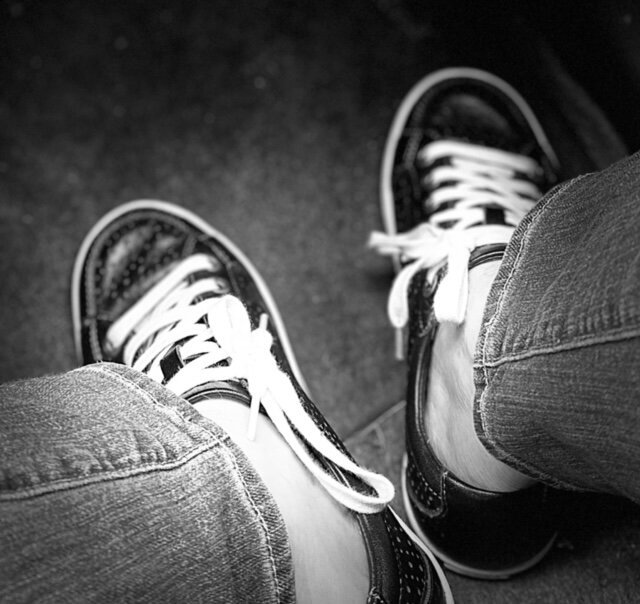
I still have great legs, though. Maybe I should just make a self portrait of my legs. Or, my tennis shoes.
Taska Sanford
When I was a boy of fourteen, my father was so ignorant I could hardly stand to have the old man around. But when I got to be twenty-one, I was astonished at how much he had learned in seven years. - Mark Twain.
Taska Sanford.
When my mom moved to California to live with us after he died, we found letters from me he had saved over the years. I wrote to him and my mom often during my years in college so far from home. My letters were more often than not addressed to Hosteen Coyote.
Coyote is by no means the only trickster in our collective consciousness. Coyote has many guises that run the gamut from silly, to self-reflective, to sexually deviant. That is quite a spread for one entity, but not unbelievable.
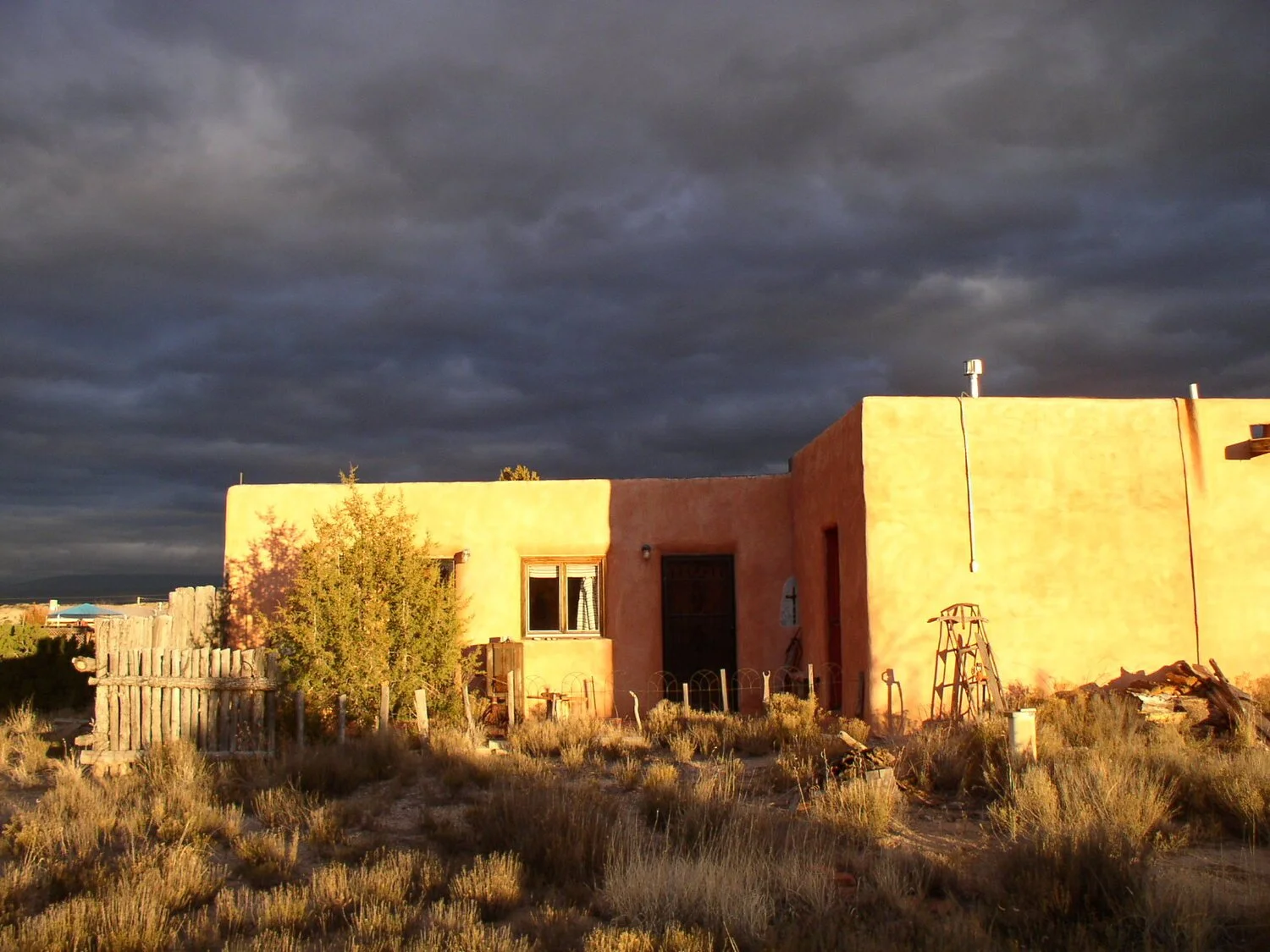
Our family had a little adobe tucked in the foothills of the Sangre de Cristo mountains in New Mexico. It was a magical place that certainly housed many spirits and beings even when buttoned up for the long harsh desert winter. Our family spent summers there wandering the desert with a collective urge of searching. We were always searching with eyes, ears, tongue, nose, fingers, and spirit. We voraciously read about the Navajo, Tewa, and Zuni. About cowboys, saints, and artists. Anyone who stopped just for a moment to breathe in this high desert-scape also felt that deep drive to search.
I think we are all searching for Hosteen Coyote. This elusive spirit will bring us fire and knowledge. It will laugh in our faces until we laugh back. Coyote holds up the mirror so we can see our true nature for the first time. We can even follow coyote back to the den, if we dare, for more tempting secrets. And like the desert itself, coyote is not always fun and carefree. Life lessons come with a cost. Sometimes we overlook the consequences of our thirst for more. Never underestimate coyote and never underestimate the desert. They are both more powerful than we are. And we humans need things that are bigger than ourselves.
When I look up to the galaxy cluster in the deep night and hear the yips of the coyote pups I know my place in the world again. Hosteen Coyote - father, trickster, and desert embodied pads through my heart and sends me to sleep body and spirit sated.
Taska Sanford is a member of the Art Junket in Berkeley, California (2018-2022)
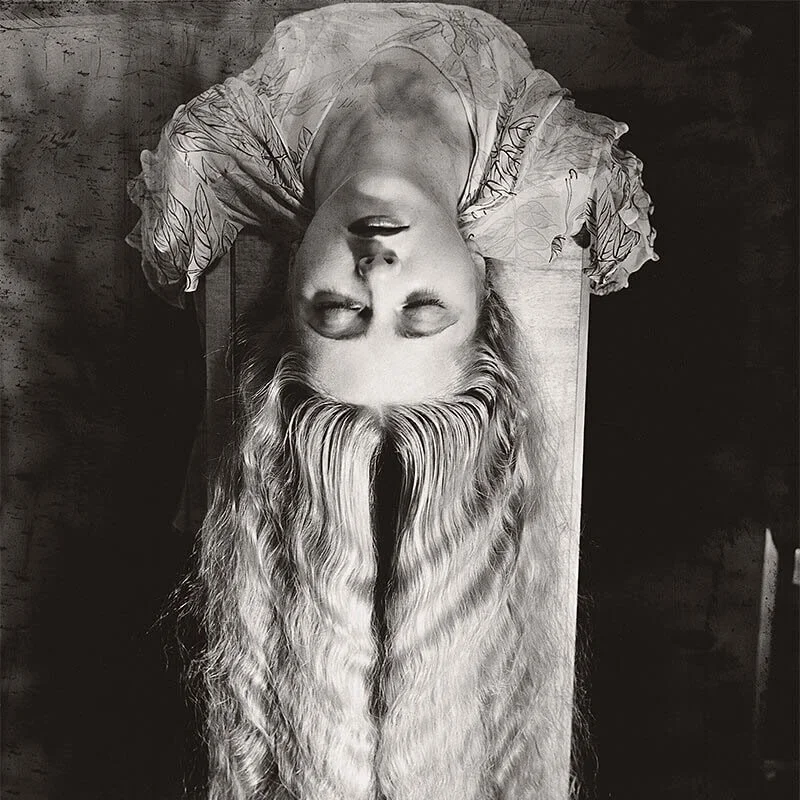
Man Ray, Woman with Long Hair. 1929
Go and make interesting mistakes, make amazing mistakes, make glorious and fantastic mistakes. Break rules. Leave the world more interesting for your being here. Neil Gaiman
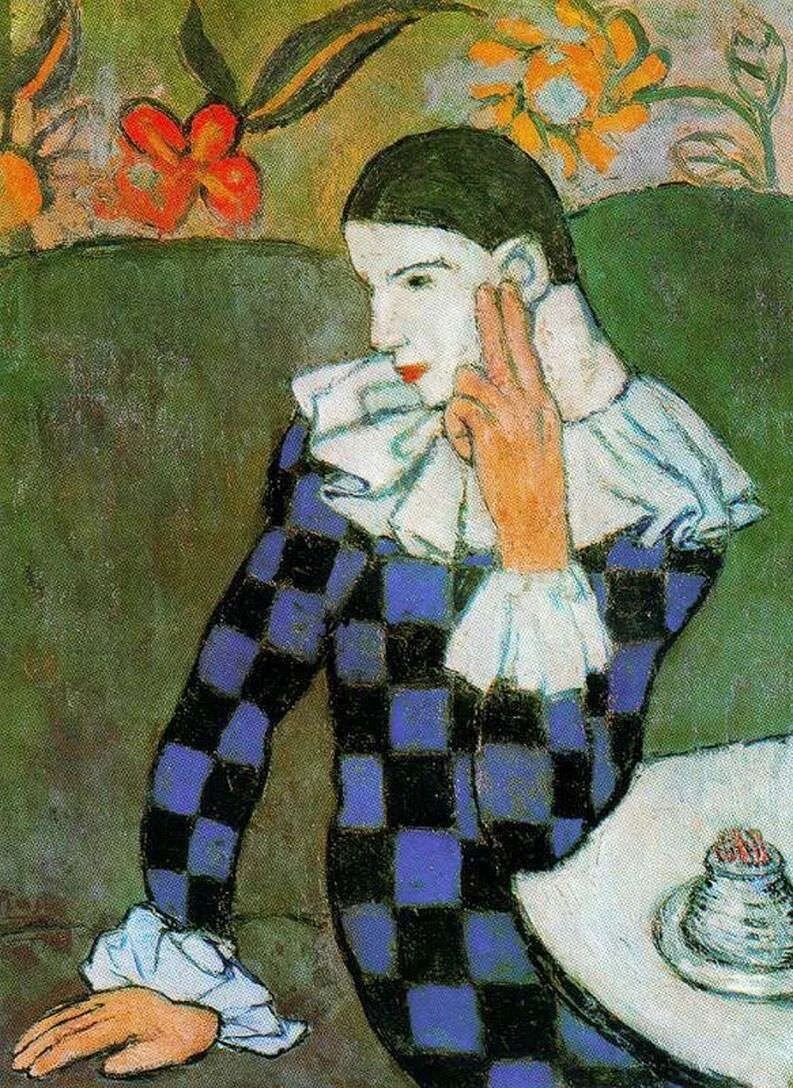
Pablo Picasso. Leaning Harlequin, 1901. Metropolitan Museum, New York. This painting marks the beginning of Picasso’s blue period. It is believed that Picasso painted this sad clown upon learning of the death of a good friend.
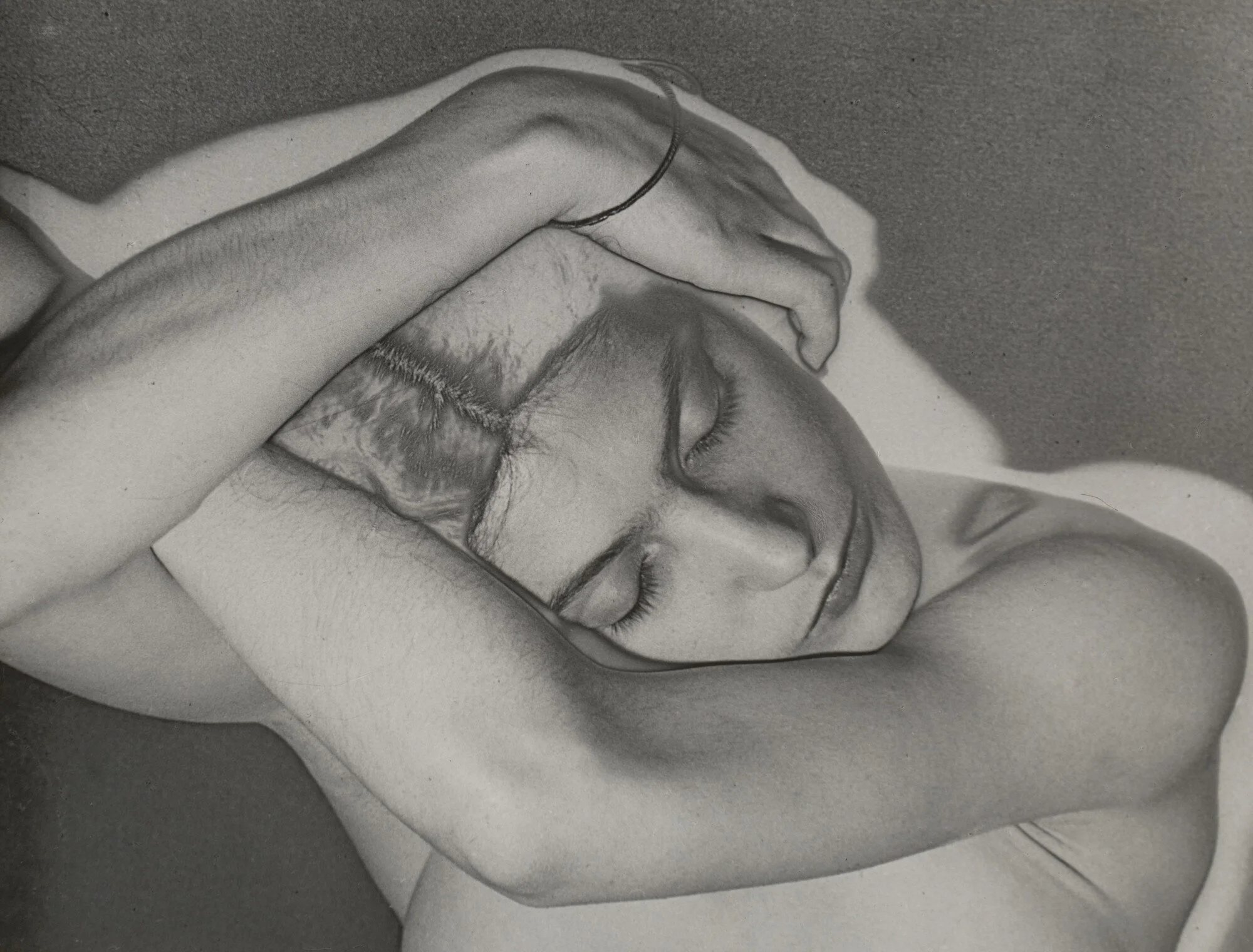
Man Ray (Emmanuel Radnitzky). Sleeping Woman (solarization). 1929. Museum of Modern Art, New York. Man Ray was born in America from immigrant Jewish parents. He moved to Paris in the 20s and was not bound by one art medium, but experimented in photography, film, painting, and sculpture.
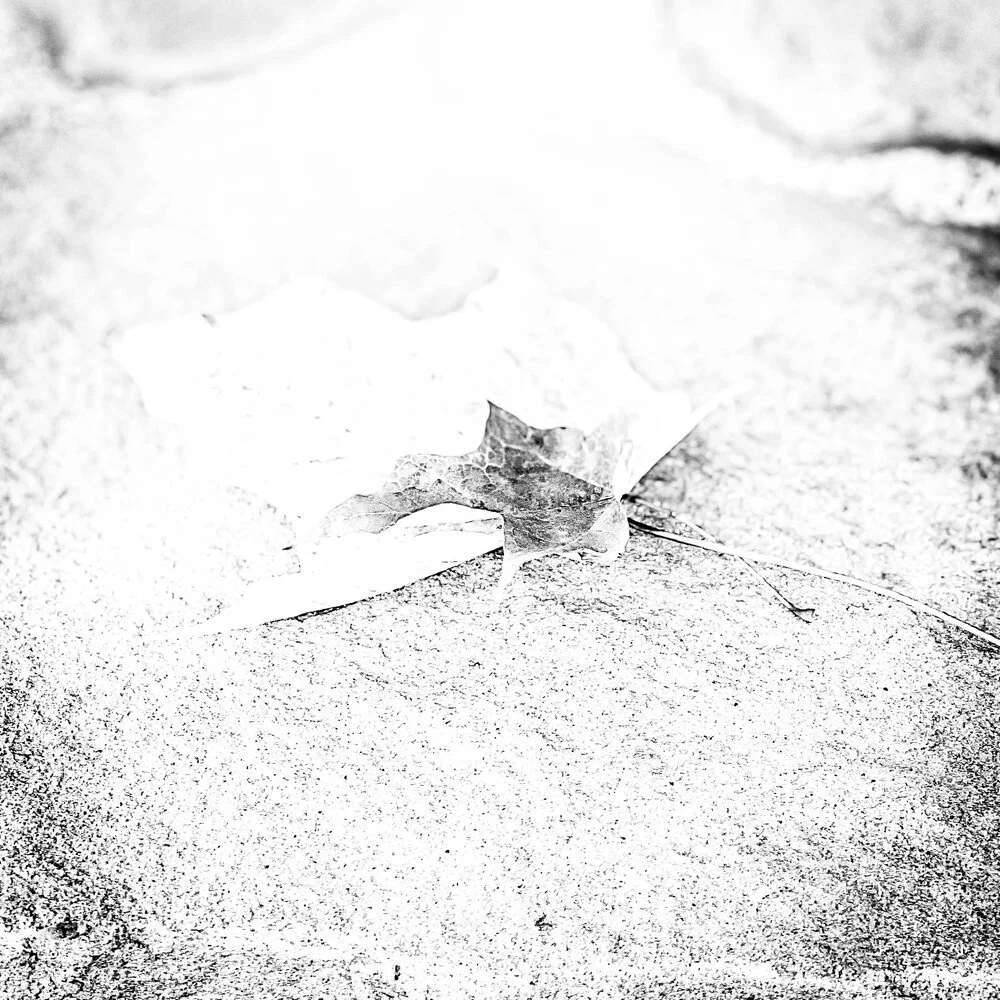
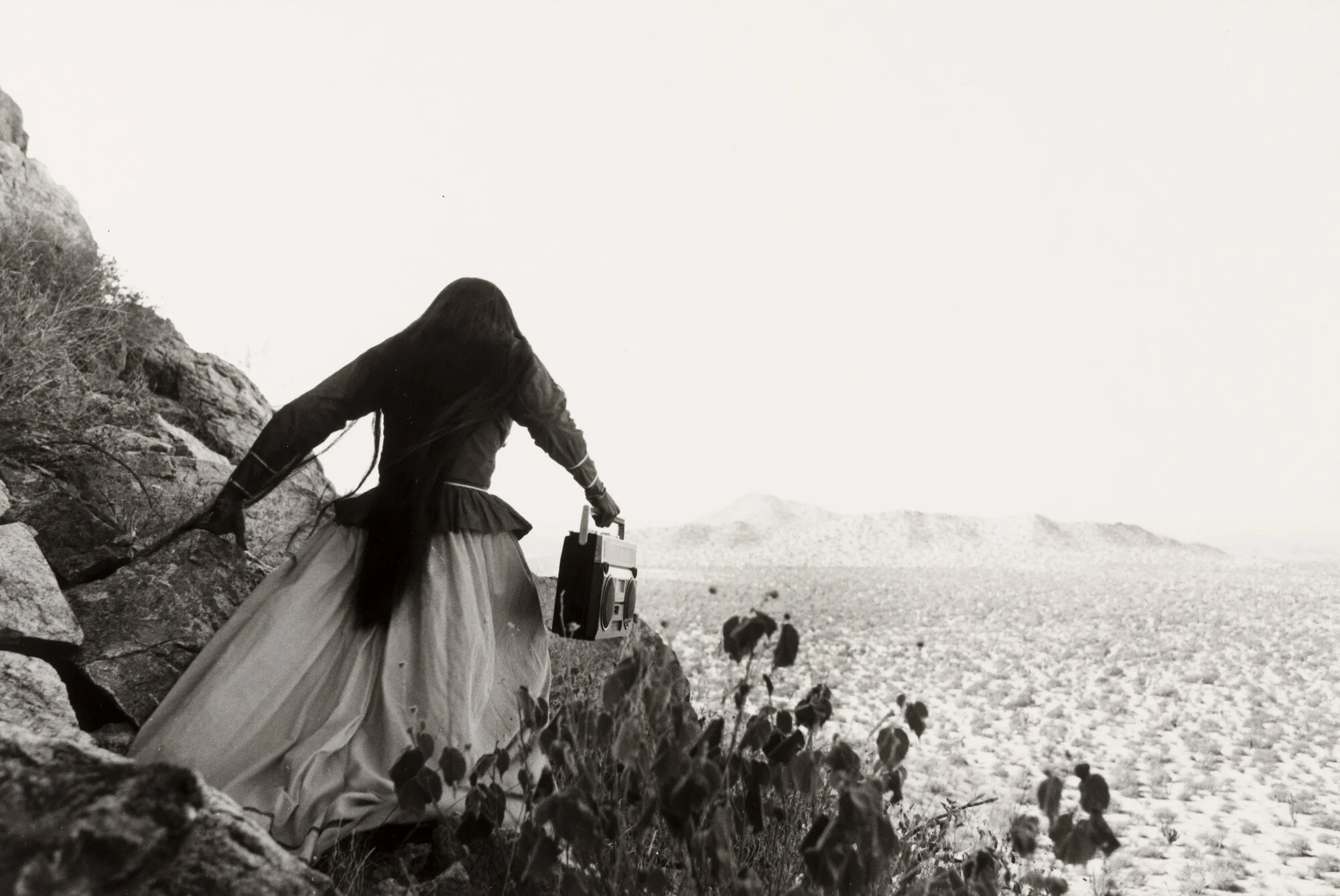
Graciela Iturbide. Mujer angel. Desierto de Sonora. 1979. Museum of Modern Art, New York. ‘The Angel Woman is moving gracefully between different worlds. Crossing the desert on foot while listening to recorded music, she combines old ways with modern ones. And like an angel, this Seri Indian woman seems to hover between ground and sky, heaven and earth.’
Definition
In mythology and the study of folklore and religion, a trickster is a character in a story (god, goddess, spirit, human) who exhibits a great degree of intellect or secret knowledge and uses it to play tricks or otherwise disobey normal rules and defy conventional behavior. (Wikipedia)
Artists as Tricksters
As I looked for the trickster in art, I see that art is about ‘disobeying normal rules.’ In fact, art disobeys the most basic rules of life - it copies life and pretends that the copy is real.
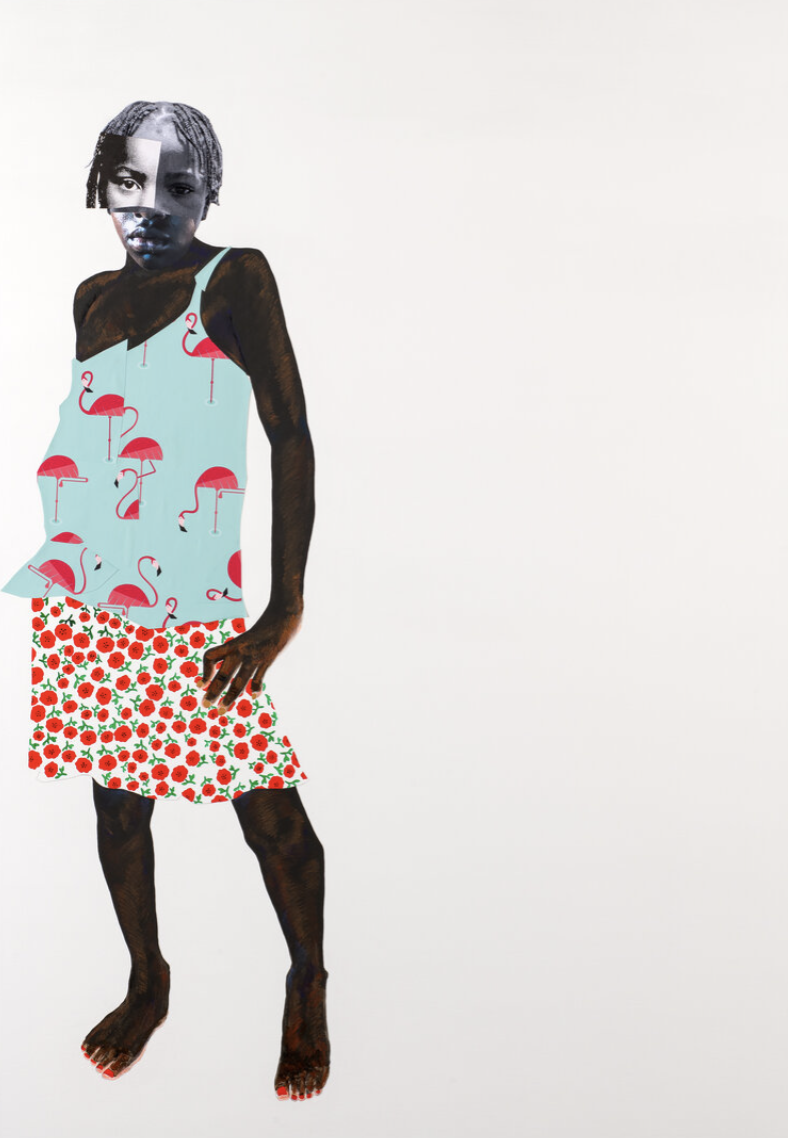
Deborah Roberts. That’s Not Ladylike No.2. 2019. “The works of Deborah Roberts question the common understanding of ‘Ideal Beauty’. She sees her work as a social commentary, making room for women who are not included in the stereotypical imagery of the beautiful woman of fashion magazines. ..Her works answer the need to critically reconstruct our idea of Beauty and the authority of the Female Figure.” (Kooness)
Artists are either proud of disobeying rules or they defend art as a snapshot of life. Different genres of art arise out of this age old philosophical debate. Is art real? Or, of course, not. Art is art. And grass is grass. And I am me.
Picasso grappled with this concept by writing, “The artist must know the manner whereby to convince others of the truthfulness of his lies.”
WORDS: Maureen Fitzmahan
Maureen Fitzmahan (Tokyo, Japan) is a founding member of the Art Junket (2015-2022).
It’s not funny
We have it totally under control. It’s one person coming in from China, and we have it under control. It’s going to be just fine. Donald Trump, President of the United States. January 22, 2020.
Everyone is going to die. There is no point in escaping from that, in escaping from reality. We have to stop being a country of sissies. Jair Bolsonaro, President of Brazil. November 20, 2020.
The Trickster had an idea. What if he spread a deadly disease no one could see?
What if leaders said: “We have it totally under control. It’s one person coming in from China. It’s going to be just fine.” (Donald Trump. January 22, 2020)? And, “No one will die of coronavirus in our country. I publicly declare this.” (President Lukashenko of Belarus) Or, “The virus is out there and we will have to face it, but like men, damn it, not like kids.” (Jair Bolsonaro, president of Brazil)
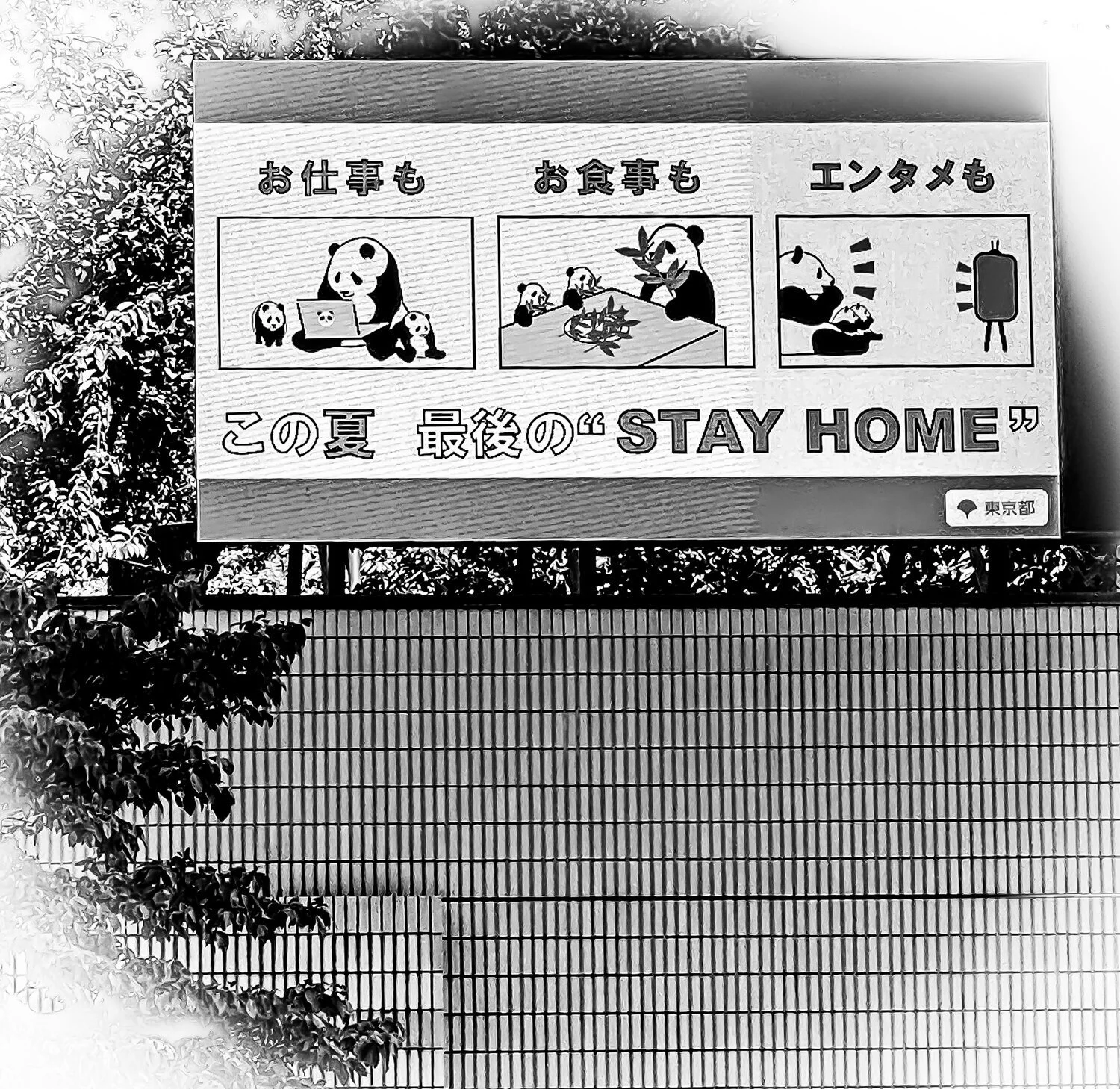
mbfitzmahan. Tokyo, Japan. 2021. (Billboard in downtown Tokyo from the city government warning “Stay home from work, from restaurants, and keep your distance until the end of the summer.”)
What if scientists found a cure, but half the people refused to get it? “One in five Americans believes the US government is using the COVID-19 vaccine to microchip the population.”
As of September 28, 2021 there have been 691,000 U.S. deaths since February 2020. The COVID 19 Pandemic is America’s deadliest. The 1918 flu killed 675,000 people. And the Trickster is not finished, yet. 45% of Americans have not been vaccinated.
The Trickster thinks this is fun.
I don’t.
Photo and words: Maureen Fitzmahan
Maureen is a founding member of the Art Junket (2014-2022)
Brian Nelson
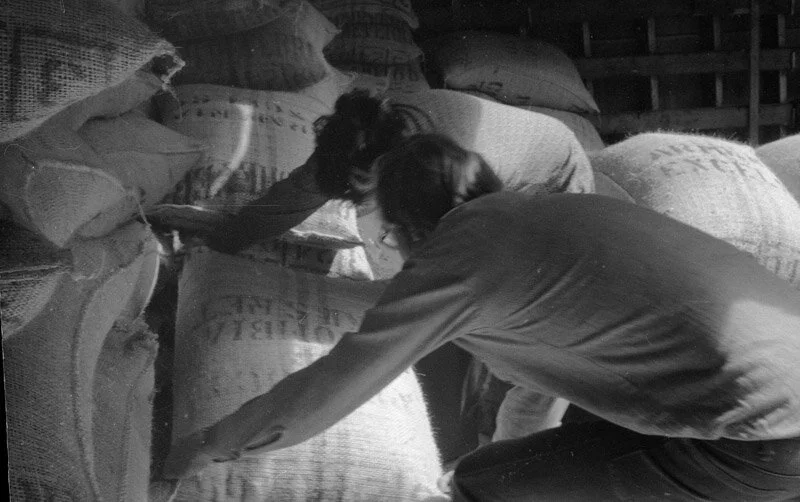
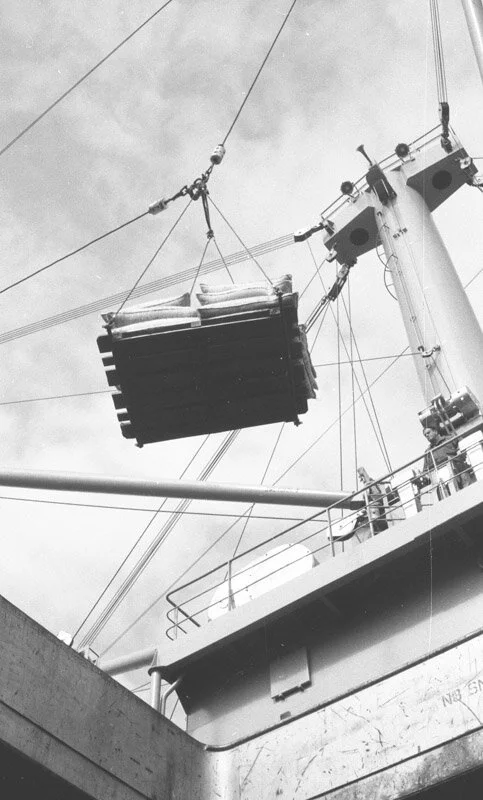
Unloading Coffee in San Francisco, 1973.
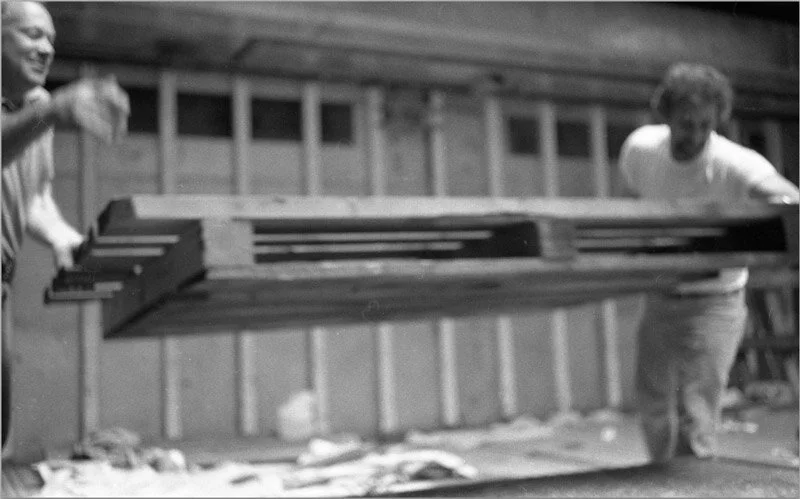
Ed Nelson (my brother) and partner reach into a tight corner, winding up for a 6-foot toss onto a pallet board.
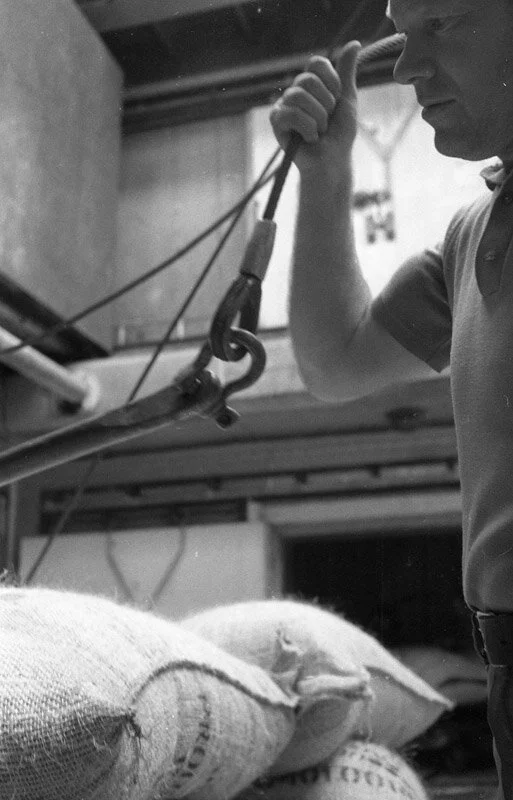
Among the many hands that brought coffee beans from plantations in the developing world to markets in the wealthy countries of North America and Europe in 1973 were those of the Longshoremen working in the holds of cargo vessels on the San Francisco waterfront. I was a Ship Clerk, down in the cargo holds with them, tallying. I took these, and hundreds more photographs, on the waterfront throughout the 1970's.
Brian Nelson. Roy, at the controls of the winches (at right), hoists the load out of the cargo hold. Roy was a London Docker prior to immigrating to San Francisco.
Brian Nelson. Willy Dedoud (aka The Dutchman, who often sang at work) hooks up a pallet down in the Lower Hold, 30 to 50 feet below the Maindeck.
Partners Willy Dedoud and Herman Garcia throw a pallet board on which they will build a load of 12 bags.
Photos and Words by Brian Nelson.
Brian Nelson is a member of the Art Junket. (2017-2022)
Japan and coffee
I could drink my coffee, read my book, pass the time of day without any special thought, all because I was part of the regular scenery. Here I had no ties to anyone. Fact is, I'd come to reclaim myself. Haruki Murakami, Dance Dance Dance
mbfitzmahan. Nagoya Coffee. Japan. 2014.
In the 60s, American newspapers talked about how shockingly expensive Tokyo was and used the cost of a steak dinner or a cup of coffee to prove the point. I hadn’t moved to Japan to eat steak dinners, but I loved her coffee and coffee shops. I must admit that when I first arrived I hoped to find door to door tea shops serving green tea at charming tiny tea houses. But, on the streets of Tokyo I found it challenging to find any tea rooms. Instead there were three or four coffee houses per city block. They served great coffee.
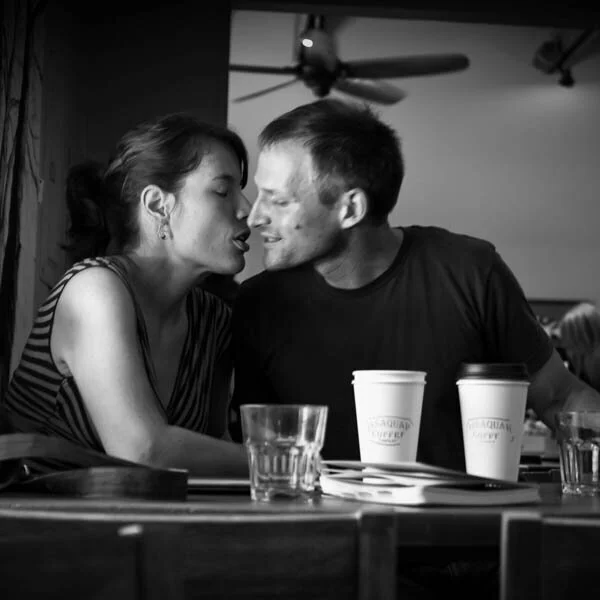
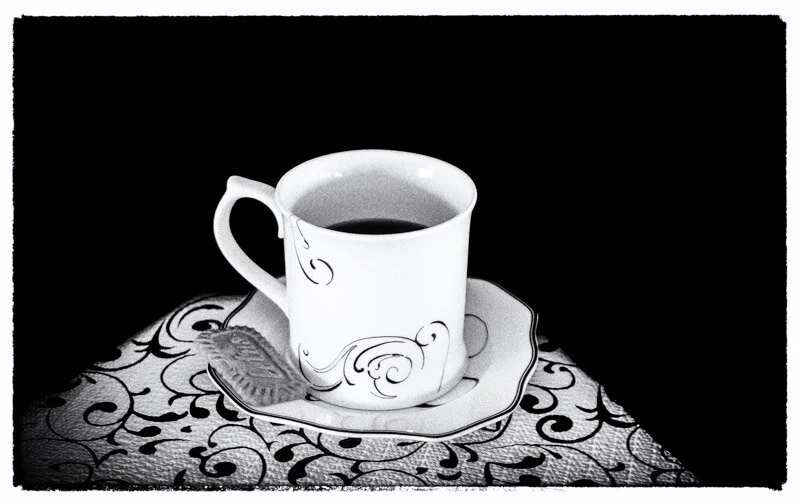
Entering the coffee shop, a proprietor of the café showed me to a table and gave me a menu of kōhi listing coffees from Brazil, Kenya, Ethiopia, Costa Rica, Java, and Guatemala. I have a strong memory of cradling my warm cup and reading Kawabata's Snow Country. "They emerged from the long border tunnel into the snow country. The night was carpeted with white." 国境の長いトンネルを抜けると雪国であった。夜の底が白くなった.
mbfitzmahan. Nagoya, Japan. 2012.
The coffee shop in Tokyo was a place for coffee, but also a landing place between my university and language classes, and the many English conversation classes I taught. I didn't go home between classes, spending the day traveling from subway stop to subway stop, and class to class.
I could choose a coffee shop for its theme or its kind of music. In the Ginza I found a French style shop, dressed up in pink and white frills. I listened to French chanson and imagined I was in a romantic cafe on the Champs-Élysées. Jazz coffee shops were common. Some cafes housed small libraries or fine art. Some of these shops were sophisticated, others were ordinary except for their good coffee.
mbfitzmahan. Nagoya Train. 2013.
Coffee is a Japanese thing. It was brought to Japan by the Dutch in the 16th century, before American colonists protested tea and coffee taxes at the Boston Tea Party. The coffee houses in the 60s were similar in many ways to today's American gourmet coffee shops. Not like the pervasive Starbucks, we know today, but similar to our local coffee shops - General Porpoise in Seattle, Devoción in Brooklyn, or Spella Café in Portland. Still, Tokyo cafes were different. Better coffee. (Or, is that a memory of a youthful day?) Better service. And, of course, no computers. There was little noise other than the sound of jazz. Sometimes a café was just quiet. Quiet. A welcome and rare commodity in busy Tokyo.
mbfitzmahan. Nagoya, Japan. 2014.
If you are a fan of Haruki Murakami, you may be familiar with the coffee shops of the 60s and 70s. Murakami owned a coffee shop he called Peter Cat. “I belonged to Tokyo and its coffee shops. But I had never felt this loneliness there. I could drink my coffee, read my book, pass the time of day without any special thought, all because I was part of the regular scenery. ” Haruki Murakami – Dance Dance Dance
mbfitzmahan. Kyoto, Japan. 2014.
Words and Photographs by Maureen Fitzmahan - Union Vale, New York. Photos of Japan, 2012-14.
Maureen is a co-founder of The Art Junket (2015-2022).
My first coffee
Coffee had a mean, dark, acrid taste; she and I were not friends.
It was a hard walk over sand and stones down into the cave. My daddy picked me up and carried me the last half mile to the bottom. I was 5. “At the bottom, we’ll find a place where we can get something to drink,” he said. Way down - 750 feet - there was a cafeteria that smelled like wet dirt and burnt coffee. My dad sat me down in a white leather booth, walked away and came back with a small cup. “Here you go, Honey. Maybe this coffee will make you feel better,” he said. Taking a spoonful of coffee, he doctored it with lots of sugar and milk. I thought it looked a bit like coca cola and I was happy to get my first grown-up drink. But the taste of the 1950s, “good to the very last drop," hit me with a searing headache. Coffee had a mean, dark, acrid taste and she and I were not friends. Why would anyone drink that stuff?
Kathleen Barry Fitts. Maureen and Bill.
Fortunately, that wasn’t the end of my relationship with coffee. Years later, she apologized for our first meeting. She later introduced me to the warm aroma of fine espresso in the coffee shops of Tokyo. My first cup, slow brewed, took 24 hours to process. She called herself, Aisu Kohi (iced coffee). She taught me that any relationship that she might have to that awful Folgers Coffee at the bottom of the cave was merely accidental.
Kathleen Fitts. Maureen and her daddy.
Today I own a burr grinder, a knock box, and an expensive silver Breville espresso machine which promises to ‘use the right dose of freshly ground beans, ensure precise temperature control, optimal water pressure, and create true micro-foam milk to deliver a harmonious blend of golden espresso and velvety textured milk.’ I know! And, a million miles away from that over-cooked and headache producing cup of coffee lurking down in the cave.
Words: Maureen Fitzmahan
Photos: Kathleen Fitts
Maureen Fitzmahan is cofounder of the Art Junket (2015-2022).
Coffee in Music
Black coffee/Is my name/Black coffee/Ooh, is my thing. Black coffee/Freshly ground and fully prepared/Hot black coffee, boy/Mmh that's where it's at. Tina Turner
Kay Adamson. 2021.
It makes me think of mornings. Coffee. With scones and fresh raspberries. Barcelona in the Square seated at a table covered in red and white. Standing in line at Starbucks in New York. “Espresso, please. No! It’s my birthday. I’ll have a Mocha Cookie Crumble Frappuccino!” Waking up to my love with a cup of coffee in hand. “Sleepless in Seattle” with Meg Ryan and Tom Hanks. I don’t remember if there is coffee in this movie, but it is filmed in Seattle and I imagine a lot of coffee was consumed by the film makers.
What is it about coffee?
Musicians love coffee. The memories, the color, the passion. Oh, yes, and the love! I researched many songs inspired by coffee. I spent a whole afternoon listening to songs in Spanish where the troubadour praised his love with coffee colored eyes Was the drink called café because it was coffee colored? Or is the color brown called café because it is the color of coffee?
And then there is the smell of coffee.
I get lost in the aroma of coffee.
Cafe your eyes, cafe your skin,
Cafe the wish that was not.
Cafe of your hair, your walk,
Cafe your body that is no longer.
In the same cafe,
In the same city,
I want another coffee to forget. * (Luciano Pereyra, “Aroma de Café”)
Me perco no aroma de um café.
Cafe seus olhos, cafe da sua pele,
Cafe o desejo que não foi.
Cafe do seu cabelo, o seu caminhar,
Cafe teu corpo que já não esta.
No mesmo café,
Na mesma cidade,
Eu quero outro café para esquecer.
Black coffee is used to protest injustice. Written by a Black woman, and later sung by a bunch of White guys from England, “Black Coffee” originally was written to say,
Black Coffee is my name…
Way back on yonder, I don't know when
I was brought over before I was ten
You see my skin is brown but my mind is black…
Here in America, the land of the free
You can get what you want if you got some DoReMi
I started out as a slave
I got free, I got paid
Now I'm independent and nobody's maid
I got me a place, I got me a raise. (Tina Turner, “Black Coffee.” Listen to the original here.
Kay Adamson. 2020
And coffee can be philosophical, judgy, even metaphysical.
The trouble with the world today it seems to me
Is coffee in a cardboard cup
The trouble with the affluent society
Is coffee in a cardboard cup
No one's ever casual and nonchalant
No one wastes a minute in a restaurant
No one wants a waitress passing pleasantries
Like "Hiya miss"
"Hiya sir"
"May I take your order please"
The trouble with the world today is plain to see
Is everything is hurry up
It's "rush it through"
"Don't be slow"
"BLT on rye to go"
And coffee
I think she said 'coffee'
I know she said 'coffee
In a cardboard cup'
The trouble with the helter skelter life we lead
Is coffee in a cardboard cup
The trouble the psychologists have all agreed
Is coffee in a cardboard cup (Mandi Patinkin, “Coffee in a Cardboard Cup”)
I spent days listening to songs with the word coffee. A Google search took me through 342 pages of coffee songs. Joy, depression, love and loneliness. I think every composer, alive and dead, was challenged to write a song with at least one reference to coffee.
Even Johann Sebastian Bach wrote a cantata about coffee. According to Wikipedia, Bach regularly directed a musical ensemble based at Zimmermann's coffee house. Bach wrote, "If I couldn't, three times a day, be allowed to drink my little cup of coffee, in my anguish I will turn into a shriveled-up roasted goat". (Wiki)
I could write about this all day. No end in sight.
Instead I will leave you with a playlist. Coffee, coffee, and more café!
Photos: Kay Adamson and Maureen Fitzmahan
Words by Maureen Fitzmahan
Kaitlin Strange
What strikes me about my life is how unfinished it is.
Time continues to turn and churn with every rotation of this interstellar ball of rock, water, and air. Slowly becoming. Kaitlin Fitzmahan Strange
“Two roads diverged in a yellow wood,
And sorry I could not travel both
And be one traveler, long I stood
And looked down one as far as I could
To where it bent in the undergrowth;
Then took the other, as just as fair,
And having perhaps the better claim,
Because it was grassy and wanted wear;
Though as for that the passing there
Had worn them really about the same,
And both that morning equally lay
In leaves no step had trodden black.
Oh, I kept the first for another day!
Yet knowing how way leads on to way,
I doubted if I should ever come back.
I shall be telling this with a sigh
Somewhere ages and ages hence:
Two roads diverged in a wood, and I—
I took the one less traveled by,
And that has made all the difference.
The Road Not Taken by Robert Frost”
Katie Fitzmahan Strange. Becoming. 2020.
What strikes me about my life is how unfinished it is. It makes sense. Seems to be a given with the way time progresses and doesn’t stop. But it’s not what I expected.
When I was eight years old I assumed everything would be put into place by the time I was in high school. And at 17 I figured by 30 I would be set in the mold of who I was determined to become. I still hold onto the illusion that by 60 I’ll have arrived somewhere, or will be someone who is more complete than I am today. But, time and again I am reminded that nothing fully stops or reaches completion. Time continues to turn and churn with every rotation of this interstellar ball of rock, water, and air. And we’re just here for the ride. Slowly becoming.
Katie and Huxley Strange. 2020.
It is rare when the hustle, the flow and movement slows to a stop. But in the last year I can recall at least one distinct moment where time slowed to a palatable and undeniable stop. The pandemic brought it on. Lock-down in Barcelona started on March 12th. For almost 3 months the city was silent and still. The only activity in the streets came at 8 PM when neighbors emerged to their balconies to clap and holler for the healthcare workers. Otherwise the city was empty, like a set for a play - waiting for action but empty, silent, lifeless.
And despite these fits and starts and moments of pause, change continues to envelope me and the people around me. My hair grows longer, the grey more persistent, the lines on my face more prominent. Friends grow families, change jobs, move towns. Parents age and slow. The change brings a melancholy with it - a relentless reminder of mortality. I worry about the fleeting amount of time we have together, about not doing enough to fill this time, about making a mark, about being a ‘good’ friend, sister, daughter, partner. I catch myself wishing time away and then thinking what a waste of time to worry so much.
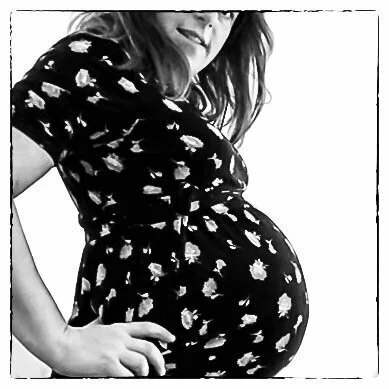
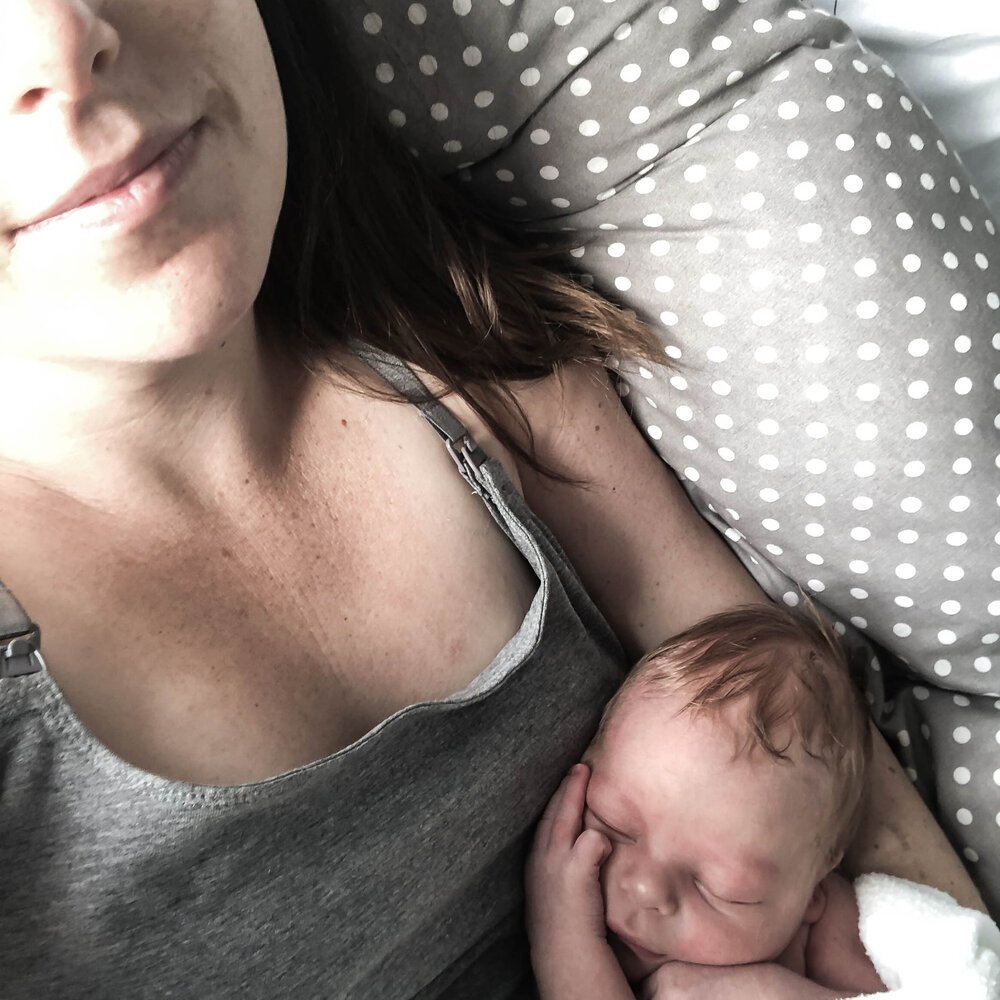
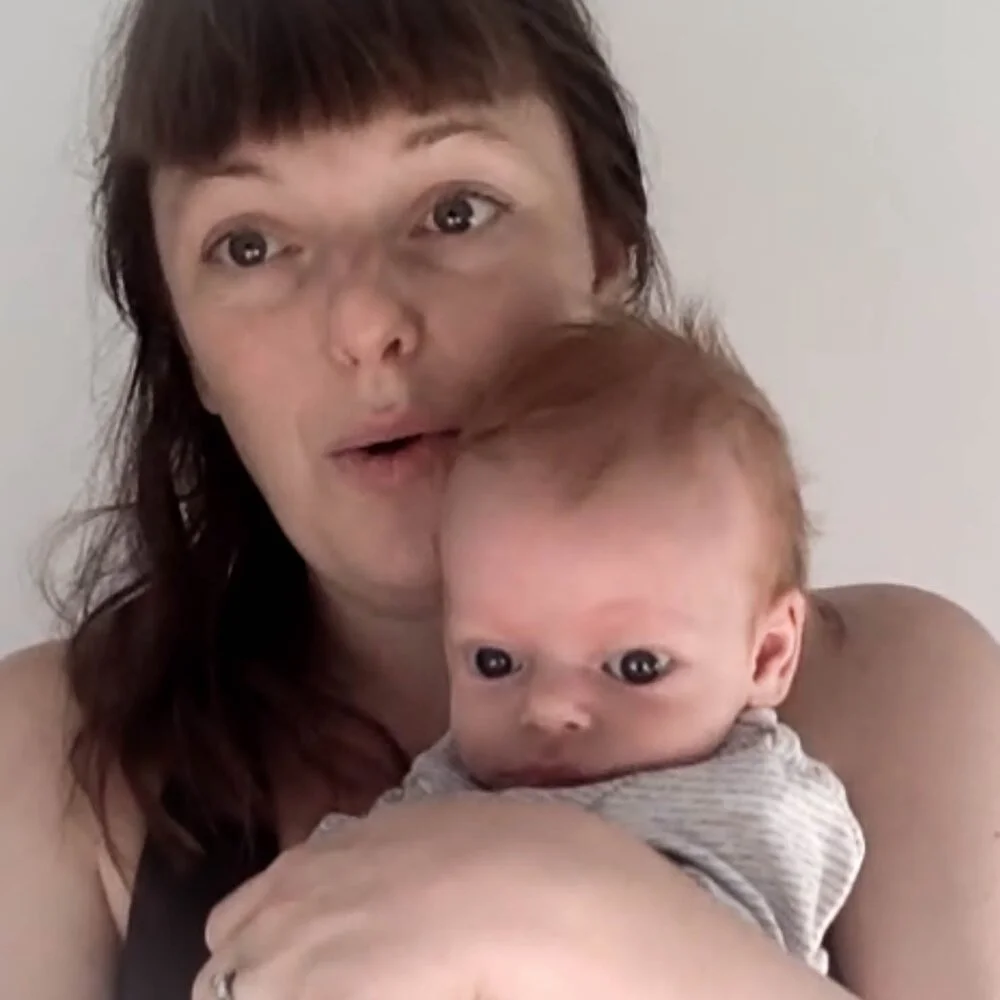
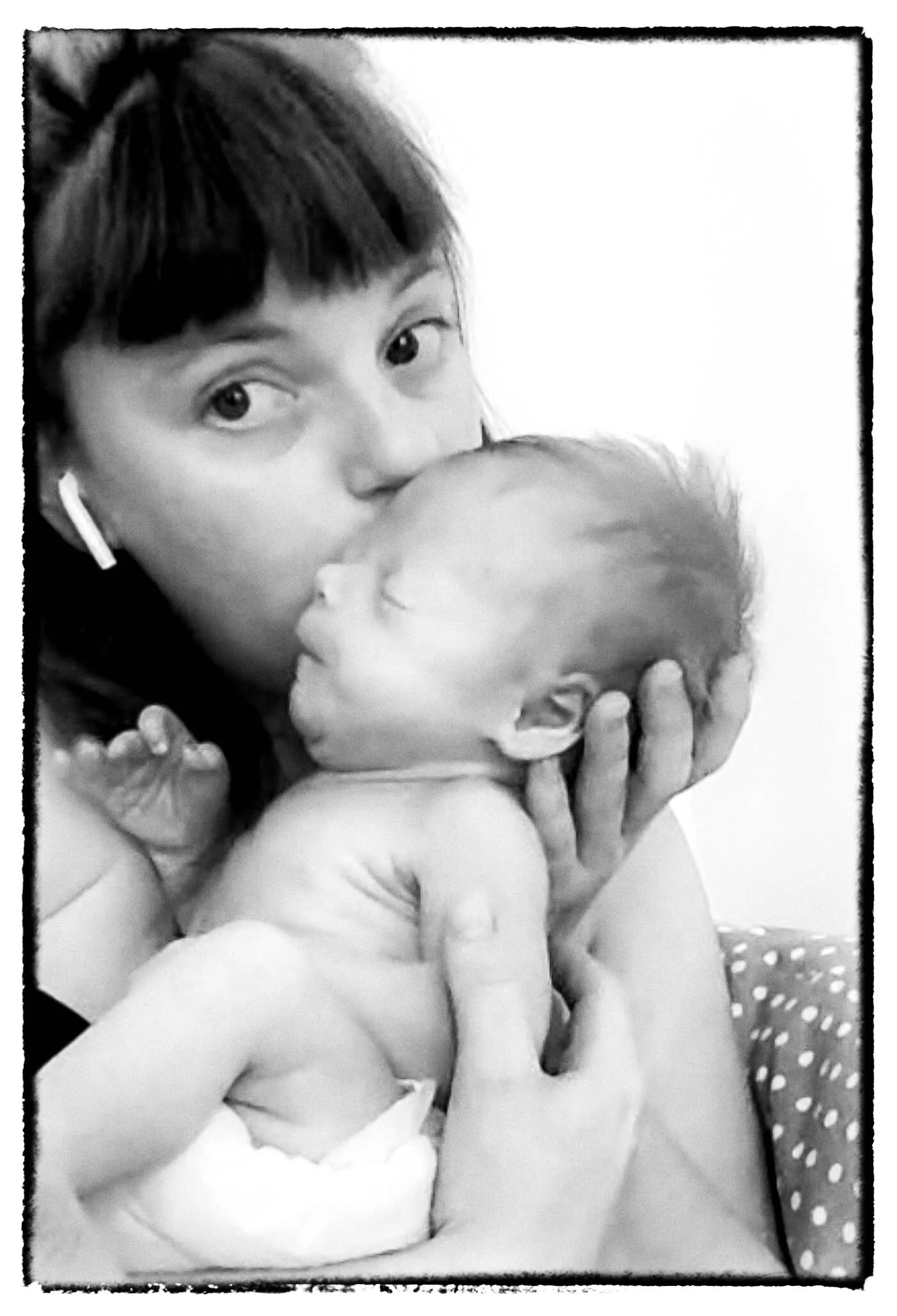
I spent 40 weeks growing a small person inside me. And 6 weeks sustaining and supporting this tiny human. As my body changes week by week, I am stunned by what time can do. How my body grows and shrinks. What creation and development looks like on the skin, the muscles, the mind. And the relief and ease that comes with having an age-old job of supporting life.
Katie and Huxley. 2020.
I don’t need to worry about wasting time, when I am continually doing something just by breathing, eating, sleeping, and walking. I grow a limb here, a toe there. I make milk and I transform energy without thinking twice. All without thinking twice.
The simplicity of the task is refreshing. There is a sense of relief that comes with time standing still. I can simply be and do at the same time. My existence and my actions are tied to an outcome that is more than myself.
Maybe we spend so much time worrying about what we are producing, making, doing because we want to feel like we are a part of something. That we are more than ourselves. What peace we might find if we were able to sit still and find that by simply being and sitting we are a part of a greater sum than our small part.
Perhaps that is what this time of slowing down has done for me, for all of us. We’ve found ourselves the space and silence needed to better understand a universal truth that connects us all, for better or worse. That even without movement, and the fast-tracked passing of time, we are all fumbling through the passing of time. We are all still becoming.
Kaitlin Fitzmahan Strange. 2020.
The words are by Katie Strange. The photographs of Kaitlin and baby are by Katie Strange and Maureen Fitzmahan.
Kaitlin Fitzmahan Strange, living in Barcelona, Spain, is a founding member of the Art Junket (2015-2022).
Ana Perches
You deserve a lover who takes away the lies and brings you hope, coffee, and poetry. Frida Kahlo
I paint flowers so they will not die. Frida Kahlo
Ana Perches
“You deserve a lover who makes you feel safe, who can consume this world whole if he walks hand in hand with you; someone who believes that his embraces are a perfect match with your skin.
You deserve a lover who wants to dance with you, who goes to paradise every time he looks into your eyes and never gets tired of studying your expressions.
You deserve a lover who listens when you sing, who supports you when you feel shame and respects your freedom; who flies with you and isn’t afraid to fall.
You deserve a lover who takes away the lies and brings you hope, coffee, and poetry.” ― Frida Kahlo
Ana Perches
In the morning of Saturday, October 3rd, I panicked, “is our salon tomorrow?” I asked myself. Not checking the calendar, I decided, well…let’s try to get started, which I did.
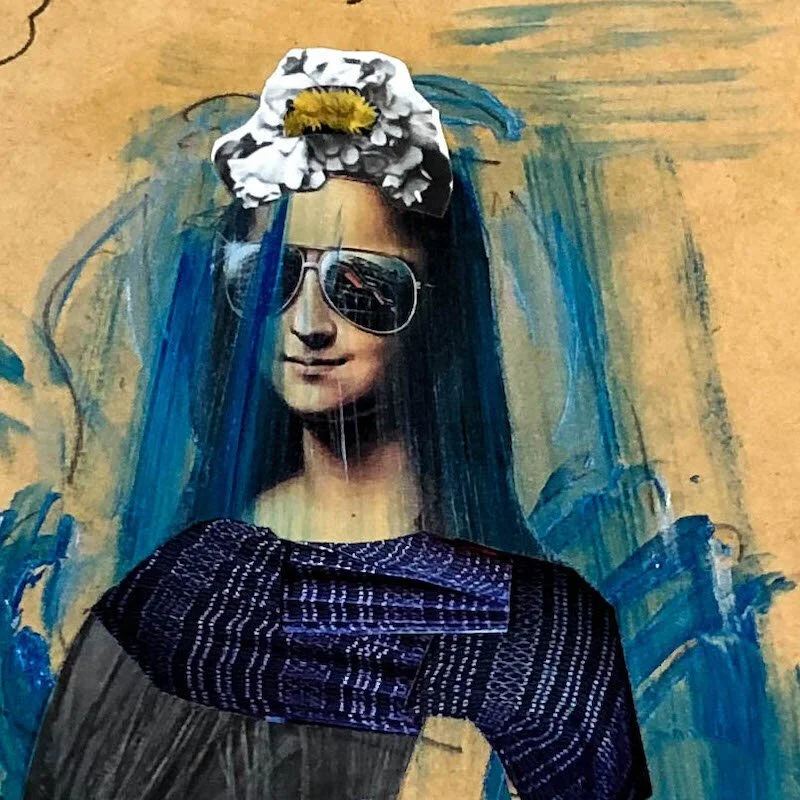
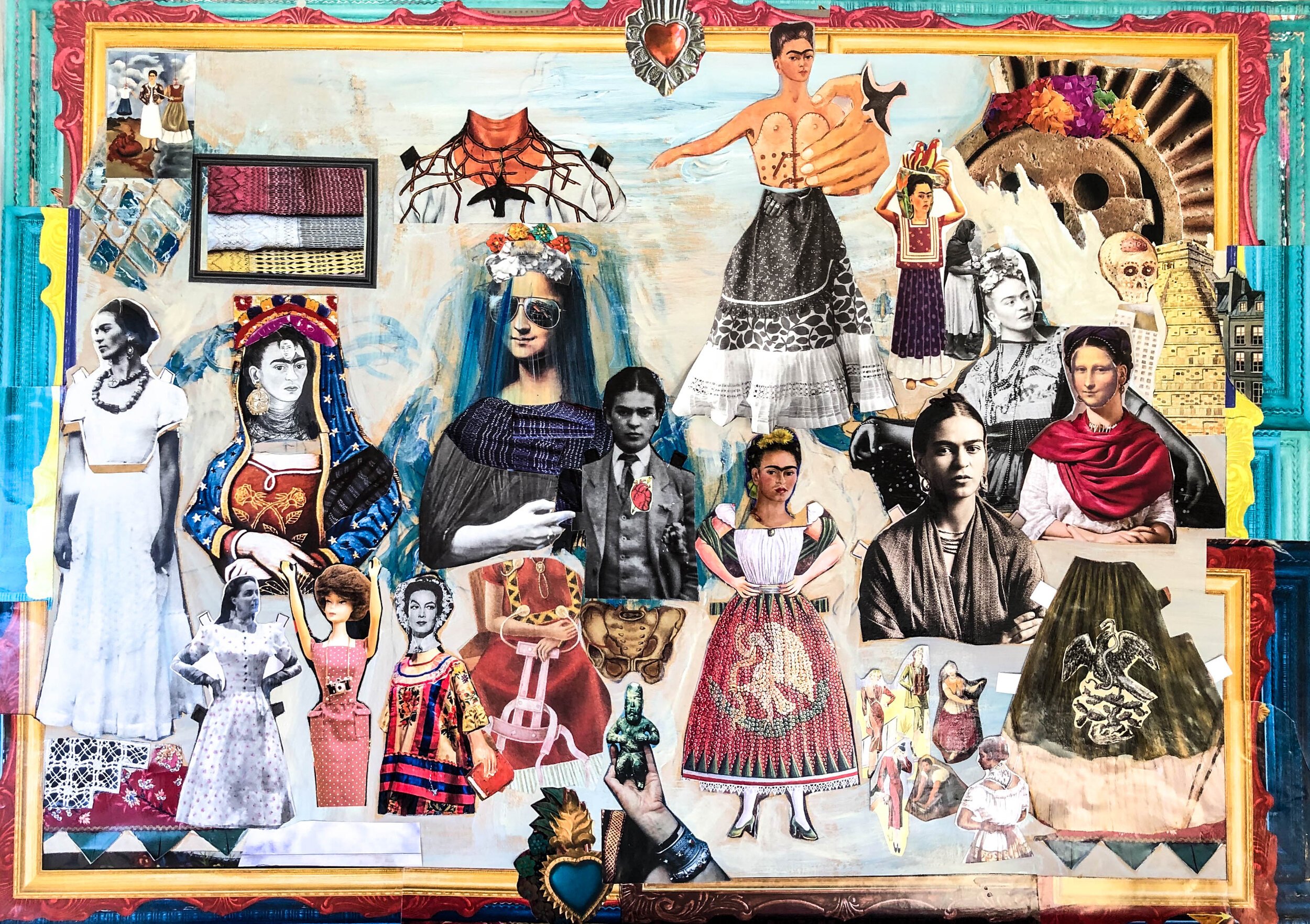
I had an unused frame, 30 in. x 20 in., that I planned to use. First I approached it vertically, then I decided to turn it horizontal because my objective was to showcase Frida’s wardrobe.
On Friday, October 2nd, I had been disappointed at having to cancel my reservation at the de Young Museum where they were featuring Frida’s wardrobe. I canceled my reservation due to poor air quality in the Bay Area, but was able to reschedule October 28th.
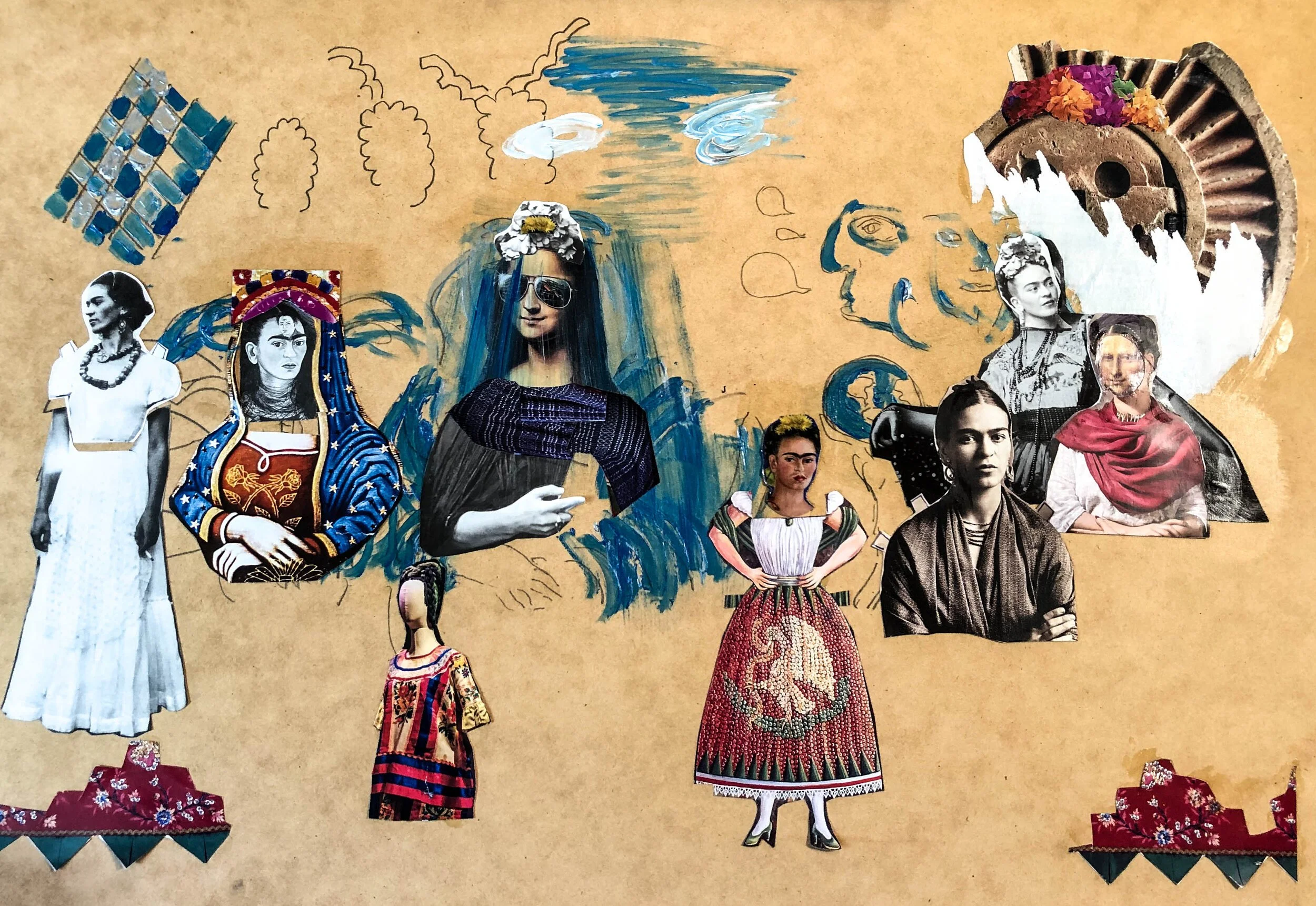
About my medium - I’ve been in the collage mode. Partly due to the fact that I don’t feel like drawing and, partly because I haven’t been able to come up with any ideas to paint. So, I’ve been collecting visuals from magazines, old postcards, pamphlets and such. They aren’t always well organized but sort of.
Someone recommended a fantastic découpage glue that I adore (Liquitex, which is superior to Hodge Podge). I like my Cutco scissors which retail for about $100 and which were my mom’s who believed in buying the best. I love cutting and pasting like in elementary school. Okay, so I had plenty of materials.
Manos a la obra! Let’s do it!
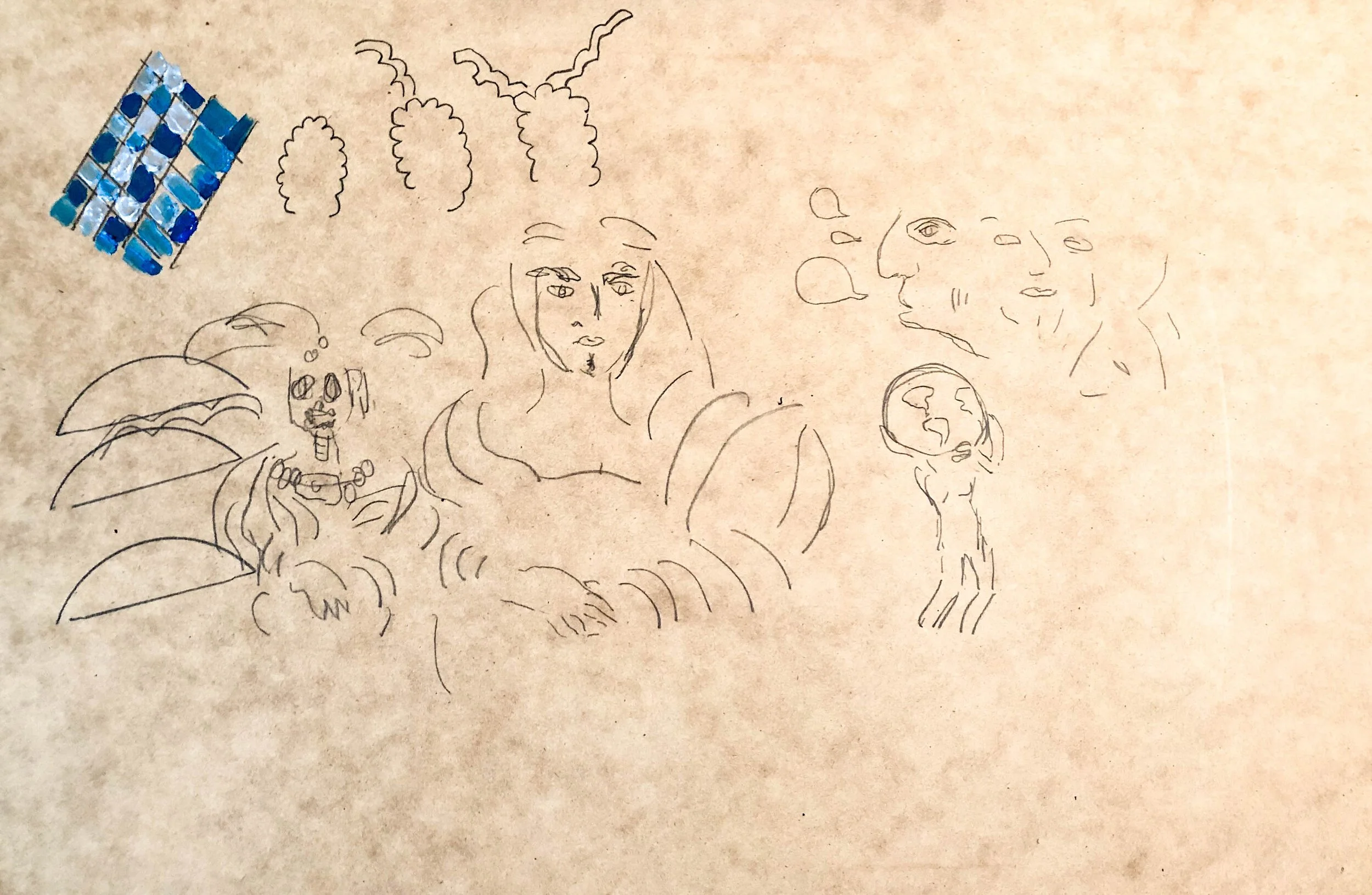
I started with a silly sketch of the Mona Lisa, because I planned to merge Frida with Mona (but about 90% Frida) because somehow the theme of becoming was there.
We want to become like someone else but we want to become ourselves. And, what if, what if, what if, Frida had met Mona or had married Da Vinci and what if Diego Rivera had painted Mona Lisa, nude, of course. Now, that’s an idea for another art piece.
Ana Perches
See what a theme like Becoming can do? To sum up Saturday, my first day working on my project, which took me all day, I got most of it done. The next day I added a few things (worked on it for a couple hours) and today I hope to finish it, but it’s basically done and it will be framed.
I will explain more on how the theme fits in when we meet on October 17th.
The art and words are by Ana Perches.
Ana Perches, living in Berkeley, California, is a founding member of the Art Junket (2015-2020).
You can see the de Young Museum, “Frida Kahlo: Appearances Can Be Deceiving,” in San Francisco from September 25, 2020 to February 2021.
Taska Sanford
I don’t really know what it was like when she was born, but I do know what it was like when she died.
That’s the way I always imagined my mom Caroline Gage Sanford was born. (Taska Sanford)
“Wednesday July 15, 1942
Cicadas sang
A young man took a drink
A young woman cursed
A crack of lightning struck and a tiny baby screamed her way into the world.
The little girl thought - Com-on Let’s get this started.”
Taska Sanford
Caroline Gage Stanford
That’s the way I imagined my mom, Caroline Gage Sanford, was born. I don’t really know what it was like when she was born, but I do know what it was like when she died.
I accepted the duty and the privilege to escort her to her death. She died Saturday, July 25th 2020, at home next to her garden just as she planned.
It was cancer, in the time of a pandemic, during lockdown. That part she did not ask for but she accepted it, matter of factly.
1001 Southern Nights
People will either write some form of memorial or at least think of one when they can not sleep in the darkest part of the night. With that in mind, writing this I still felt so disconnected.
As one friend, also going through loss, said it pointedly, “Your first home is now gone.”
Caroline Gage Stanford
The days of raw primal grief felt like the darkest of nights. Alone in my head while the world slept, I wrote this memorial over and over and over.
Because the thought of telling you about how I knew her kept Mom just a little closer, a little warmer, a little less dead.
I then began a transformation. I took on a new identity. I left behind caregiver, daughter, youngest child, and put on the shining, embellished robes of Scheherazade. You remember from One Thousand and One Arabian Nights? Scheherazade was married to a terrible Sultan that married girls only to kill them the next morning and then married again... until Sheherazade arrived. She beguiled the sultan by spinning the greatest stories ever - to keep herself alive day after day. So I have become Shaherazade telling stories night after night. Stories that keep my mother alive in my heart one more day and then one more day and on and on.
What story do I tell you? The time in high school in a heated moment when told my very favorite teacher, Mr. Yates, to fuck off? Mom laughed so hard when I told her, she spit out her coca-cola.
Or I could tell you about that day when I was in high school and she said in all seriousness, “Taska, you will need to learn how to make money to buy your own groceries and pay your own rent, but I will always buy you art supplies.”
Caroline Gage Stanford
High school was rough, like it often is, and I had trouble connecting with my dearest friends for a time. I found myself at home in the giant house on West Drive feeling alone but not wanting to go out. Then a new friend came along and reached out to me. Mom, who had worked long hours to set up her own psychology business, now had the time to see her daughter struggling with teenage life. So she stopped being as much of a mother and instead became my friend.
We did so much together that gave me joy and confidence. She taught me to garden, to sing, to call bad drivers “jackass!”
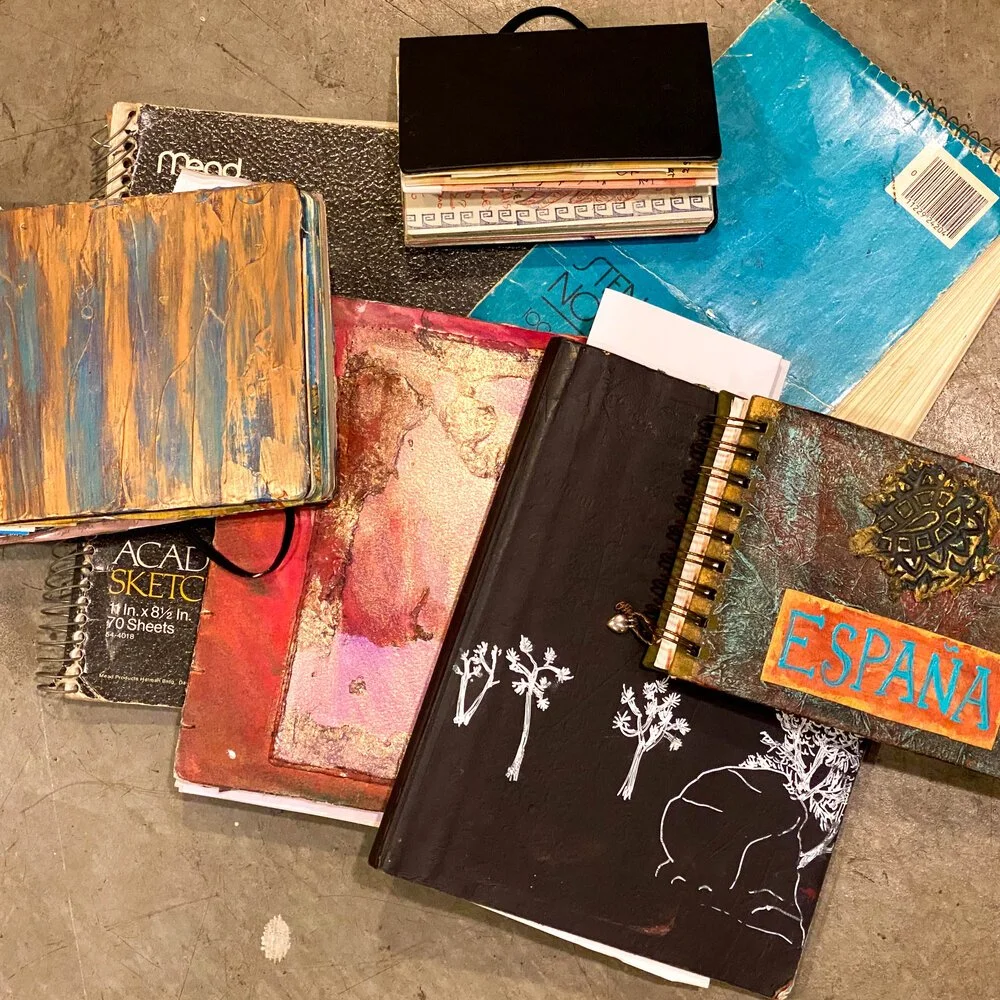
We talked on the phone every week - I mean EVERY week when I left for college. We wrote letters. We took cool art classes together and sent altered art books back and forth across the country.
Caroline Gage Stanford
And then as life progressed my dad died in 2013 and she lost her partner in crime. And because family is family, without batting an eye, Travis, Cedar, and I brought Mom (now Nana) out to California to live with us. When thanking Travis for so readily welcoming my mom, he said he had promised my dad to help her. So we did.
And for the next 6 years while I slid from the role of daughter to mother, my mom constructed a new life out here that was quickly built on music, gardens, art, new friends, and late nights at the bars!
I could also tell you the story about the week when Cecelia came to visit. The cancer was coming down on mom fast and furious. Then her beloved friend and cousin, Cecilia Chilton, flew into town despite the pandemic. She fired up the iPads and she and Mom attended Augusta Music Camp online. What a phenomenon! I could not believe the strength and vigor mom regained. Her ailing voice returned and she played her guitar again and again. Then the week ended, July 18th, Cecilia returned home, and mom lay down her guitar…...
Taska Sanford
Alright Dad, I think we all did our part well with Mom’s last years. Now you and Mom can drive off in the Dodge minivan into the desert, together.
So you see I do have 1001 stories to tell about this amazing woman.
My photographs are intimate.
The New Year
feelings of loneliness
the end of autumn.
Matsuo Basho
mbfitzmahan. Autumn in the Hudson Valley. 2020.
枯れ枝に烏の止まりけり秋の暮 芭蕉
Autumn evening
A crow perched
On a withered branch
Matsuo Basho
mbfitzmahan. Pawling, New York. 2020
My photographs are intimate. They are portraits of surprise, pain, joy - moments of life. I generally take photos of people, but even my landscape photos are portraits of a delicate life.
Matsuo Basho, a 17th century haiku poet, instructed his students on how to write haiku,
In composing haiku there are two ways: “becoming” and “making.”
mbfitzmahan. Homeschool. New York. 2020
Basho made a distinction between these two ways of creating art, and supported “becoming” and viewed “making” as inferior, inauthentic.
Basho taught,
For a haiku poet, to learn from nature should mean to submerge himself, to perceive the delicate life and feel its feelings, out of which a poem forms itself.
mbfitzmahan. Erin in Anshin, the woods. 2021.
Makoto Ueda, a scholar on Basho, wrote that Basho believed that,
Beauty in nature is a manifestation of the supreme creative force which flows through all things in the universe, animate and inanimate.
The artist can depict this force “when the object enters his mind and dyes it in its own color, whereupon a poem emerges by itself.
mbfitzmahan. Hudson Valley. 2020.
Makoto Ueda, “Basho and the Poetics of “Haiku.” The Journal of Aesthetics and Art Criticism, Vol. 21, No. 4 (Smuuer, 1963), pp. 423-431. The full article is accessible at JSTOR at https://www.jstor.org/stable/427098?seq=1.
The photographs are of 2020 in the Hudson Valley, New York.
The words and photographs are by Maureen Fitzmahan.
Maureen Fitzmahan, living in the Hudson Valley, is a founding member of the Art Junket (2015-2022).
Ana perches
Pa’ qué son lujos - A condemnation of superfluity and waste, ostentation, and vanity. And an affirmation of dignity and restraint, forbearance, and respect for the value of a hard-earned dollar. Or peso, in this case. Ana Perches, 2020.
“Es una calle larga y silenciosa.
Ando en tinieblas y tropiezo y caigo
y me levanto y piso con pies ciegos
las piedras mudas y las hojas secas
y alguien detrás de mí también las pisa:
si me detengo, se detiene;
si corro, corre. Vuelvo el rostro: nadie.
Todo está oscuro y sin salida
y doy vueltas y vueltas en esquinas
que dan siempre a la calle
donde nadie me espera ni me sigue,
donde yo sigo a un hombre que tropieza
y se levanta y dice al verme: nadie.”
— Octavio Paz (Mexico, 1914-98)
mbfitzmahan. New York. 2020.
What if, instead of feeling stress, I felt energy. Instead of feeling scared, what if I felt inspired - for having energy, for feeling safe, for having food, clothing and shelter. Why should I feel stressed?
I am not entitled to feel stress when so many others are in dire straits or on the brink of being there, while I’m not there… yet.
If mere compassion leads to inaction, I’m back to feeling guilty again, about not feeling stressed, or about having the luxury to pretend I’m not stressed.
So, do I then get up from my chair to act, as Jean-Paul Sartre would have a person of “good faith” do? Let’s not get existentialist or philosophical here because that’s a luxury, too. While people are out scrambling for food, finding ways to make their next car payment, or come up with money to pay their mortgage or rent or…. With what nerve am I searching here for the perfect metaphor? A rhetorical question during rhetorical times. A Peruvian poet spoke of that in the 20th century, as have many other writers.
mbfitzmahan. 2020.
Yes, I’ve known stress before. But today, knowing what I know now and what I still don’t know and never will know, am I allowed to feel stress? I’m not asking for anyone’s permission but my own, and my answer from me is: No, Ana, you’re not allowed to feel stress.
Okay, I’m not allowed to feel stress. Because so many people are so much worse off than I am.
My father had an expression, which is à propos here. His expression was Pa’ qué son lujos, which is hard to translate but literally means, “What’s the point of luxuries?” We would hear that phrase from my father when he was enjoying a simple plate of Mexican beans instead of a pricey meal at a two-star restaurant. Or when having the money to buy himself a Rolex he would instead choose a Casio from Costco. Pa’ qué son lujos? Luxury! Who needs it. Or say, if we were at a restaurant where the waiter would brush away the crumbs from the white table cloth using a small dustpan and shiny blade, my dad with a sarcastic smile and a shake of the head, pa’ qué son lujos! What does luxury know? Know, about life. Or if someone insisted on using the correct fork for a salad or… you get the idea.
mbfitzmahan. 2020.
His remark was also a way of saying, “If only you knew what it was like to have lived during the Revolution.” His comment was in itself a metaphor because he was born after the Revolution, the Mexican Revolution of 1910, that brought the first massive wave of Mexican labor to the United States. What my father meant by that expression is that some people can do all that fancy fanfare and stuff because they don’t know what it’s like to go hungry. His philosophy of ¿para qué son lujos? was not unlike that
Pa’ qué son lujos is colloquial for ¿para qué son lujos? Pa’ is short for para in informal speech.
When I think of the Americans who lived through the Great Depression or of the immigrants and refugees arriving on American shores with nothing but a small suitcase and perhaps two nickels in their pocket, I think, pa’ qué son lujos. How could they understand their grandson or granddaughter whimpering about the pesto coming out too salty, or too caloric?
“Bubba, I’m on a diet, don’t add so much heavy cream, or butter.” Or, “Abuela, lard is fattening, I can’t have tamales! Or, “Tata, you know I can’t eat raw onions …pico de gallo has raw onions!” Pa’ qué son lujos! is not really a question but an exclamation. “You’re worried about that?” You’re stressed out because the tile isn’t lining up exactly straight above your $7,000 Miele stove? Or you are upset that you should have chosen a grout color a bit more grey instead of that brown hue? Pa’ qué son lujos!
My father did survive many micro-revolutions in Mexico, hard times for someone like himself who knew the value of work and who did not have parents to help him out along the stormy ride. He never talked to us about stress. In fact, there is no word in Spanish for stress, which borrowed the word from English starting around the 1970’s and called it “estrés.” My father got lucky, but not everybody does.
I walked along Solano Avenue on Monday. Deserted and empty stores on both sides of the street. Where are the people who work here? Who’s going to pay their rent? Will the owners of those businesses go inside once in a while, deactivate the alarm, turn on the lights, flush the toilet and wonder, “How could this have happened to me and to so many others?”
Restaurants displayed their hand-printed signs, “Take-out only.” And there was the lighting store with the old-fashioned lamps getting dustier each day. The dry cleaning stores were open, just in case you wanted your pants ironed or cleaned - if you wanted a crisp, starched shirt for work. Work. A luxury - or a painful reminder that a privileged few don’t need to work. Or some can work at home and don’t need a starched, ironed shirt while millions of others are out of work.
While I don’t mean to downplay the many kinds of stress people of all walks of life are feeling these days. As David Brooks has shown in his recent heart-wrenching editorials, as long as my situation is stable I cannot claim stress under my current circumstances. That would only be claiming another privilege I happen to have… for now. Pa’ qué son lujos.
My father’s tone of voice when he spoke those words, and the look on his face, conveyed at the same time a condemnation and an affirmation. Pa’ qué son lujos. A condemnation of superfluity and waste, ostentation, and vanity. And an affirmation of dignity and restraint, forbearance, and respect for the value of a hard-earned dollar. Or peso, in this case.
Ana Perches
Words by Ana Perches - Berkeley, California
Photographs by Maureen Fitzmahan - Pawling, New York. Photos of mid-Hudson Valley New York.
Ana & Maureen are Founding Members of The Art Junket.
“A long and silent street.
I walk in blackness and I stumble and fall
and rise, and I walk blind, my feet
stepping on silent stones and dry leaves.
Someone behind me is also stepping on stones, on leaves:
if I slow down, he slows;
if I run, he runs. I turn: nobody.
Everything is dark and doorless.
Turning and turning around these corners
which lead forever to the street
where I pursue a man who stumbles
and rises and says when he sees me: nobody.”
— The Street by Octavio Paz
Zoom during pandemic
Art is an instrument in the war against the enemy. Pablo Picasso
We joined over the Internet to talk about our experiences as artists in this uncertain time.
The collective tragedy of the COVID-19 pandemic has made us feel humbled and small. The waves of emotions and the immensity of the catastrophe feels too big to express. “Who am I to think that I could portray the scale of this tragedy?”
Maureen and Kaitlin shared how debilitating their inner critics are. In this time of the pandemic, the inner critic is loud, taking advantage of our weaknesses. It’s hard to tell that inner critic to be quiet when she sounds so convincing. When we feel like we are coming apart at the seams, the inner critic is there to keep us from doing anything risky - especially art.
We are grateful to be safe, well-resourced, and with our loved ones. And we know that this is a privilege. We realize that people are suffering. Ana said, “How can I make art when others are in pain?”
But, then Ana remembered that when words fail, that’s when we can and must use images and music to communicate.
Kaitlin is journaling about her experience. She confessed to feeling a bit childish or self-centered about her writing. But, recently she reached a turning point and she found that she could, “turn the Particular into the General. The best storytelling and art is about personal moments.”
Kaitlin suggested that we can honor our personal experiences. When we sit and tell our stories, they become meaningful. People need stories. And sharing our own story helps us feel less alone. It gives our lives context and beauty. Kaitlin also recommended, “Be gentle with yourself,” she said. “It’s nice to be nice to yourself.”
And, yes, we need to be seen. That is what the Art Junket has always been to us - a supportive and positive place where we could honor our personal journeys and our art. Now, more than ever, we need a community to motivate us and bear witness to our originality.
I spoke of the need to express our creativity as a kind of wellness practice. Brené Brown wrote: “Unused creativity is not benign. It metastasizes. It turns into grief, rage, judgement, sorrow, shame.” (Brené Brown, The Gifts of Imperfection: Let Go of Who you Think You’re Supposed to Be and Embrace Who You Are. 2010.)
As artists in this uncertain time, there is one thing we know for sure - we need each other. Unexpressed wounds fester and shame grows like mold in the darkness of our thoughts. We need each other.
Thank you for being our audience, for inspiring us with your creativity, and supporting us with your feedback. We miss you. How are you doing?
Tuna, the cat
In ancient times cats were worshipped as gods. They have not forgotten this. Terry Pratchett
Before a Cat will condescend
To treat you as a trusted friend,
Some little token of esteem
Is needed, like a dish of cream.
T.S. Eliot
Lessons from Tuna the Cat: Surviving a Pandemic
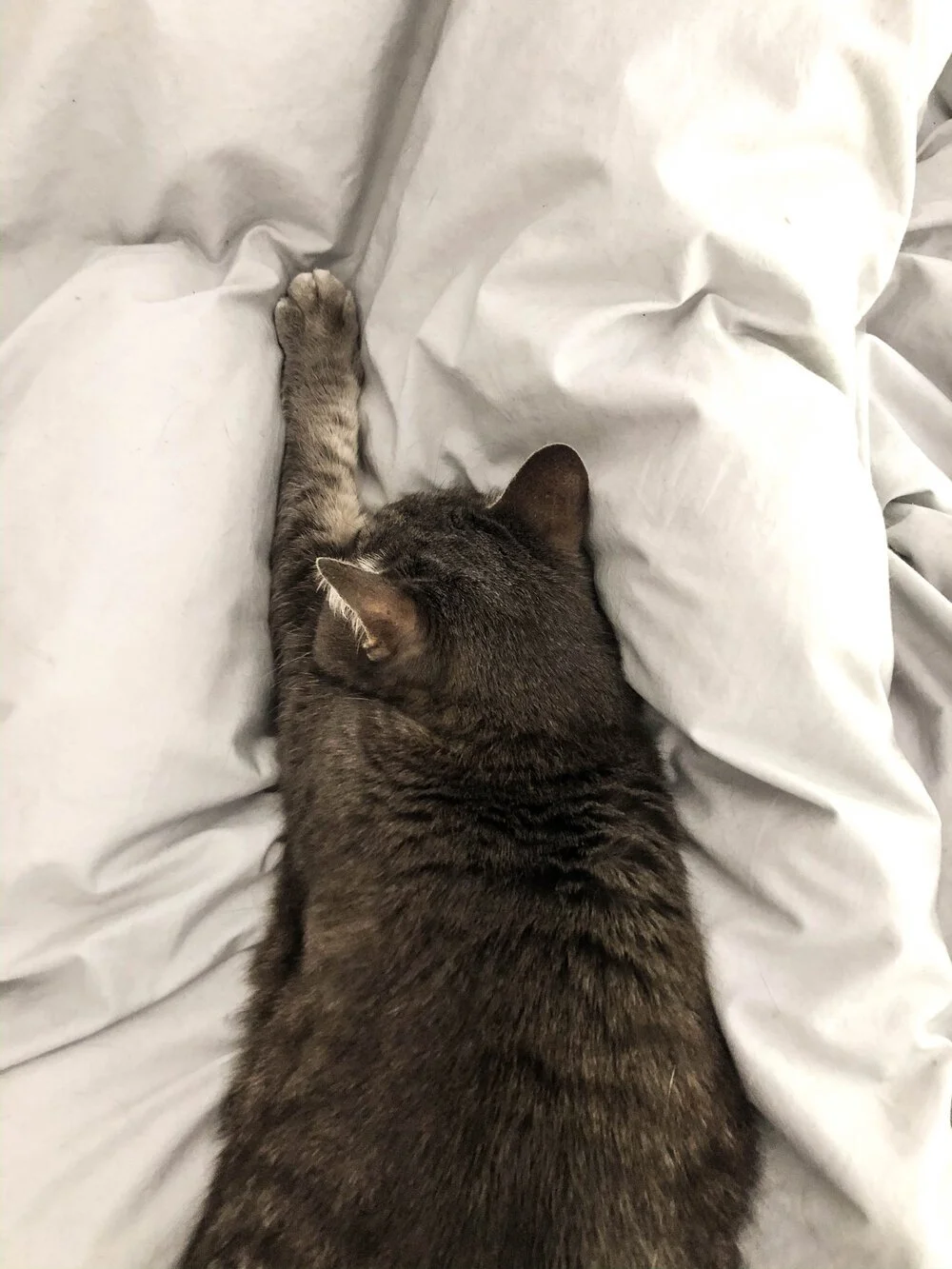
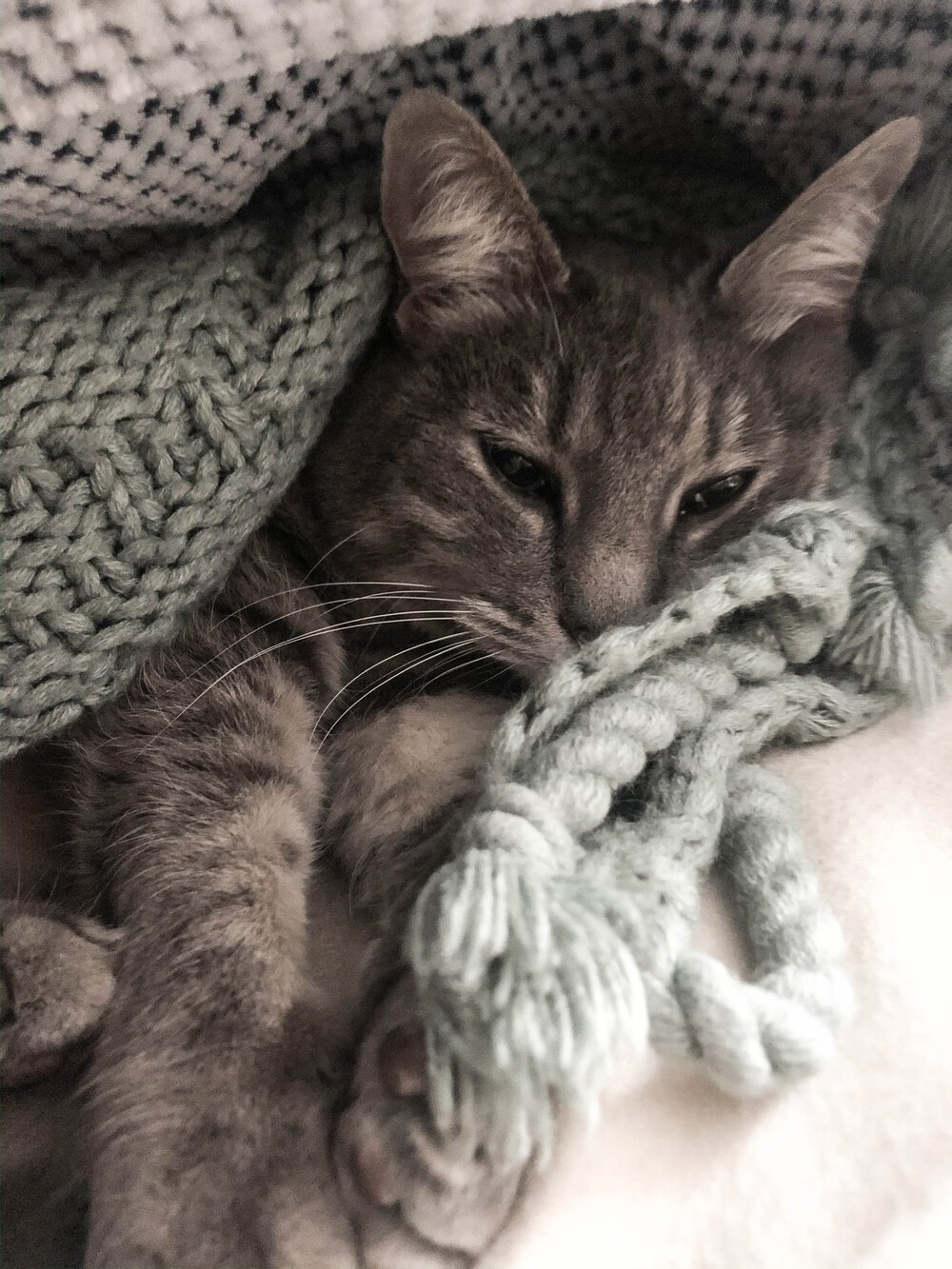
45 days of quarantine takes its toll. Boredom, anxiety, frustration, fear are inevitable. Where do we turn to find a sense of contentment or, dare I say, joy? I turn to the smaller and simpler allies around me. Yes, I’m talking about my cat. Her name is Tuna. The isolation may have influenced my choice of her as a model for self-care. But when you spend this much time with another creature you tend to pick up on their habits. And Tuna is a pro at managing stress and fighting boredom. So here you have it, five lessons on quarantine from Tuna the cat.
Prioritize Sleep
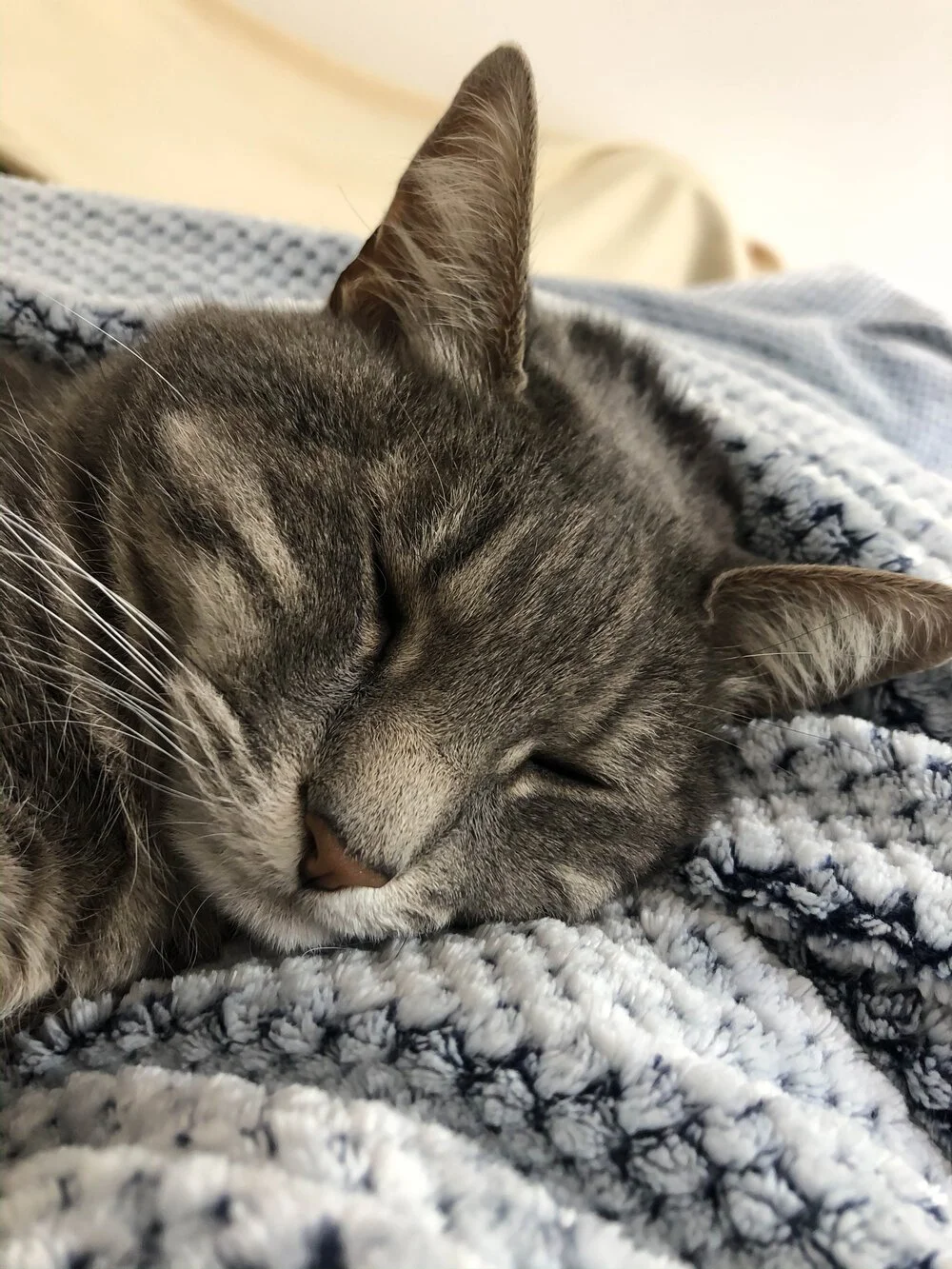
Tuna sleeps most of the day. She knows the value of a good nap. Her sleep is at times interrupted by her customary attacking, pouncing, and chasing. In the end, she knows when to take a break. And, my friends, we all need breaks.
These are hard times. No matter what this pandemic is serving you, whether you are supporting someone who is sick or sick yourself, taking care of children, trying to work, or just getting through the day. These are trying times. Stress comes from inside our homes as well as outside. With the internet, cellphones, and social media, stress and anxiety is not hard to come by. To cope, our brains and bodies need to rest and reset. Tired in the middle of the afternoon? Great. Take a nap. Emotionally exhausted after an epic news session. Fantastic. Take a nap. Can’t find the motivation to do anything? Feel yourself slipping into a pit of sadness? No worries. Take a nap.
Do as Tuna does, get your sleep on. Life, even during a pandemic, is a lot more manageable if you listen to your body and sleep when you need to.
Prioritize food
What day is it? What time is it? Where am I? These are now daily questions. For a cat like Tuna, these questions are irrelevant and futile social constructs. Food, on the other hand, is the cornerstone of a happy daily routine. She eagerly awaits the most significant events of the day: breakfast and dinner. She knows when, where, and how she will be fed. And afterwards she is carefree and moves on with her day.
Food can be a source of comfort, health, and sanity. In these simple times, food is the foundation of routine. You need to eat, so do it up. Plan out your meals and take time to prepare Even better, FaceTime a friend while you prep and cook. Savor your food. Enjoy the flavors. And don’t forget to indulge. We can’t spend hours preparing a culinary experience everyday. Sometimes you just need to binge watch trashy TV while eating boxed mac and cheese with hot sauce.
Express your feelings
Tuna is not afraid to let you know how she is feeling. Usually in the form of meowing in your face or jumping on your lap. She does not shy away from telling you she needs you, when she needs you.
It’s hard to ask for help. Vulnerability and sensitivity does not always feel safe or comfortable. But your community is here for you. Trust that if you ask, they will respond. A phone call or a quick message will do the trick. People will be eager to help and support. In fact, they will be grateful. Because your vulnerability allows them to be vulnerable. So go ahead, let people know how you are feeling and what you need.
Enjoy the simple things
Tuna will turn anything into a toy: a bottle cap, a piece of string, a price tag, a piece of lint. She isn’t picky. She welcomes the entertainment.
When stuck at home it can be easy to find something to do. The long list of to-do’s and half-started projects are endless. But now is also a time to slow down, get grounded, and find joy in the simple things. So do as Tuna does, spend a few hours a day doing what makes you happy and curious. Get off the computer and the phone. Play with something physical - paint, food, wood, dirt, or a ball. Tuna will spend a solid 20 minutes playing with her own tail. Your to-do list and all the ‘shoulds’ of your life will be there when you’re done.
Seek out the sun
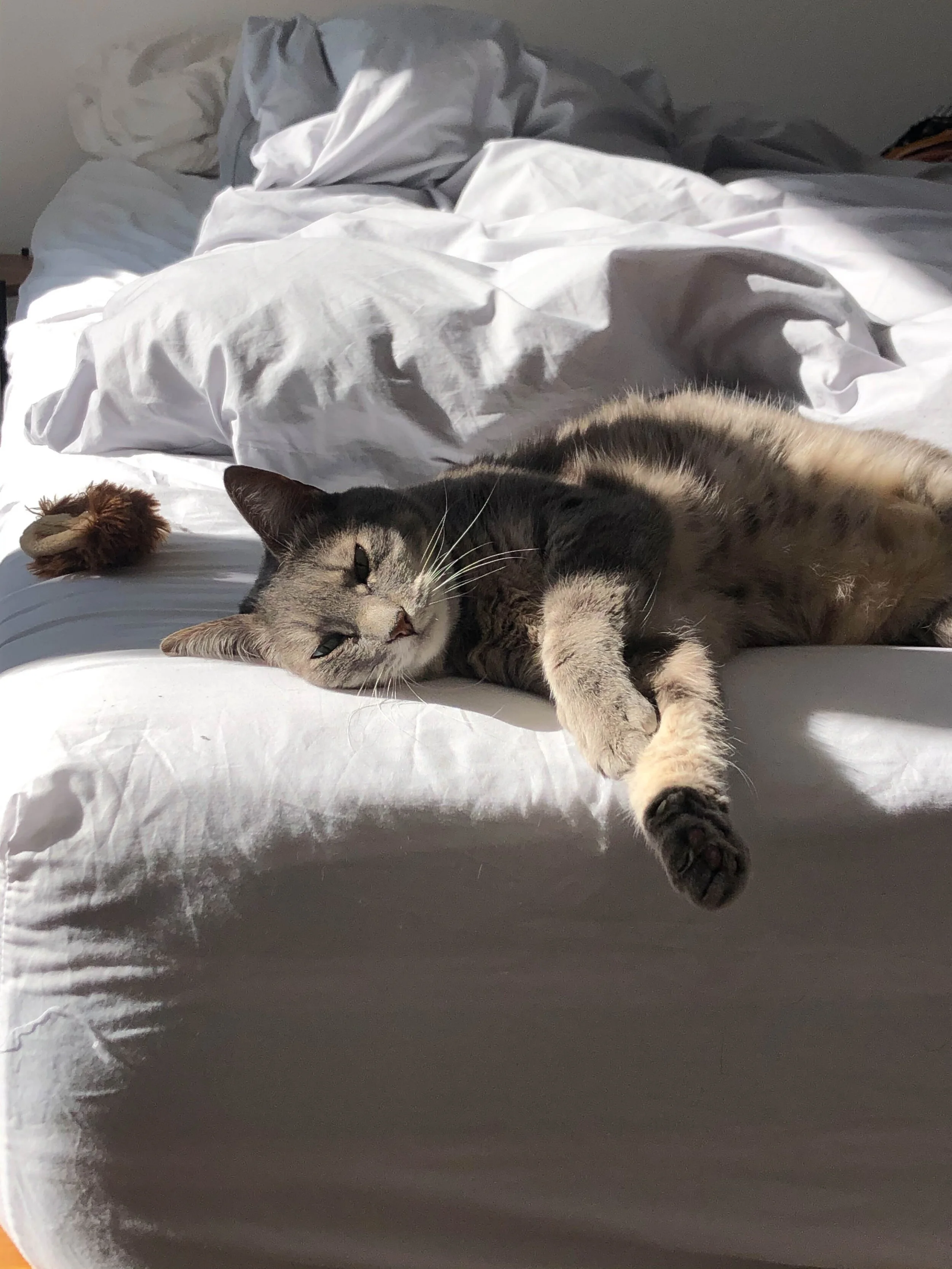
Tuna will find any ray of sunshine and park herself there for hours. This is usually paired with the aforementioned nap or staring out the window and plotting against the pigeons. She’ll stretch out, take up space, and take it all in.
This lesson’s pretty simple, cost efficient, and good for your health. If the sun comes out, find a patch of sunshine and sit in it. Or walk in it. Or do a workout in it. Or nap in it. But get that Vitamin D. And it’s not just Tuna. Research has shown that an increase in Vitamin D helps boost your immune system and protect again COVID-19. So there you go. Find that sun.
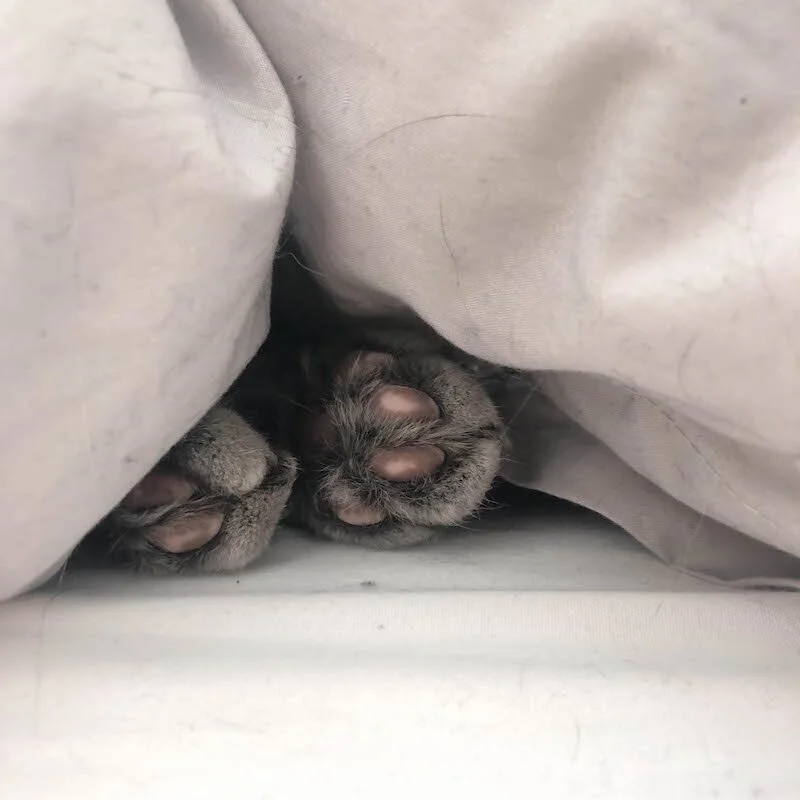
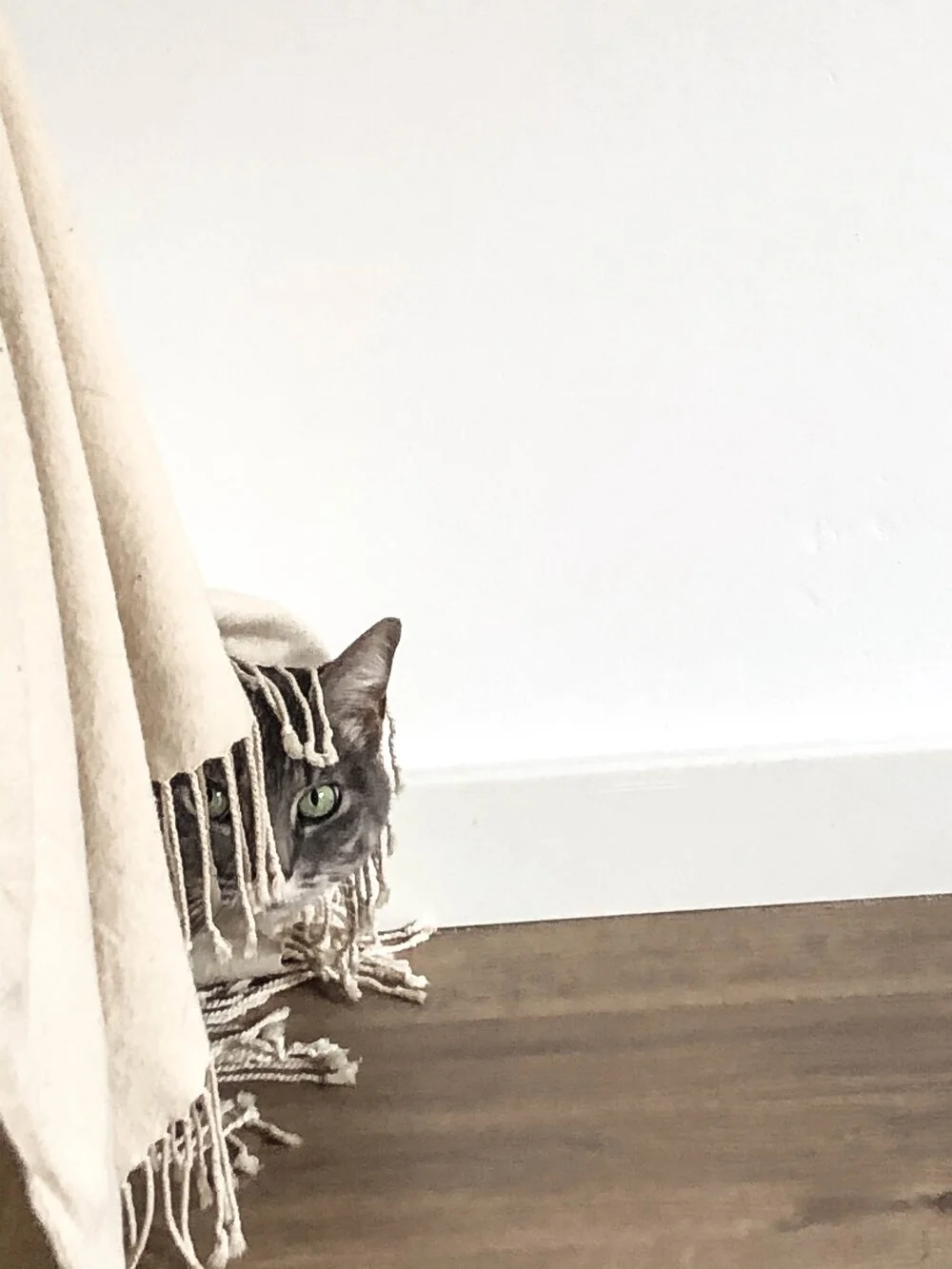
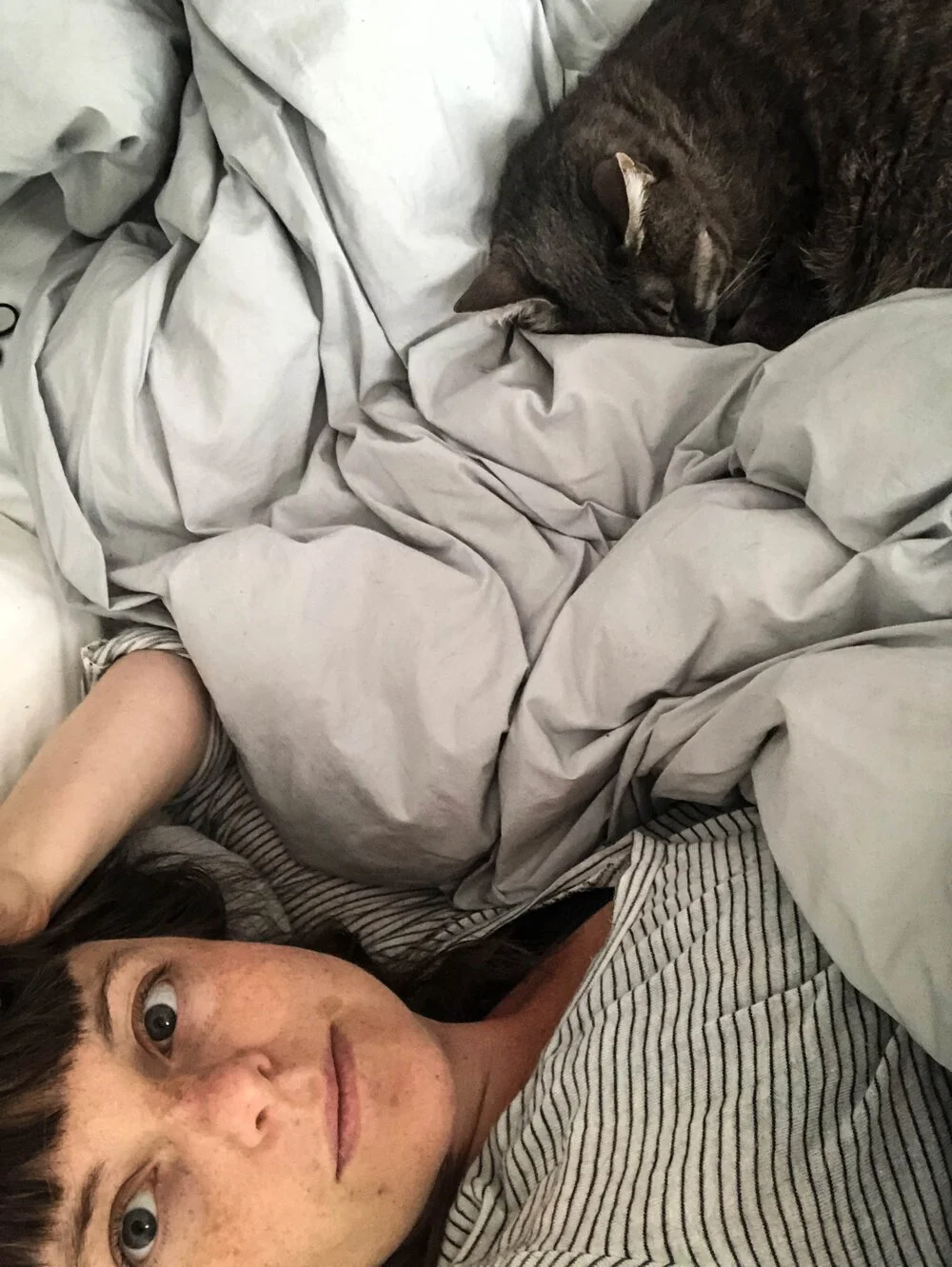
Tuna and Katie. Selfie. Barcelona, April 2020